
You love your favorite perfume, but lately, you can barely smell it after putting it on. Has your fragrance lost its beautiful scent, or has your nose simply become too familiar with it? Here's what science says about going nose-blind to perfume—and what you can do about it.
You have a favorite perfume that never fails to make you feel lovely.
Perhaps it's an elegant rose fragrance, a warm vanilla with a whisper of amber, or a soft, creamy musk that feels like your own personal signature.
You spray it on in the morning, enjoy that beautiful first impression, and go about getting ready.
But somewhere between finishing your makeup and leaving the house, something curious happens.
You can barely smell it anymore.
The bottle is the same. The fragrance hasn't changed, at least not that you've noticed.
So why doesn't it seem as wonderful or noticeable as it did when you first discovered it?
You might even start wondering whether you need a stronger perfume.
But before you go shopping for another bottle, there's something fascinating worth understanding.
Yes, you can become nose-blind to your perfume. Repeated or continuous exposure to a fragrance can temporarily reduce how strongly you perceive it, even while the scent remains present.
Scientists study this phenomenon through processes called olfactory habituation and olfactory adaptation.
And while the term nose-blind might sound a little dramatic, the experience itself is a normal part of how our sense of smell works.
Let's explore what causes it, how to recognize it, and whether there's anything you can do to enjoy your favorite fragrance more fully.
The Parlor™ Takeaway
Going nose-blind doesn't necessarily mean your perfume has faded. Your sense of smell can become less responsive to a fragrance after repeated or prolonged exposure.
If your perfume seems to disappear, avoid immediately spraying more. Give your nose some time away from the fragrance, then check whether you can detect it again. If other people can still smell your perfume while you barely notice it, olfactory habituation may be part of the explanation.
What Does It Mean to Go Nose-Blind to Perfume?

Have you ever visited someone's home and immediately noticed the fragrance of a scented candle?
Perhaps it's a beautiful vanilla, a fresh linen fragrance, or a warm blend of cinnamon and spice.
At first, the scent is unmistakable.
But after spending some time in the room, you hardly notice it.
The candle may still be releasing fragrance, yet your awareness of that scent has decreased.
Something similar can happen with perfume.
Your Sense of Smell Adapts to Familiar Scents
When odor molecules enter your nose, they interact with specialized sensory cells that send signals to your brain.
Your brain helps interpret those signals, allowing you to recognize different smells.
But your olfactory system doesn't respond to an unchanging scent with the same intensity forever.
With repeated or prolonged exposure, your perception of an odor can gradually decrease.
Researchers distinguish between two closely related processes:
Olfactory habituation: A reduction in your perceptual or behavioral response to an odor following repeated or sustained exposure.
Olfactory adaptation: Changes in the sensory and neural processes that contribute to reduced responsiveness.
A 2017 scientific review published in Physiology & Behavior explains how these processes influence odor perception in humans.
In everyday fragrance conversations, we often group these experiences together under the term nose-blindness.
The important thing to understand is that your awareness of a scent can decrease without the scent itself having completely disappeared.
And that distinction matters when you're judging how well your perfume performs.
Nose-Blindness Can Happen Surprisingly Quickly
You might assume that becoming nose-blind takes several hours.
But research suggests that reduced sensitivity can develop much sooner under certain conditions.
A 2024 study published in The Laryngoscope examined olfactory habituation in 80 younger and older adults.
Participants were exposed to a rose-like odorant through a device placed at one nostril.
Researchers found measurable reductions in odor sensitivity after ten minutes of exposure, with more pronounced effects following two hours.
That doesn't mean everyone becomes nose-blind to perfume after exactly ten minutes.
The researchers used controlled odor exposure, not ordinary perfume application during a typical day.
Still, the findings help explain why you may stop noticing a familiar scent sooner than expected.
There isn't one universal timetable for becoming nose-blind.
The fragrance, its intensity, your exposure, and individual differences in smell perception can all influence the experience.
What Does Science Say About Wearing Perfume and Nose-Blindness?

One particularly interesting study looked directly at how wearing personal fragrance affects our ability to smell.
And its findings are worth understanding.
How Wearing Perfume Can Affect Your Sensitivity to Other Scents
A 2022 study published in the journal Foods examined whether wearing personal fragrance affected performance on standardized smell tests.
Nineteen participants completed the study.
Researchers compared three conditions: no fragrance, a moderate amount of perfume, and a stronger amount.
The fragrance was applied to aprons worn by participants rather than directly to their skin.
The results showed that participants generally performed better on certain smell-detection and odor-discrimination tasks when they weren't wearing fragrance.
In other words, wearing perfume affected their ability to detect or distinguish some other odors during testing.
However, there's an important scientific distinction.
The researchers identified two possible explanations: olfactory adaptation and odor masking, where one fragrance makes another more difficult to detect.
The study couldn't fully separate these effects.
It also didn't measure exactly how long participants could smell their own perfume.
So while this research supports the idea that wearing fragrance can influence olfactory performance, it doesn't prove that everyone becomes nose-blind to their perfume after a particular number of minutes.
The Pretty Skin Parlor™ advice: If you've been wearing a fragrance for a while and it seems unusually faint, don't immediately assume something is wrong with the perfume. Your own changing sensitivity is worth considering before adding more sprays.
Can Wearing the Same Perfume Every Day Make You Nose-Blind?
There's something wonderfully personal about having a signature fragrance.
That one bottle you reach for almost without thinking.
Perhaps you've worn it for years. Maybe friends and family even associate its scent with you.
But if you wear the same perfume regularly, you may notice that it no longer makes quite the same impression on your own nose.
Does that mean you've become permanently nose-blind to it?
Not necessarily.
What Research Says About Repeated Fragrance Exposure
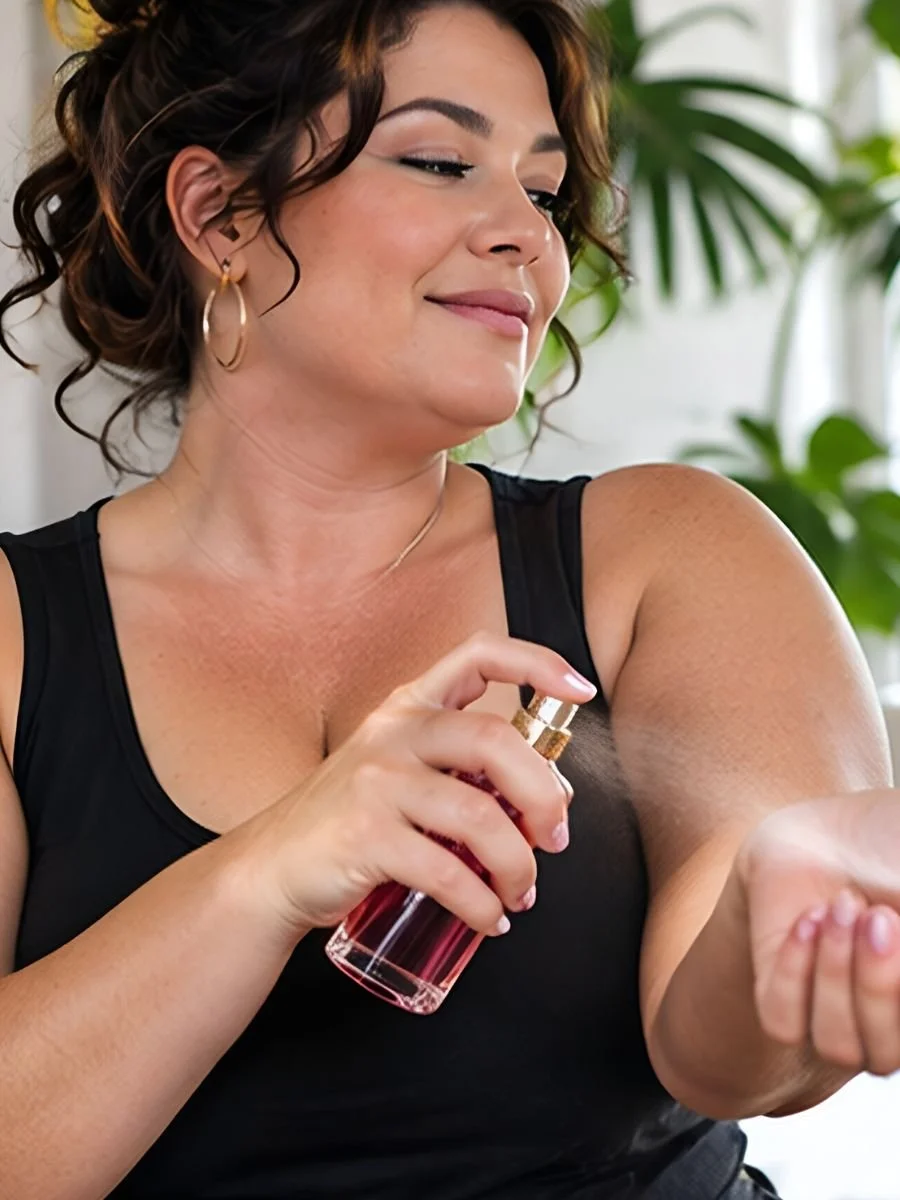
Scientists have studied what happens when people encounter the same odor repeatedly over longer periods.
A 2021 study published in Chemical Senses followed 57 younger and older adults who were exposed to one of two specific odorants at home over two weeks.
Researchers measured changes in their ability to detect those odors.
After prolonged exposure, participants showed reduced sensitivity to the odor they had encountered.
Importantly, the researchers also found that sensitivity recovered after exposure ended.
In that study, participants had fully recovered by the one-week follow-up.
These findings provide evidence that repeated odor exposure can affect sensitivity and that the effects can be reversible.
But the experiment involved individual odorants, not people wearing their favorite commercial perfumes every day.
It would be inaccurate to conclude that everyone needs to stop wearing a signature fragrance for exactly one week to reset their nose.
What the study does tell us is that repeated exposure can influence smell perception over time.
And that's a useful distinction if your once-familiar fragrance seems less noticeable than it used to.
How Can You Tell If You're Nose-Blind or Your Perfume Has Faded?
Here's where things become a little tricky.
You can't always determine whether your perfume is still present simply by relying on your own nose.
After all, if your sensitivity to the fragrance has decreased, your perception may not reflect how noticeable the perfume is to someone else.
But there are a few clues worth considering.
Can You Stop Yourself From Going Nose-Blind?
Now for the practical question.
If you've become accustomed to your favorite perfume, is there a way to enjoy smelling it again?
Olfactory habituation is a normal sensory process, so you can't reliably prevent it from happening altogether.
But you can make a few thoughtful changes to how you experience your fragrance.
1. Give Your Nose a Break From the Fragrance
Sometimes the simplest approach is to stop checking your perfume so frequently.
If you spray your wrists and immediately bring them toward your nose every few minutes, you're repeatedly exposing yourself to the same scent.
Instead, apply your perfume and go about your day.
Allow yourself to experience the other smells in your surroundings.
If you're trying to evaluate a particular fragrance, spending some time away from it may help you notice it more clearly when you return.
A 2014 study published in Chemical Senses examined how people became desensitized to particular odors and how their sensitivity recovered after exposure stopped.
Researchers found that longer recovery periods generally allowed participants to perceive the odors more strongly again.
The exact recovery time depended on the experimental conditions, so there's no scientifically established number of minutes that will reset everyone's sensitivity to perfume.
But taking a break is a sensible place to begin.
2. Try Alternating Your Perfumes
If you enjoy collecting fragrances, you might consider alternating between them.
Perhaps you wear a soft floral one day, a warm vanilla the next, and a fresh citrus fragrance over the weekend.
This can give you a little variety in your scent experience.
It may also make it easier to appreciate the differences between fragrances rather than continuously exposing yourself to the same one.
However, there isn't strong evidence that rotating commercial perfumes on a particular schedule prevents nose-blindness.
Think of fragrance rotation as an enjoyable experiment, not a scientifically guaranteed treatment.
And if you prefer wearing the same signature perfume every day, there's no reason you must abandon it.
You can still enjoy your favorite fragrance even when it feels less noticeable to you.
3. Avoid Spraying More Just Because You Can't Smell It
Here's an important habit to reconsider.
You apply your perfume in the morning.
An hour later, you can't smell it.
So you spray again.
Then later, another little spritz.
Before long, you've used considerably more perfume than you intended.
The difficulty is that adding more fragrance doesn't necessarily restore your original sensitivity to it.
If your nose has adapted to the scent, you may continue perceiving it as faint even while the fragrance around you becomes stronger.
That can be uncomfortable for people nearby, particularly in enclosed spaces.
Instead, consider whether the perfume is genuinely fading or whether you're simply less aware of it.
A modest refresh is perfectly reasonable when the fragrance has faded and you'd like to enjoy it again.
But you don't need to keep spraying until you can smell it continuously.
4. Don't Rely on Coffee Beans to Reset Your Nose
Have you ever visited a perfume counter and been offered a little jar of coffee beans between fragrances?
The idea is that smelling coffee will somehow clear your nose, allowing you to appreciate the next perfume.
It's a familiar ritual.
But there isn't convincing evidence that sniffing coffee beans reliably resets olfactory adaptation or restores your original sensitivity to a fragrance.
Coffee is simply another odor for your nose to process.
If you've been sampling several perfumes and find that they all begin to smell similar, taking a break from smelling fragrances is a more sensible approach.
Step away from the perfume counter, enjoy some unscented air, and return when you're ready.
There's no need to rush through an entire fragrance collection in one afternoon.
Sometimes giving each perfume a little space makes discovering its character more enjoyable.
The Parlor Notes: A Simple Way to Check Your Perfume Perception
If you're wondering whether you've become nose-blind to a particular fragrance, try this gentle observation exercise.
It won't diagnose olfactory adaptation, but it may help you understand how you're experiencing your perfume.
Choose one familiar perfume. Select a fragrance you know well and have worn several times before.
Apply your usual amount. Use the same number of sprays you would normally wear. Avoid increasing the amount for the experiment.
Notice your first impression. Pay attention to how clearly you can smell the fragrance immediately after applying it.
Stop repeatedly checking it. Go about your day without constantly bringing your wrists toward your nose.
Spend some time away from the scent. When practical, avoid deliberately smelling the application area for a while.
Check again later. Notice whether you're able to detect the fragrance more clearly after a break.
Consider another person's perspective. If someone you trust is comfortable helping, ask whether they can detect the scent without moving unusually close.
If your perfume seems faint to you but remains noticeable to someone else, reduced personal sensitivity may be contributing.
If you notice the fragrance more clearly after spending time away from it, that may also be consistent with adaptation and recovery.
But neither observation proves nose-blindness on its own.
Perfume naturally changes as its materials evaporate, and individual differences in odor sensitivity can influence the result.
The purpose of this little exercise isn't to measure your perfume scientifically.
It's to become more aware of how your own scent perception changes during the day.
And you may discover that your fragrance is far more noticeable than you realized.
When Is It More Than Ordinary Nose-Blindness?
There's an important difference between becoming accustomed to one perfume and experiencing a general change in your sense of smell.
If you can barely detect your signature fragrance but still enjoy the aromas of fresh coffee, flowers, and food, ordinary olfactory habituation may be one explanation.
However, if you suddenly notice that many familiar smells have become faint, disappeared, or changed dramatically, don't assume it's simply perfume nose-blindness.
According to the National Institute on Deafness and Other Communication Disorders, smell disorders can involve a reduced ability to detect odors, a complete loss of smell, or changes in how odors are perceived.
Possible causes include respiratory infections, nasal inflammation, certain medications, head injuries, and other medical conditions.
A persistent or unexplained change in your sense of smell deserves medical evaluation.
If you suddenly lose your sense of smell, it's sensible to contact a healthcare professional rather than assuming it's due to fragrance exposure.
Your sense of smell helps you enjoy beautiful perfumes, but it also plays an important role in recognizing food aromas and potential dangers in your surroundings.
Learning to Appreciate Your Favorite Perfume Again

Perhaps one of the most interesting things about fragrance is how differently we experience it from one moment to another.
That beautiful perfume you fell in love with may still be surrounding you with a delicate scent, even when you've stopped noticing it.
Or perhaps you've worn it so often that your response to its familiar aroma has become less pronounced.
Neither experience automatically means the perfume has changed or lost its quality.
Your sense of smell is an active sensory system, constantly responding to the world around you.
And becoming less aware of a familiar odor is part of how that system works.
If you suspect you're going nose-blind to your perfume, try giving your nose a break, avoiding unnecessary reapplication, and paying attention to how your perception changes.
If you enjoy variety, experimenting with different fragrances may make your collection feel fresh and interesting again.
But there's no need to give up a signature scent simply because you don't notice it as strongly as you once did.
Going nose-blind doesn't mean you've stopped loving your perfume. It means your sense of smell may have become accustomed to something familiar.
And sometimes, all it takes is a little distance from that familiar scent to notice its beauty again.
After all, a fragrance doesn't have to command your attention every moment of the day to be a lovely part of your life.
Before You Leave the Parlor💕
Don't slip out without signing the guest book — just drop a note in the comments below.
Have you noticed that a perfume you once smelled clearly has become harder to detect after wearing it regularly?
Tell us which fragrance it is and whether taking a break helped you notice it again—we would love to hear about your experience.
Beauty Starts at the Parlor™.
