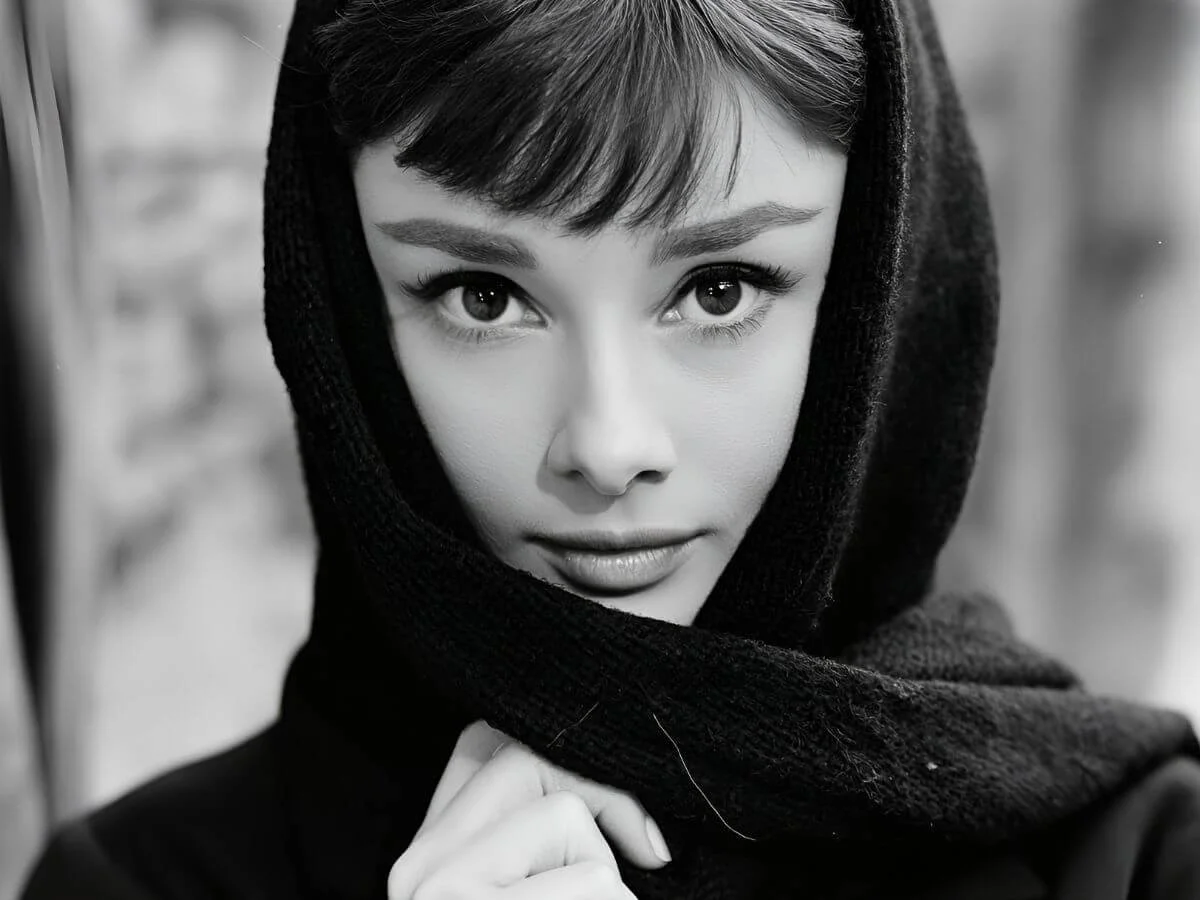
There are certain beauty signatures you can recognize without ever seeing the full face.
A strong, beautifully shaped brow. Large brown eyes edged in black liner. Long lashes that look impossibly neat. A soft pink lip. A tiny fringe or polished pixie framing delicate features.
Audrey Hepburn had one of those faces.
More than seventy years after Roman Holiday, her look still feels surprisingly current. You could take the brows, liner, and cropped hair from a 1950s photograph, place them in a modern beauty editorial, and very little would look out of place.
But the Audrey Hepburn beauty story gets far more interesting once we move past the usual lists of internet folklore.
Because Audrey didn't rely on one mysterious lipstick, one miracle cream, or one complicated routine.
There were really two Audreys at the vanity:
Audrey the actress: Her face was carefully prepared, sculpted, and perfected for the cameras by master makeup artists.
Audrey away from the set: She described her personal daily makeup as remarkably simple.
Those two distinct sides tell us far more than another recycled product list ever could.
So come on into The Beauty Room, Parlorlettes. Today we are taking a closer look at what we actually know about Audrey’s makeup, skincare, hair care, and perfume—separating documented beauty history from the myths that have grown around her over the decades.
Because Beauty starts at the parlor™.
Audrey Hepburn’s Famous Look Was Carefully Created
Audrey’s makeup often looked effortless.
That does not mean it actually was.
One of the most important people behind her screen appearance was Italian makeup artist Alberto de Rossi, who worked with Audrey for years and helped develop the polished face seen in many of her films and photographs.
In 1972, Vogue devoted a feature to de Rossi making up Audrey. What makes that article particularly valuable today is that it gives us something better than beauty folklore: a makeup artist explaining his own process.
De Rossi did not approach a face by simply applying whatever colors happened to be fashionable.
He studied it.
He looked at proportion, bone structure, light and shadow. His approach was closer to sculpting than simply painting cosmetics over the skin. Complexion products and powders could be used to subtly alter how the planes of the face appeared, while brows and eyes were carefully defined.
And Audrey was a perfect example of what that approach could do.
She already had striking features. The makeup did not need to bury them.
It needed to know when to get out of their way.
Her Brows Were Meant to Be Seen
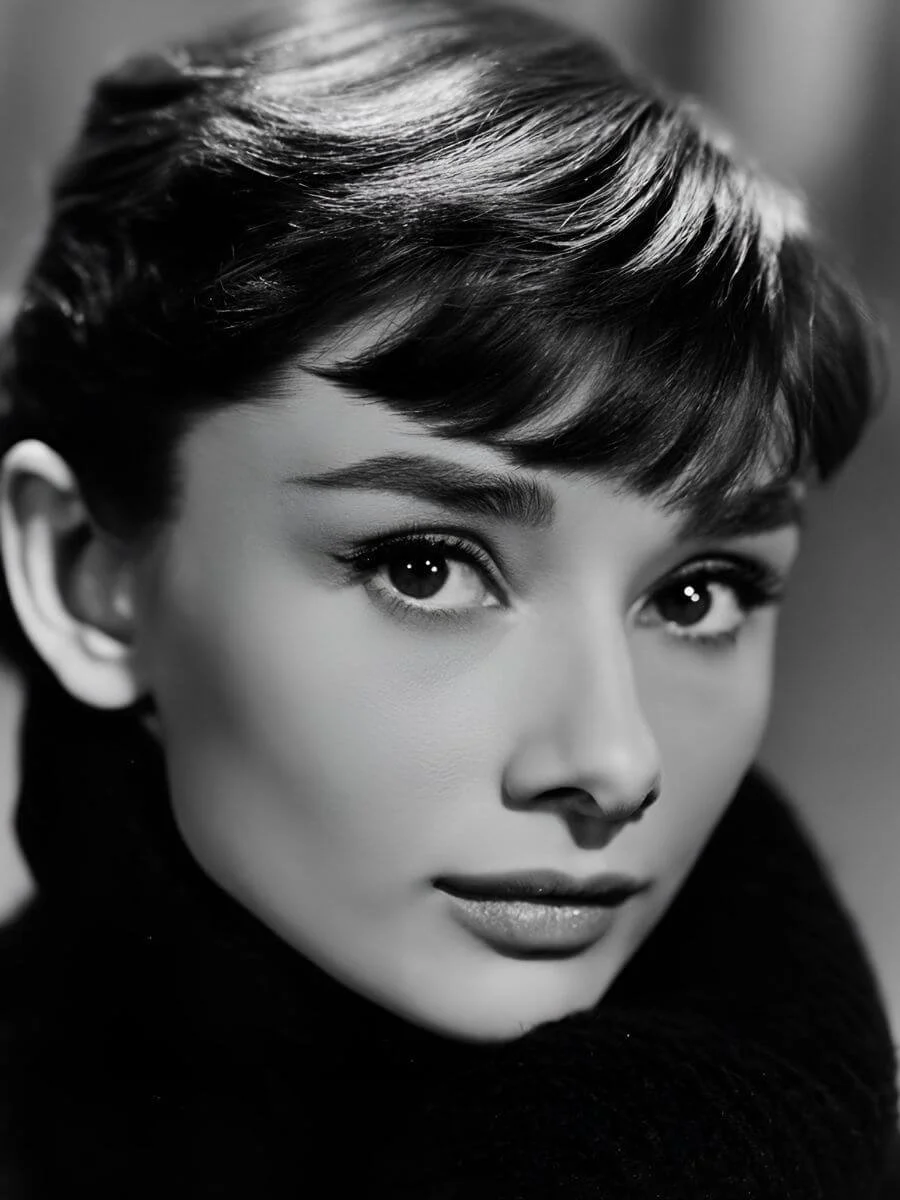
Before laminated brows, soap brows, brow gels and the seemingly endless cycle between pencil-thin and fluffy eyebrows, Audrey Hepburn had those brows.
Dark.
Full.
Structured.
And completely unmistakable.
Her eyebrows gave her face much of its graphic quality. They created a strong frame above those enormous eyes and balanced the delicacy of her other features.
De Rossi placed considerable importance on brows, and that decision matters because Audrey’s eyebrows did not always follow the prevailing fashion.
Instead of removing what made her distinctive, her makeup emphasized it.
That is one of the reasons a photograph of Audrey is so easy to recognize even decades later.
And Parlorlettes, there may be a beauty lesson hiding right there.
We spend an awful lot of time being told which part of our face needs to change next.
Brows should be thinner.
No, thicker.
No, straighter.
No, feathered.
No, laminated halfway toward the ceiling.
Audrey’s face is a lovely reminder that sometimes the feature that makes you different is the one you should leave alone.
The Secret Behind Those Famous Audrey Hepburn Eyes
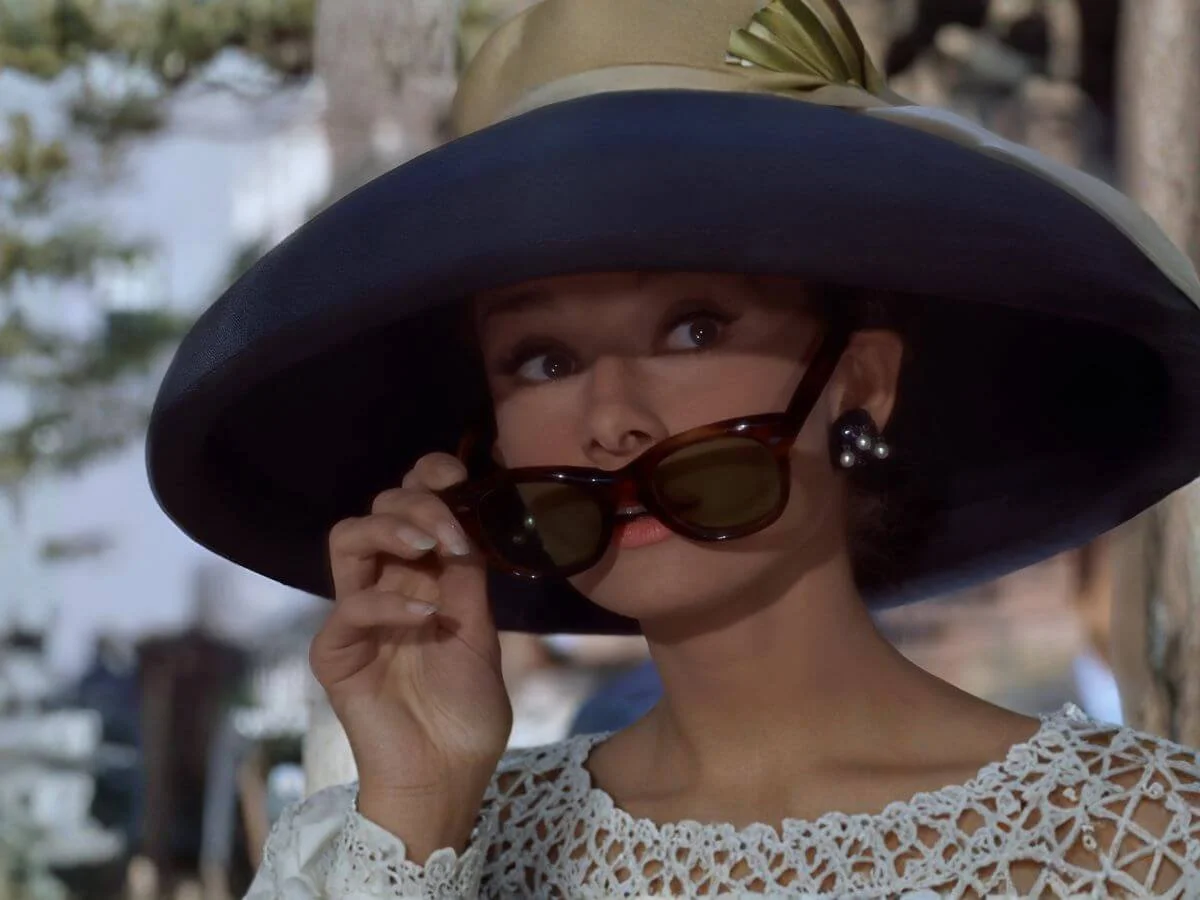
If the brows created the frame, the eyes were the centerpiece.
Audrey’s classic eye makeup relied heavily on definition.
Black liner followed the eye and extended outward, helping create the elongated feline shape we still associate with her. Mascara emphasized her naturally large eyes, while carefully groomed brows finished the effect.
The lashes were also kept remarkably separated.
That detail matters.
When we look at Audrey’s eye makeup, we do not usually see thick masses of mascara sitting on top of one another. Individual lashes remain visible, giving the lash line length and definition without making it appear excessively heavy.
Over the years, a rather dramatic story has developed around exactly how Audrey’s lashes were separated after mascara. Different retellings have named different tools, which is precisely why we are not going to turn one of those versions into historical fact around here.
What is clear from the finished makeup is the technique that mattered:
The lashes were meticulously separated.
And fortunately for us, modern lash combs exist.
No questionable vintage beauty equipment required.
Audrey’s Everyday Makeup Was Surprisingly Simple
Here is where the Audrey Hepburn beauty story gets especially interesting.
The elaborate makeup required for professional photography and film was not necessarily how Audrey made herself up when she was simply being Audrey.
In an early-1970s Vogue interview, Audrey described her personal makeup routine in wonderfully uncomplicated terms.
She concentrated primarily on her eyes.
Black eyeliner.
Mascara.
Dark-brown pencil for the brows.
And a very pale pink lipstick.
Most interestingly, she said she did not normally wear foundation in her everyday life. She preferred an unmade-up appearance.
That is a very different picture from the complicated celebrity routines we are accustomed to seeing today.
No twenty-product complexion routine.
No contour palette.
No foundation followed by concealer followed by more foundation followed by enough setting spray to survive a hurricane.
Audrey knew which features she wanted to emphasize.
And apparently, on an ordinary day, that was enough.
Professional Audrey and Everyday Audrey Were Not the Same
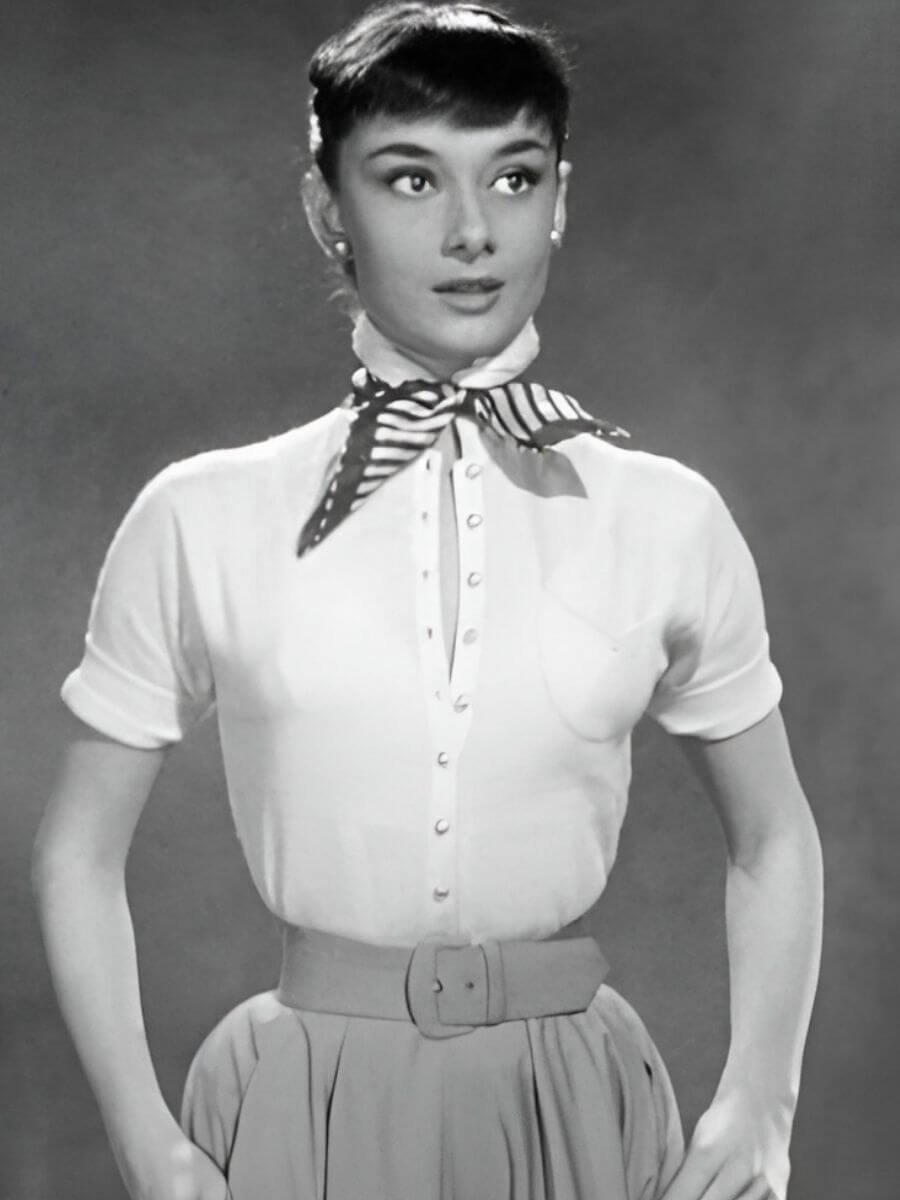
This distinction is important because it is one we often lose when talking about vintage beauty.
A movie star’s screen makeup is not necessarily her personal beauty routine.
Under professional lights and in front of a camera, Audrey’s complexion could be carefully evened, powdered, highlighted and subtly sculpted by de Rossi.
Away from that environment, Audrey could skip foundation entirely.
Both things can be true.
And this helps explain one reason celebrity beauty history becomes so confusing online. A product seen on a film set becomes “her favorite.” A technique used by a makeup artist becomes “her daily routine.” A shade created for a character becomes “the lipstick she never lived without.”
After enough repetition, movie makeup and personal makeup become one big beauty story.
Audrey’s own comments tell us otherwise.
The face created for the camera was a professional production.
Her private routine was much simpler.
What Do We Actually Know About Audrey Hepburn’s Skincare?
This is where we need to be a little careful.
There are many Audrey Hepburn skincare routines online.
Some are extremely detailed.
The problem is that the evidence behind them is not nearly as detailed.
Unlike Marilyn Monroe, whose personalized instructions from Dr. Erno Laszlo survive and give us an unusually specific record of her skincare regimen, Audrey does not appear to have left us an equivalent surviving prescription that allows us to reconstruct a complete morning-and-night routine product by product.
Audrey is historically associated with Dr. Erno Laszlo, whose famous clientele included several major actresses and society women of the period.
But being associated with Laszlo is not the same as having Audrey’s complete personal prescription sitting in front of us.
So we are not going to invent one.
What Audrey herself did speak about was cleansing.
She said her experience working in the theater had made her particularly careful about removing makeup because she had seen what poor makeup removal could do to the skin.
That may not be as glamorous as discovering a secret jar on a dressing table, but it is one of the more sensible Audrey beauty habits we can borrow.
Remove the day.
Then go to bed.
Sometimes beauty history is wonderfully uncomplicated.
Audrey Was a “Soap-and-Water” Kind of Woman
Audrey also described herself as something of a soap-and-water girl.
That needs a little modern context.
The soaps available and the way people discussed cleansing in Audrey’s era were different from the way we think about facial cleansers today. So this is not a suggestion to grab whichever bar happens to be sitting beside the bathroom sink and scrub away.
The useful part of Audrey’s habit is not necessarily the exact cleansing product.
It is the consistency.
She wore professional makeup for work and made a point of properly removing it.
That principle has aged considerably better than many vintage beauty tricks.
Her Beauty Routine Included Something Very Unfashionable: Sleep
Some of Audrey’s most charming beauty details have nothing to do with cosmetics at all.
When discussing her routine with Vogue, she said she needed around eight or nine hours of sleep to feel completely happy.
I know.
Of all the Audrey Hepburn beauty secrets, this may be the one modern life is least interested in cooperating with.
But it gives us another glimpse of how she thought about beauty.
The routine was not confined to the makeup table.
Rest mattered.
Baths mattered.
Hair care mattered.
She even mentioned enjoying a beautifully scented bath with Floris bath oil.
Now that feels appropriately Audrey.
Not thirty-five frantic steps while staring at a phone.
A bath that smells lovely.
A little lipstick.
And enough sleep.
She may have been onto something.
Audrey Did Her Own Hair More Often Than You Might Expect
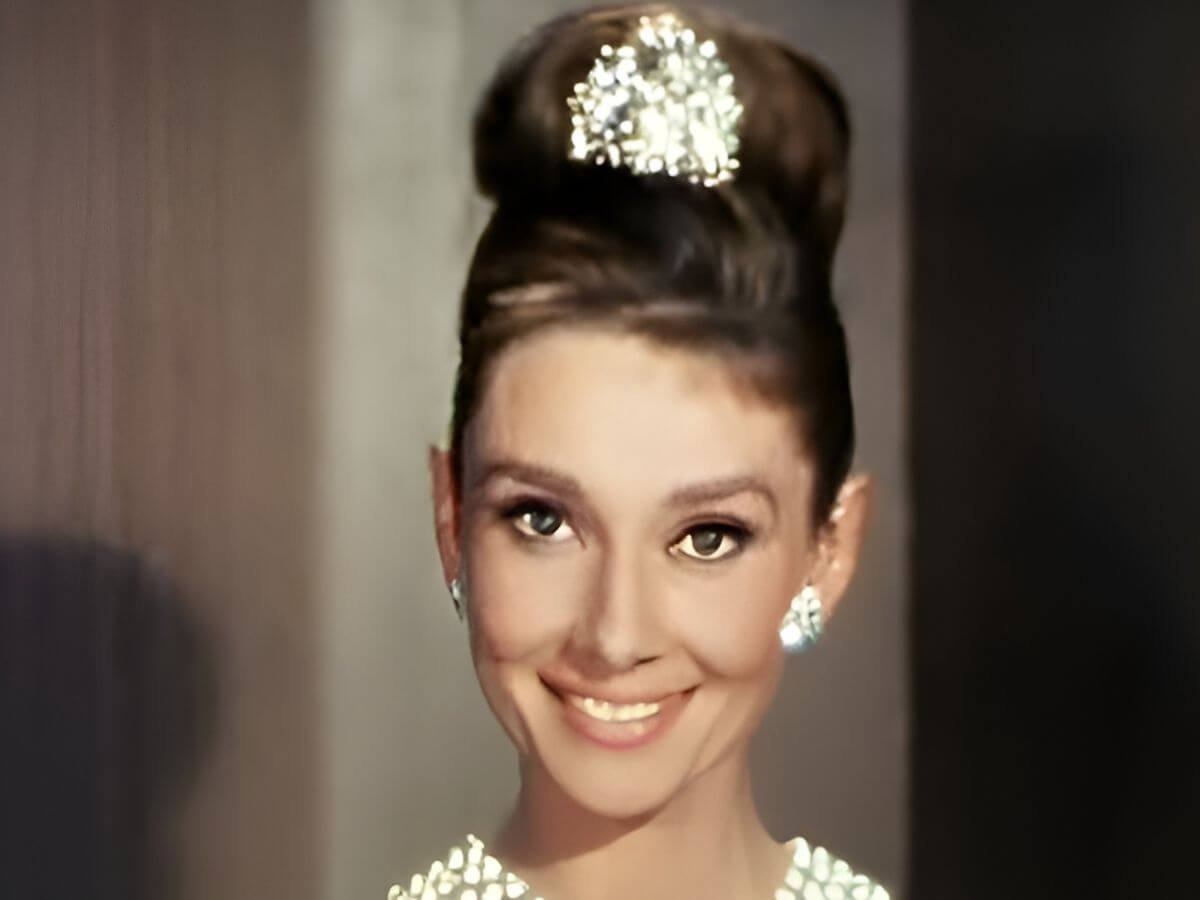
Audrey’s hairstyles are nearly as recognizable as her makeup.
The little cropped fringe from Roman Holiday.
Her pixie cuts.
Smooth chignons.
Short bobs.
Elegant updos.
And, of course, the towering polished style associated with Holly Golightly in Breakfast at Tiffany’s.
Her hair changed considerably throughout her career, but it usually shared the same quality as her makeup: a strong, intentional shape.
And despite being one of the most photographed women in the world, Audrey apparently did not want to live in a salon.
She told Vogue that salons made her restless and said she generally washed her own hair every four or five days.
I love that detail because it pulls the beauty icon off the pedestal for a moment.
Audrey Hepburn, standing around waiting for a salon appointment and thinking, I could have done this myself.
Parlorlettes, some things truly are timeless.
One of Audrey Hepburn’s Hair Problems Created a Product That Still Exists
Audrey’s most interesting contribution to hair history came later.
By the 1970s, years of styling for film had taken a toll on her hair.
In 1974, she went to see trichologist Philip Kingsley.
According to the history maintained by the Philip Kingsley company, Audrey’s hair had become dry and damaged from repeated heat styling. She needed conditioning, but heavier after-shampoo treatments could leave her fine hair feeling flat and weighed down.
Kingsley developed a different type of treatment for her.
Instead of applying the rich treatment after shampooing, it went on before the hair was washed.
The treatment became Elasticizer.
The idea was that the hair could receive moisture and conditioning first, while shampooing afterward removed excess residue that might otherwise weigh fine hair down.
Philip Kingsley’s company says Audrey continued using the treatment and had it sent to her home in Switzerland.
Elasticizer later became a permanent part of the company’s range and remains in production today.
Now that is the kind of vintage beauty story I like.
Not “Audrey supposedly rubbed something from the refrigerator all over her face.”
A real problem.
A professional.
A product developed to address that problem.
And a beauty treatment still being sold roughly half a century later.
Audrey Hepburn and L’Interdit: A Perfume Made Especially for Her
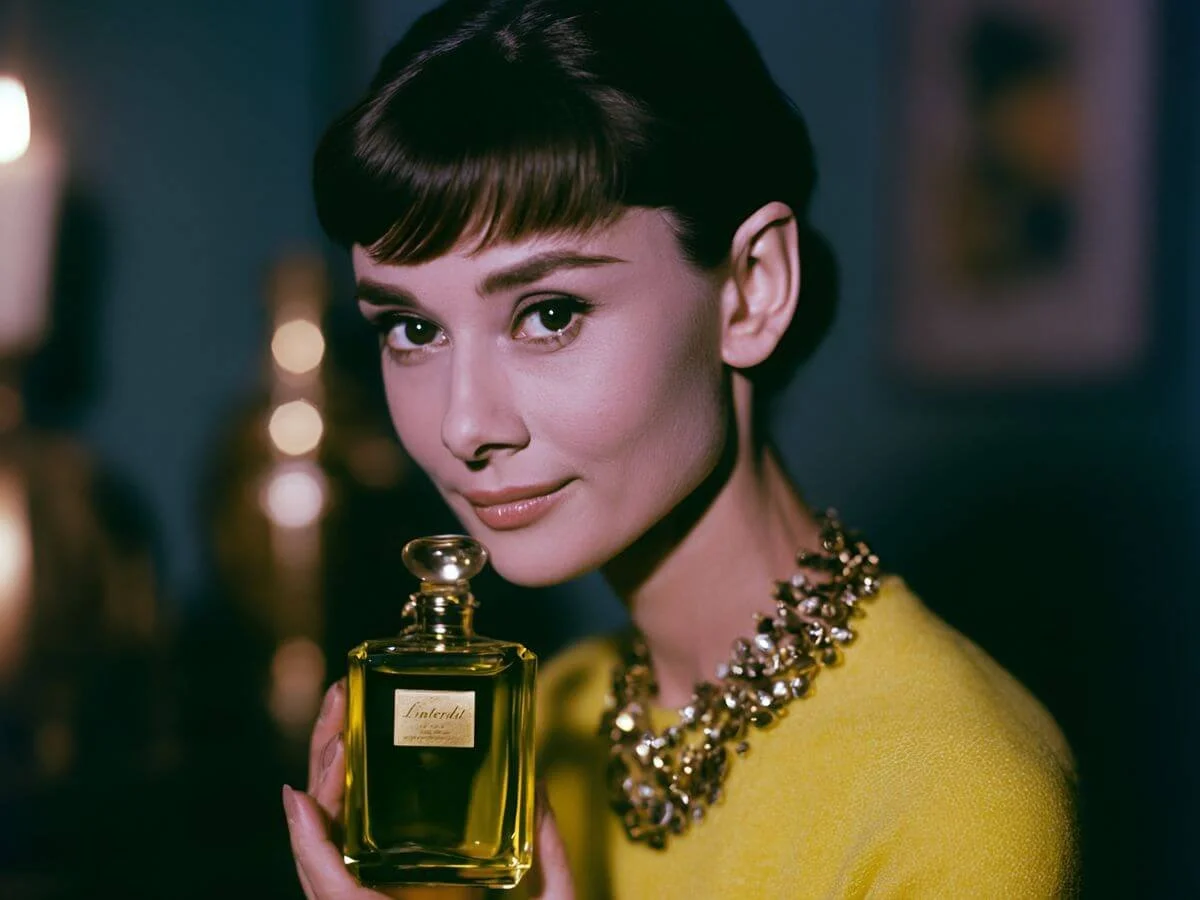
And now, Parlorlettes, we have arrived at the perfume counter.
Audrey’s relationship with Hubert de Givenchy became one of the great creative friendships in twentieth-century fashion.
They first met in the 1950s, and Givenchy would go on to dress Audrey both on-screen and in her personal life.
Their collaboration extended beyond clothing.
Givenchy created a fragrance especially for Audrey.
That fragrance became L’Interdit.
The House of Givenchy identifies L’Interdit as its first fragrance and traces its public launch to 1957. The house also identifies Audrey as the woman for whom the fragrance was specially created.
The famous story behind the name comes from Givenchy itself.
When Hubert de Givenchy eventually wanted to release the fragrance to the public, Audrey is said to have jokingly protested in French:
Je vous l’interdis.
Essentially:
I forbid you.
And so the fragrance became L’Interdit—The Forbidden.
Now that is a perfume story.
Imagine somebody creating a private fragrance for you, wearing it as your own, and then discovering that everybody else is about to get a bottle too.
I might have forbidden it as well.
Is Today’s L’Interdit the Exact Perfume Audrey Wore?
No—and this is an important distinction.
The L’Interdit sold today belongs to the same fragrance lineage, but the modern perfume has been reinterpreted.
Perfumes change.
Formulas are reformulated.
Materials become restricted or unavailable.
Brands update fragrances for new generations.
Givenchy itself describes the modern L’Interdit collection as a reinvention of its historic fragrance.
So buying today's bottle gives you a connection to the story and heritage of Audrey's L’Interdit.
It does not give you a time machine back to the exact liquid Audrey was wearing in the 1950s.
And that is perfectly fine.
Perfume history is full of ghosts.
Sometimes part of the fun is knowing what came before.
What Lipstick Did Audrey Hepburn Wear in Breakfast at Tiffany’s?
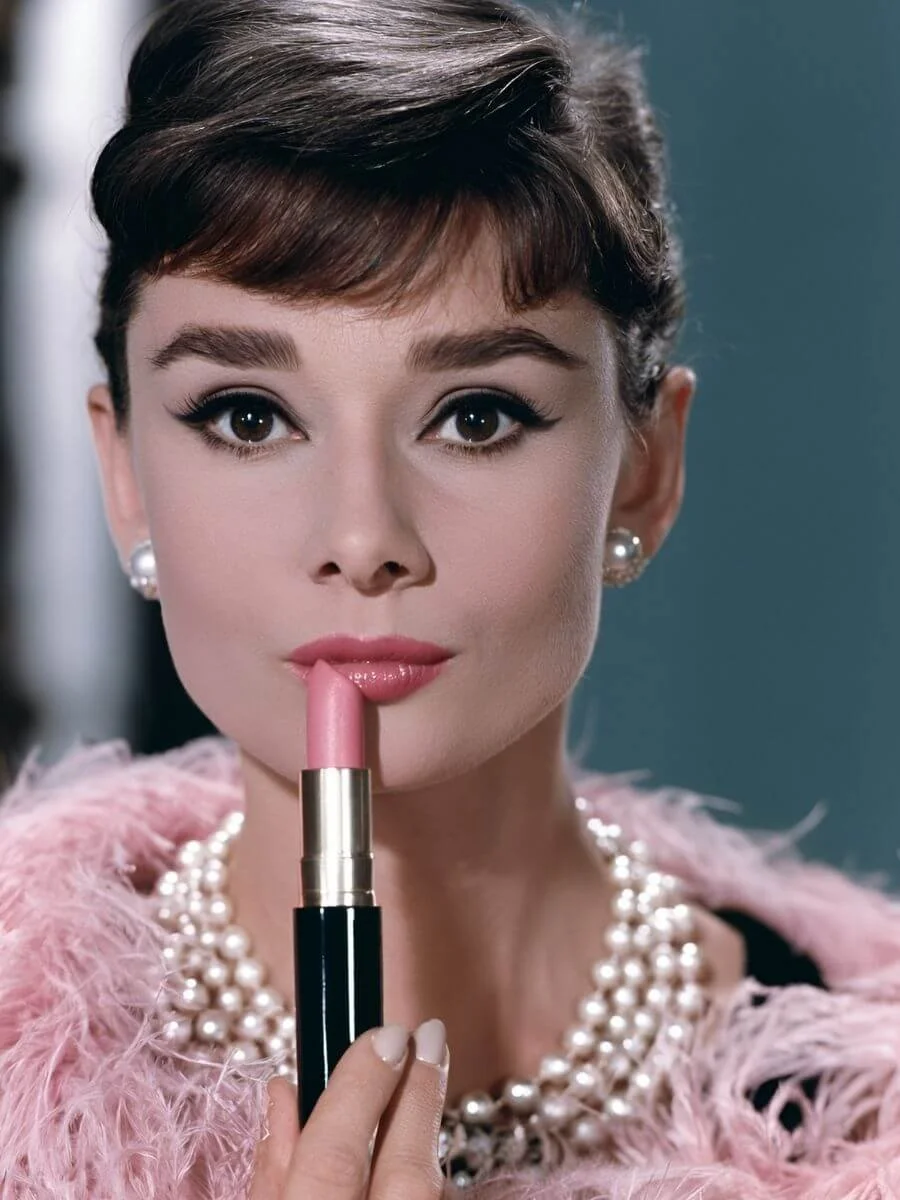
Ah.
Here we go.
This question has followed Audrey around the internet for years.
Search for Holly Golightly’s lipstick and you will find extremely confident answers naming exact brands and shades.
The problem is that the exact lipstick used on Audrey in Breakfast at Tiffany’s has not been conclusively documented in a way that allows us to state a particular modern internet favorite as fact.
One shade frequently connected with the film is Revlon’s Pink in the Afternoon.
Audrey did have a later relationship with Revlon, and the shade has been associated with her in advertising.
That does not establish that it was the lipstick she wore as Holly Golightly in a movie released in 1961.
So what can we say?
Look at the film and photographs and you can certainly appreciate the color family: warm pinks, coral-pinks and salmon tones suited Audrey beautifully.
But if someone tells you with absolute certainty that they have uncovered Holly Golightly’s exact lipstick simply because the same answer has appeared on hundreds of websites, keep one eyebrow raised.
Preferably an Audrey-sized eyebrow.
There Are Quite a Few Audrey Hepburn Beauty “Facts” That Aren’t So Simple
Audrey has been gone for decades, but the internet continues building her beauty routine for her.
A yogurt facial is repeated in one place.
A particular sunscreen habit appears in another.
An exact lipstick becomes unquestioned fact.
A dramatic story about how every individual eyelash was separated gets passed around until one version becomes the official version.
A quotation gets repeated so many times that nobody asks where she originally said it.
This does not mean every old Audrey beauty story is false.
It means a repeated story and a documented fact are not the same thing.
And I would rather tell you, “We don't know,” than turn a pretty rumor into Audrey's official morning skincare routine.
There is already plenty about her beauty that we do know.
And frankly, the documented Audrey is more interesting.
Audrey’s Real Beauty Signature Was Knowing What to Emphasize
When you pull everything together, Audrey Hepburn’s beauty does not look like a collection of secret products.
It looks like a point of view.
She had powerful brows, so they were allowed to remain powerful.
She had remarkable eyes, so her makeup concentrated there.
Her everyday complexion could remain relatively bare.
Her professional makeup artist used technique and proportion rather than simply following fashion.
When styling damaged her hair, she sought someone who understood hair and had the problem treated.
And her fragrance became so personal that it began as something created specifically for her.
There is restraint running through all of it.
Not carelessness.
Not neglect.
Restraint.
Those are very different things.
Audrey’s beauty looked simple because there was a clear sense of what mattered and what did not.
What Can We Actually Borrow From Audrey Hepburn’s Beauty Routine?
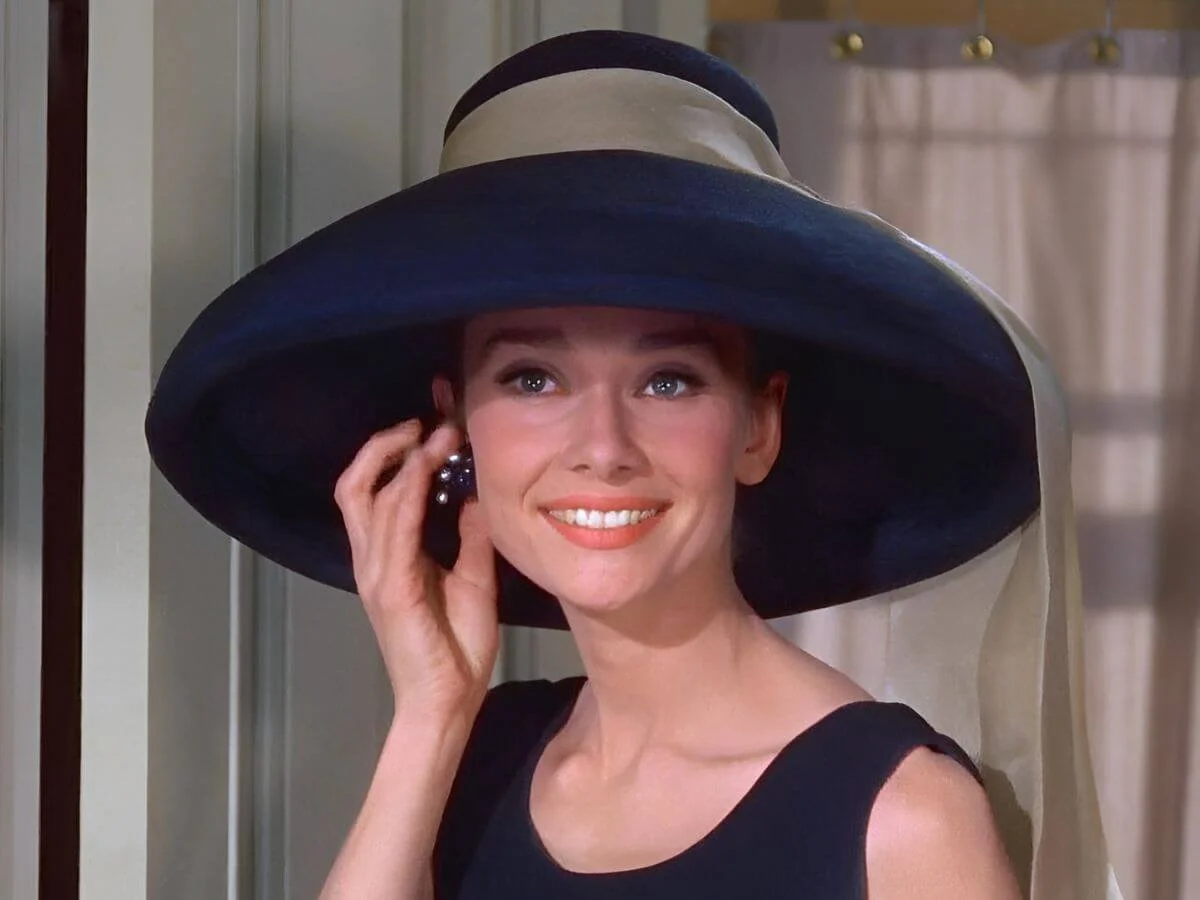
We do not need to reproduce a 1950s face exactly to borrow something useful from Audrey.
Start with your own features rather than somebody else’s.
If your brows are naturally beautiful, perhaps you do not need to reshape them every time eyebrow fashion changes.
If your eyes are your favorite feature, let them be the focus and quiet everything else down.
If you like your skin without foundation, wearing foundation is not a requirement for looking “finished.”
Take your makeup off before bed.
Pay attention when repeated heat or styling starts damaging your hair.
And perhaps give yourself permission to have a beauty signature.
Audrey had hers.
You knew those brows belonged to her.
You knew that little flick of liner.
You knew the hair.
You knew the silhouette.
Beauty was not coming from having every possible thing.
It was coming from knowing which things were hers.
And that may be why Audrey Hepburn’s beauty still feels so fresh all these years later.
Before You Leave the Parlor…
Now I want to hear from you, Parlorlettes.
Which part of Audrey Hepburn’s beauty would you borrow for yourself?
Would it be her strong brows, feline eyeliner, separated lashes, very pale pink lip, polished pixie—or would you skip the makeup altogether and head straight to the perfume counter for L’Interdit?
Stop by The Parlor Guest Book and tell us.
And if you love peeking behind the dressing-room door at the real beauty routines, products and techniques behind Old Hollywood’s most memorable faces, there is plenty more waiting for you here in The Beauty Room.
We love knowing who stopped by. 💕
Frequently Asked Questions
What makeup did Audrey Hepburn wear?
Audrey Hepburn’s professional makeup could involve carefully prepared skin, complexion products, powder, defined brows, black eyeliner, mascara and lip color. Her personal routine was much simpler. In an early-1970s interview, Audrey described using black liner and mascara, dark-brown eyebrow pencil and very pale pink lipstick, while generally skipping foundation.
Did Audrey Hepburn wear foundation every day?
No. Audrey said that in her personal life she preferred an unmade-up appearance and did not normally wear foundation. That should be distinguished from the more detailed complexion makeup created for film, photography and public appearances.
Who was Audrey Hepburn’s makeup artist?
Alberto de Rossi was one of Audrey Hepburn’s important longtime makeup artists. His documented approach focused on studying the structure of the face and using makeup to enhance its natural proportions rather than simply following trends.
How did Audrey Hepburn get her famous eye makeup?
Her signature eye look relied on black liner, mascara, strong brows and carefully separated lashes. The liner extended outward to emphasize the shape of her eyes while the separated lashes created definition without an overly clumpy appearance.
What lipstick did Audrey Hepburn wear in Breakfast at Tiffany’s?
The exact lipstick Audrey wore as Holly Golightly has not been conclusively established. Revlon Pink in the Afternoon is frequently mentioned online, but its connection to the actual 1961 film has not been proven. Audrey later had a relationship with Revlon, which likely contributed to the confusion.
What perfume was created for Audrey Hepburn?
Givenchy L’Interdit was created especially for Audrey Hepburn by the House of Givenchy. The fragrance was later released publicly in 1957 and became Givenchy’s first perfume.
Is modern Givenchy L’Interdit the same perfume Audrey Hepburn wore?
Not exactly. Today's L’Interdit belongs to the historic fragrance line but is a modern reinterpretation. It should not be assumed to have the identical formula Audrey wore in the 1950s.
What hair treatment was created for Audrey Hepburn?
Philip Kingsley Elasticizer was developed for Audrey Hepburn in 1974 after years of professional heat styling had left her hair dry and damaged. It was created as a pre-shampoo conditioning treatment so her fine hair could receive moisture without being left heavy and flat.
Did Audrey Hepburn do her own hair?
Audrey said that salons made her restless and that she generally washed her own hair every four or five days. Her film hairstyles, of course, were often professionally created, but her everyday hair care was considerably less elaborate.
What was Audrey Hepburn’s skincare routine?
There is no publicly documented step-by-step Audrey Hepburn skincare prescription comparable to the surviving prescription we have for Marilyn Monroe. Audrey is associated with dermatologist Erno Laszlo and spoke about being careful to remove her makeup, but many detailed “Audrey skincare routines” repeated online include claims that are difficult to verify. It is more accurate to stick with the habits we can document rather than invent a complete routine.
