
Beauty trends may move at lightning speed, but beauty habits? Those have a funny way of circling right back around.
Spend enough time looking through old beauty books, vintage magazines, Hollywood photographs, or the beauty advice our mothers and grandmothers followed, and you start noticing something interesting. Many of the practices being marketed today as the newest skincare, haircare, and makeup discoveries are not particularly new at all.
Cold cream cleansing? Generations of women did it.
Heatless curls? They were wrapping, rolling, pinning, and setting hair long before anyone filmed a tutorial.
Petroleum jelly for dry skin? A bathroom-cabinet staple for more than a century.
Blotting lipstick between layers? Old-school makeup artists knew exactly what they were doing.
Of course, vintage beauty advice was not always brilliant. Some old remedies belong firmly in the past. Lemon juice on the face, harsh baking soda scrubs, excessive sun exposure, dangerous skin-lightening ingredients, and other questionable practices remind us that old does not automatically mean better.
But some vintage beauty tricks have survived for a reason.
They are simple.
They are inexpensive.
And most importantly, they actually work.
So pull up a chair because we are opening the vintage beauty cabinet and separating the genuinely useful tricks from the beauty folklore. Here are the vintage beauty hacks that still deserve a place in a modern routine.
Why Are Vintage Beauty Hacks Becoming Popular Again?

There is something appealing about beauty advice that does not require seventeen products, three electronic devices, and a spreadsheet to remember what goes on your face Tuesday night.
Modern beauty routines can be wonderful, particularly when advances in cosmetic chemistry give us ingredients and formulations that simply did not exist decades ago. But many women are also becoming interested in simpler beauty rituals.
That is where vintage beauty habits suddenly feel surprisingly relevant.
Women in previous generations often had fewer products available, which meant they learned how to get more from what they had. A jar of cream might cleanse, soften, remove makeup, and protect dry skin. Hair could be styled overnight rather than subjected to daily heat. Makeup techniques focused heavily on placement, layering, and finishing rather than buying another product every time something did not look quite right.
The best vintage beauty tricks were often less about having more and more about knowing how to use what you already had.
That is a beauty philosophy worth bringing back.
1. Cold Cream Cleansing Still Works Beautifully for Removing Makeup

Before cleansing balms and cleansing oils filled beauty shelves, there was cold cream.
Cold creams became enormously popular because they could dissolve makeup, loosen grime, and leave the skin feeling softer rather than stripped. Women massaged the cream onto their faces and then removed it with a soft cloth or tissue.
Sound familiar?
It should.
The basic idea is remarkably similar to modern oil cleansing and cleansing balms.
Makeup—particularly long-wearing foundation, lipstick, sunscreen, and other oil-soluble products—can be broken down effectively by oily or emollient cleansers. Instead of relying solely on a foaming cleanser to attack everything at once, an oil-rich product helps loosen cosmetics before they are wiped or rinsed away.
That is why cold cream still works.
Modern versions are generally more sophisticated than formulas from decades ago, but the underlying beauty principle remains useful.
If you wear a full face of makeup, you can massage cold cream over dry skin, gently remove it with a damp cloth, and follow with your usual facial cleanser if you prefer a double cleanse.
The trick is not scrubbing.
Let the cream do the work.
Old Hollywood had plenty of elaborate beauty secrets, but sometimes the most effective one was simply getting every last bit of makeup off before bed.
2. Petroleum Jelly Is Still One of the Best Dry-Skin Helpers Around

Few beauty products have managed to remain bathroom-cabinet regulars for generations quite like petroleum jelly.
It is not glamorous.
It does not arrive in a jewel-toned serum bottle with an exotic botanical story.
But when used appropriately, it does its job extremely well.
Petroleum jelly is an occlusive, meaning it creates a protective layer over the skin that helps reduce water loss. That makes it especially useful for dry lips, rough elbows, cracked heels, dry cuticles, and areas of skin that need extra protection.
One of the best ways to use this old-fashioned beauty staple is to apply moisturizer first and then smooth a very thin layer of petroleum jelly over particularly dry areas.
The moisturizer provides hydration and emollience.
The petroleum jelly helps seal that moisture in.
Today, people often call applying an occlusive layer over skincare “slugging,” but grandmothers everywhere could probably make a convincing argument that beauty enthusiasts simply gave an old trick a new name.
That does not mean everyone needs to cover their entire face in petroleum jelly. People who are acne-prone, sensitive to heavier textures, or using certain strong skincare products may prefer targeted application.
For lips and stubborn dry patches, however, this vintage standby is still difficult to beat.
3. A Damp Washcloth Really Can Improve Your Cleansing Routine

Sometimes the least glamorous beauty tools are the most useful.
Enter the humble soft washcloth.
For generations, women used warm washcloths to remove cold cream, cleanse the face, and gently lift away loosened makeup and dead surface skin.
There is a reason this still feels so satisfying.
A soft, damp cloth provides a small amount of physical exfoliation while helping remove cleanser and residue. Used gently, it can leave skin feeling remarkably smooth without requiring a separate scrub.
The important word here is gently.
A washcloth should not become sandpaper.
Use lukewarm rather than scalding water, choose a soft cloth, and glide it over the skin rather than aggressively rubbing.
And please use a clean one.
The vintage beauty ritual may be charming. Reusing a damp washcloth that has been sitting around the bathroom for four days is considerably less charming.
4. Blotting Lipstick Between Layers Really Does Make It Last Longer

If you have ever watched an old film and wondered how those perfectly painted lips survived for more than five minutes, part of the answer lies in technique.
Vintage makeup application frequently involved layering and blotting lipstick.
Instead of applying one thick coat and hoping for the best, lipstick was applied, blotted, and then reapplied.
It is still an excellent technique.
The first layer deposits pigment. Blotting removes excess oils and product sitting loosely on the surface of the lips. A second thin layer adds color back without creating one heavy, slippery coat.
The result is often a lip color that wears more evenly and feels less likely to slide around.
For even more longevity, you can lightly line and fill the lips with pencil before applying lipstick.
Then:
Apply a thin coat of lipstick.
Blot gently with tissue.
Apply another thin coat.
Blot again if needed.
You do not need six layers.
The point is thin layers and controlled application.
Sometimes the difference between makeup that disappears by lunchtime and makeup that hangs around is not the lipstick. It is how you applied it.
5. Powdering Strategically Instead of Everywhere Creates Better-Looking Skin

Vintage makeup could certainly involve powder—and sometimes quite a lot of it—but professional makeup artists also understood the importance of controlling where shine appeared on the face.
That lesson still works.
Applying powder heavily across every inch of the complexion can flatten the skin, exaggerate texture, and remove the natural dimension that makes a face look alive.
A better approach is strategic powdering.
Concentrate translucent powder where makeup tends to move or where unwanted shine appears, such as:
Around the sides of the nose
Across the center of the forehead
On the chin
Beneath the eyes when necessary
Around areas where concealer creases
Leave areas such as the upper cheekbones slightly more natural if you enjoy a softer glow.
This is particularly useful for mature or dry skin, where excessive powder can emphasize fine lines.
Vintage glamour was never simply about piling products onto the face. The best makeup artists understood light, shadow, texture, and placement.
That part of the lesson has aged beautifully.
6. Pin Curls Are Still One of the Best Heatless Curling Methods

Before curling irons became everyday styling tools, women became remarkably good at creating curls without plugging anything into a wall.
One of the most iconic methods was the pin curl.
Sections of slightly damp hair were wrapped into curls, flattened against the head, secured with clips or pins, and allowed to dry completely. When released and brushed through, they created anything from soft waves to structured curls depending on the size and placement of the sections.
Pin curls are still useful because hair can change shape as it dries.
That makes them an excellent option for anyone trying to reduce frequent heat styling.
The secret is patience.
If you unravel pin curls while the hair is still damp, the curl may collapse almost immediately.
For the best results:
Start with slightly damp rather than soaking-wet hair.
Use smaller sections for stronger curls.
Make sure the hair dries completely.
Allow the curls to settle before brushing them out.
Brush or finger-style depending on the finish you want.
You may not wake up looking exactly like Rita Hayworth—and frankly, that seems like an unreasonable amount of pressure before coffee—but you can absolutely create beautiful heatless waves.
7. Setting Hair at Night Can Reduce Daily Heat Damage

Vintage beauty routines often required preparation.
Hair was rolled, wrapped, braided, or pinned before bed so that the next day's style was already underway.
It is a habit modern haircare could borrow more often.
Repeated use of very hot styling tools can contribute to dryness and breakage. Using overnight styling methods periodically can reduce the amount of direct heat hair receives.
Depending on your hair texture and desired result, that might mean:
Pin curls
Foam rollers
Flexi rods
Braids
Twists
Hair wrapping
Heatless curling bands
The method may have changed, but the principle has not.
Style while you sleep and do less in the morning.
Women have been chasing that dream for a very long time.
8. Satin and Silk Really Can Be Kinder to Hair

Sleeping in hair wraps and scarves has a long beauty history, particularly among women protecting styled, textured, or processed hair.
Today, satin pillowcases and silk accessories are often marketed as luxury beauty products, but the practical idea behind them is straightforward.
Smooth fabrics create less friction against hair than rougher materials.
Less friction can mean less tangling, snagging, frizz, and disruption of carefully styled hair.
For curly, coily, fragile, color-treated, relaxed, or otherwise breakage-prone hair, reducing unnecessary friction at night can make a noticeable difference.
And no, you do not necessarily need to spend a small fortune on a pillowcase.
A well-made satin bonnet, scarf, or pillowcase can accomplish the same basic goal: keeping the hair from rubbing repeatedly against a rough surface for six or eight hours.
Some vintage habits survive because they were based on simple observation.
Women noticed their hair stayed nicer when it was protected at night.
They were right.
9. Oatmeal Is Still Wonderful for Soothing Dry, Uncomfortable Skin
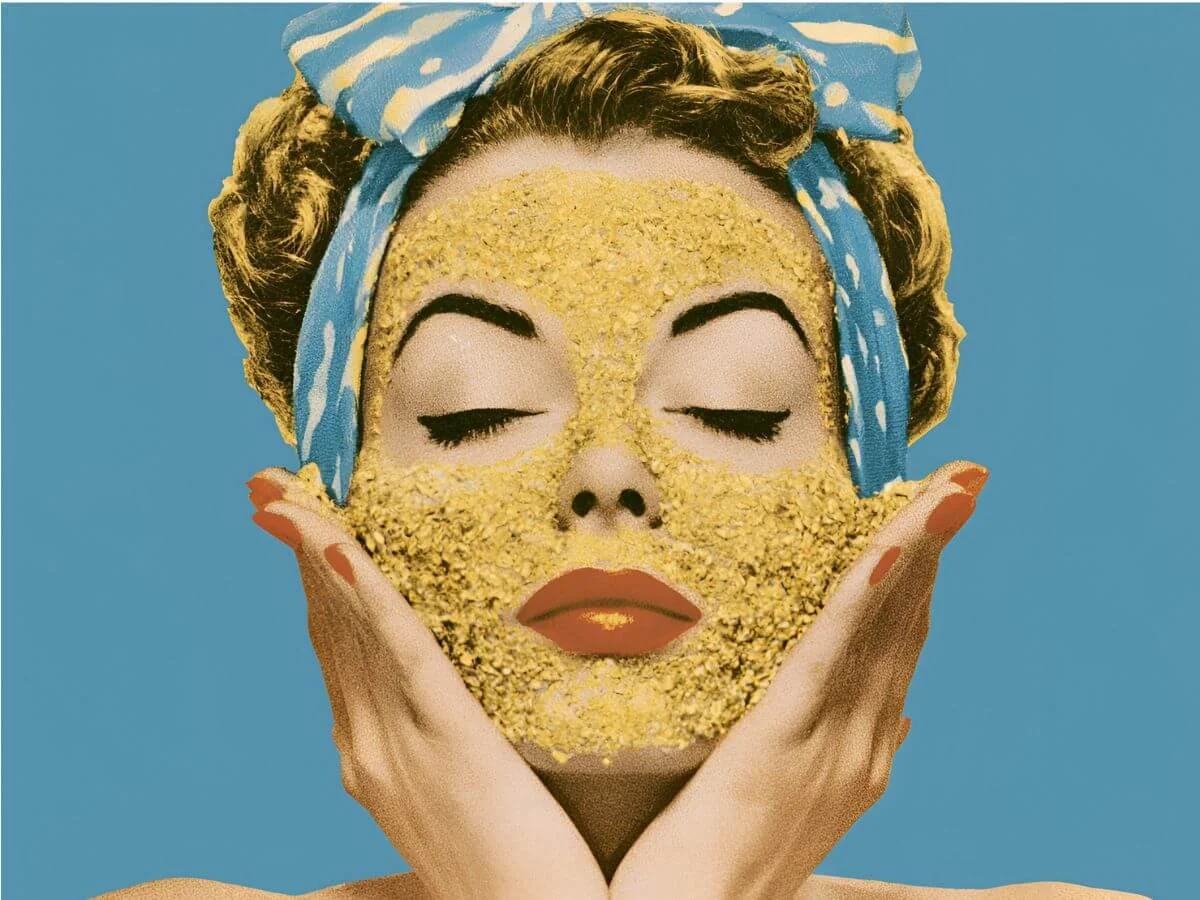
Oat-based baths and skin remedies sound like something straight out of an old household beauty book, yet oatmeal remains a respected ingredient in modern skincare.
More specifically, colloidal oatmeal is widely used in products designed for dry, irritated, and sensitive skin.
Finely ground oatmeal can help soothe the skin and support its protective barrier, which explains why oatmeal appears in everything from bath treatments to body lotions.
For a modern version of the vintage oatmeal bath, the safest and easiest option is using a properly formulated colloidal oatmeal bath product or finely milled oatmeal intended for skincare.
And while throwing breakfast oats into bathwater may sound delightfully cottage-core, large oat flakes floating around the tub can become considerably less romantic when you are trying to clean the drain afterward.
The old idea was solid.
Modern formulation simply makes it easier.
10. Chilled Compresses Can Temporarily Reduce Puffiness

Cold spoons under the eyes may be one of the most famous old-fashioned beauty tricks.
And there is a little truth behind it.
Cool temperatures can temporarily constrict blood vessels and help reduce the appearance of mild puffiness.
That is why chilled eye masks, cooling rollers, gel patches, and refrigerated skincare tools remain popular.
You do not need anything elaborate.
A clean, cool washcloth can work perfectly well.
The key is cool—not painfully frozen.
Extreme cold can irritate or damage delicate skin. There is no beauty prize for seeing how long you can hold something straight from the freezer beneath your eyes.
Think gentle cooling rather than cryogenic facial experiment.
It will not permanently erase under-eye bags or treat every cause of swelling, but for the occasional puffy morning, this vintage trick can make the eye area look a little more refreshed.
11. Facial Massage Still Has a Place in a Modern Beauty Routine

Women have massaged creams and oils into their faces for generations.
Today the practice appears under dozens of names involving rollers, sculpting tools, lymphatic techniques, and elaborate massage routines.
But you do not necessarily need a special tool.
Your hands work rather well.
Gentle facial massage can help spread skincare products evenly and may temporarily create a more refreshed appearance by encouraging circulation and reducing minor fluid buildup.
The important thing is to use enough slip so you are not dragging dry skin.
Apply a moisturizer, cream, balm, or facial oil appropriate for your skin and use light, controlled pressure.
More pressure does not equal better results.
Your face does not need to be kneaded like bread dough.
Think of facial massage as a relaxing skincare ritual rather than a permanent face-lifting procedure.
It can feel wonderful.
It may temporarily improve puffiness.
It can make your nighttime routine feel more intentional.
Those are perfectly good reasons to keep doing it.
12. Brushing Brows Into Place Before Filling Them Gives a More Natural Result

Long before brow gels, lamination kits, precision pens, and micro-fine pencils, women were grooming their eyebrows with brushes.
That simple first step remains one of the best ways to improve brow makeup.
Brush the hairs into their natural direction before adding product.
Once the brow is arranged, you can see where genuine gaps exist rather than automatically drawing over the entire shape.
This usually requires less pencil or powder and produces a softer result.
For a polished brow:
Brush hairs upward and outward.
Identify sparse areas.
Add small, hair-like strokes only where necessary.
Brush through again to soften the product.
It is simple, but it makes a noticeable difference.
One of the smartest lessons we can borrow from classic beauty is that grooming often matters more than adding more makeup.
13. Using Cream Blush for a Natural Flush Is Hardly a New Idea

Cream rouge has been around for generations.
And if you love the modern “skin-like” makeup trend, congratulations—you are participating in a beauty tradition that is much older than social media.
Cream blush melts into the complexion differently from many powders. Applied lightly and blended thoroughly, it can create the appearance of color coming through the skin rather than sitting visibly on top of it.
For a natural effect, tap a small amount over the apples or upper portions of the cheeks and blend the edges carefully.
You can use a brush, sponge, or clean fingers depending on the formula.
The most important trick is starting with less product than you think you need.
You can always add more.
Removing a bright circle of rouge after becoming unexpectedly enthusiastic is a more complicated operation.
14. A Soft Lip Pencil Can Change the Shape of the Mouth Without Looking Obvious

Old Hollywood makeup artists understood illusion extraordinarily well.
One of their favorite tools was lip liner.
Strategic lip lining could make the mouth appear fuller, more symmetrical, or more defined without relying on dramatic cosmetic procedures.
That technique is still extremely effective when done subtly.
Instead of drawing far outside the entire mouth, concentrate any overlining around areas where it looks believable—often near the cupid's bow or center of the lower lip.
Then follow the natural lip line toward the corners.
You can also use pencil to correct slight asymmetry before applying lipstick.
The trick is keeping everything softly blended.
Good lip liner should support the lipstick, not announce itself from across the room.
Vintage makeup artists knew that the most impressive illusions were often the ones nobody noticed.
15. Hand Cream Before Bed Is Still an Underrated Beauty Ritual

There is something wonderfully old-fashioned about keeping a jar or tube of hand cream beside the bed.
It also happens to be practical.
Hands are constantly exposed to washing, cleaning products, weather, and everyday friction. Applying a richer moisturizer at night gives the product uninterrupted time to sit on the skin.
Pay special attention to:
Knuckles
Cuticles
Fingertips
Dry patches around the nails
If your hands are extremely dry, an occlusive ointment can be used over moisturizer on particularly rough areas.
Cotton gloves were once commonly recommended as an overnight beauty treatment, and they can still be useful when you want to keep a heavy hand cream from transferring onto bedding.
It is not glamorous.
It is effective.
A surprising number of good beauty habits fall into both categories.
16. Leaving Your Face Alone Can Sometimes Be the Best Beauty Hack of All

Here is one old beauty lesson that deserves considerably more attention in the age of aggressive exfoliation: you do not need to constantly attack your skin.
Women certainly experimented with questionable beauty remedies in earlier eras, but many traditional routines were remarkably simple.
Cleanse.
Moisturize.
Protect.
Repeat.
Modern skincare has given us wonderful ingredients such as retinoids, vitamin C, exfoliating acids, ceramides, and sophisticated sunscreens. The problem begins when we assume using all of them as often as possible must produce even better results.
Skin can become irritated when too many active products are layered together or used too frequently.
Sometimes the fix is not another serum.
Sometimes the fix is doing less.
A gentle cleanser, moisturizer, and broad-spectrum sunscreen can form a perfectly respectable foundation for a skincare routine. Treatments can then be added according to actual needs rather than because another product went viral.
Vintage beauty was not always scientifically advanced, but the simplicity of older routines can be a useful reminder that healthy skin does not need constant interference.
Vintage Beauty Hacks We Should Definitely Leave in the Past
Now we need to have a little talk about the other side of vintage beauty.
Because not every trick deserves a comeback.
Some historical beauty practices were ineffective. Others were irritating. And a few were downright dangerous.
Among the old beauty remedies best left in the archives are undiluted lemon juice on the face, harsh baking soda treatments, excessive tanning, abrasive scrubbing, toothpaste as an acne treatment, and questionable bleaching or lightening preparations.
Historical cosmetics could also contain substances we now know were unsafe.
So while it is fun to explore vintage beauty culture, never assume something is safe simply because women used it for generations.
Our grandmothers were clever.
They were also working with the information available to them at the time.
We get to keep the brilliant parts and politely decline the rest.
What Vintage Beauty Can Teach Us About Modern Routines
Perhaps the most useful thing about revisiting vintage beauty is not discovering one miraculous forgotten trick.
It is noticing how women approached beauty when fewer products were available.
They learned techniques.
They protected hairstyles instead of completely redoing them each day.
They removed makeup carefully.
They moisturized dry areas consistently.
They understood that applying cosmetics properly could matter just as much as buying them.
And many beauty rituals were exactly that—rituals.
You sat at the vanity.
You brushed your hair.
You removed your makeup.
You applied your cream.
You prepared for bed.
There is something appealing about that slower approach in a beauty culture constantly encouraging us to purchase the next thing.
Modern cosmetic science has given us safer ingredients, better sunscreens, sophisticated formulations, and treatments previous generations could only have dreamed about.
We do not need to give those things up.
But we can pair them with the best lessons from the past: consistency, simplicity, thoughtful technique, and knowing when enough is enough.
The Best Vintage Beauty Secrets Never Really Disappeared

Beauty trends may change, packaging may become prettier, and old techniques may return with new names, but the fundamentals of good beauty care are surprisingly stubborn.
Cold cream still removes makeup. Petroleum jelly still protects dry skin. Pin curls still create heatless waves.
Satin still reduces friction. Oatmeal can still soothe dry skin. Strategic powder, properly layered lipstick, gentle massage, and consistent moisturizing still work because the basic principles behind them have not changed.
The real secret is knowing which vintage beauty hacks deserve another turn at the vanity and which ones belong permanently in the history books.
We can enjoy the glamour, borrow the clever techniques, leave the questionable remedies behind, and create a routine that blends the very best of beauty then and beauty now.
Before You Leave the Parlor…
Don’t slip out without signing the guest book — leave us a little note in the comments below.
Tell us which vintage beauty hack you still use — or which one you’re tempted to bring back.
Did this post make you look at cold cream, pin curls, petroleum jelly, satin scarves, or old-school makeup tricks a little differently?
And if your mother, grandmother, or auntie had a beauty trick she swore by, tell us what it was.
We love knowing who stopped by. 💕
Frequently Asked Questions
Do vintage beauty hacks really work?
Some absolutely do. Many vintage beauty techniques—such as cold cream cleansing, moisturizing dry skin with an occlusive like petroleum jelly, heatless curling, protecting hair with satin, and layering lipstick—work because the basic beauty principles behind them are still sound.
However, not every old beauty remedy is safe or effective, so vintage advice should still be judged using what we know about skincare and haircare today.
What is the best vintage beauty hack for dry skin?
One of the simplest is applying a moisturizer and then using a thin layer of petroleum jelly over especially dry areas to help reduce moisture loss.
It can be particularly useful on dry lips, cuticles, elbows, and heels.
Does cold cream still work for removing makeup?
Yes. Cold cream contains emollient ingredients that can help loosen makeup, sunscreen, and surface buildup.
Massage it gently onto dry skin, remove it with a soft damp cloth, and follow with your regular cleanser if you prefer to double cleanse.
Are vintage heatless curls better for your hair than a curling iron?
They can be gentler because they allow you to create curls and waves without repeatedly exposing your hair to high temperatures.
Pin curls, rollers, braids, twists, and other overnight styling methods can be especially useful when you are trying to reduce heat styling.
Which vintage beauty hacks should I avoid?
Skip harsh or potentially irritating remedies such as lemon juice on the face, baking soda scrubs, toothpaste on pimples, excessive tanning, and questionable skin-lightening preparations.
Vintage beauty can be fun to explore, but an old remedy is not automatically a safe one.
