
You've probably heard that applying body lotion before perfume can help your favorite fragrance last longer. But does moisturized skin really hold fragrance better than dry skin? Here's what recent scientific research reveals—and how to make this simple beauty habit work for you.
You step out of the shower, smooth on your favorite body lotion, and reach for that beautiful bottle of perfume sitting on your dressing table.
Perhaps it's a romantic rose fragrance, a creamy vanilla with a touch of amber, or a delicate floral that makes you feel instantly put together.
You give yourself a few spritzes and head off to enjoy your day.
But you've probably heard someone say that you should always moisturize before applying perfume because the fragrance will last much longer.
It sounds like perfectly sensible beauty advice.
After all, if moisturizer helps your skin retain moisture, perhaps it can help your skin hold onto perfume, too.
But is there actually any science behind this familiar fragrance tip?
The answer is encouraging, although there's an important distinction worth understanding.
Yes, moisturized skin may help certain fragrance materials remain on your skin longer. Research published in 2025 found that skin hydration influences how some fragrance molecules evaporate. However, scientists have not established that applying body lotion before perfume will make every fragrance last longer.
And that's an important difference.
Let's explore what the research actually tells us, how moisturizers may influence fragrance wear, and whether adding this simple step to your beauty routine is worthwhile.
What Does Science Say About Moisturized Skin and Perfume?
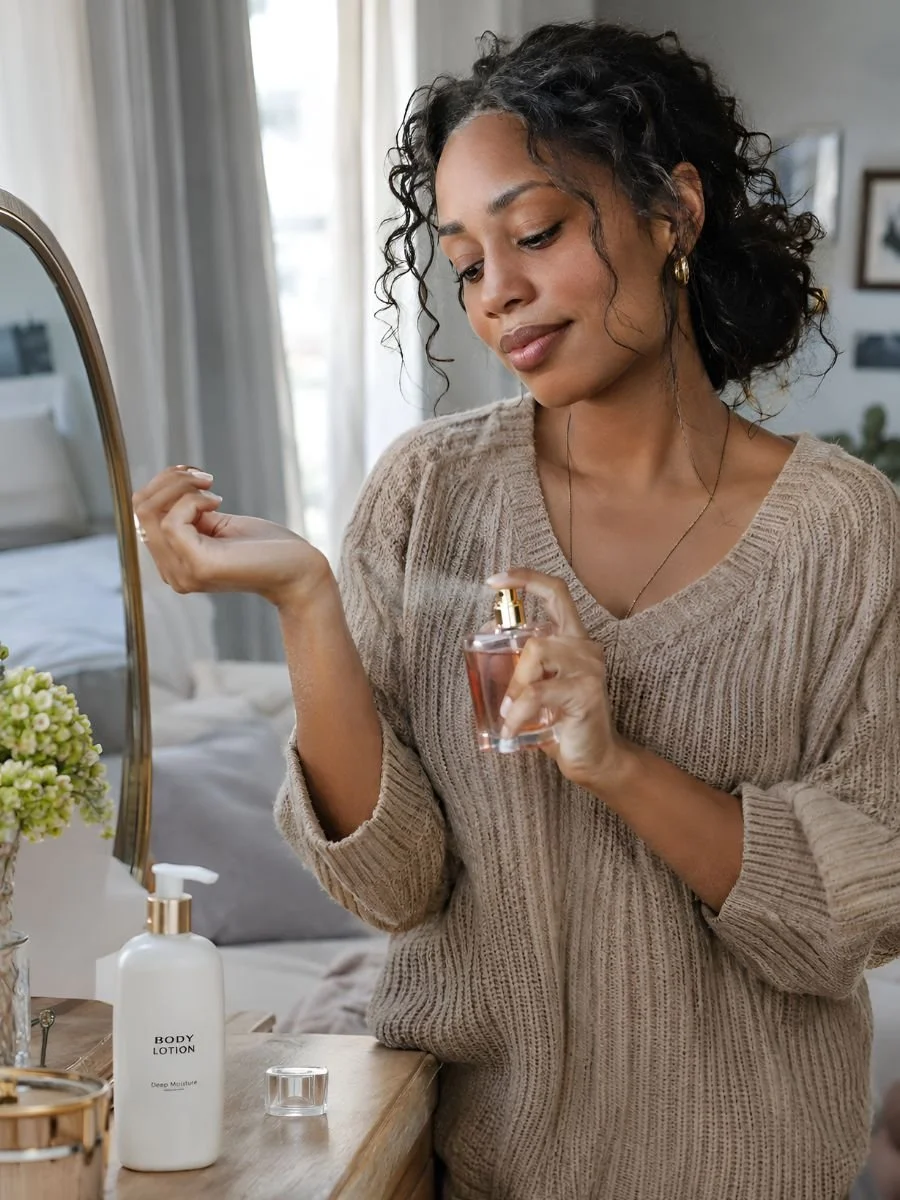
For years, beauty advice has suggested that perfume lasts longer on moisturized skin.
The explanation usually sounds something like this: dry skin allows fragrance to disappear more quickly, while moisturized skin helps the scent linger.
But scientists have only recently begun investigating some of the specific interactions between fragrance molecules and human skin.
1. A 2025 Study Found That Skin Hydration Influences Fragrance Evaporation
One of the most relevant studies was published in June 2025 in the International Journal of Cosmetic Science.
Researchers at the University of Le Havre Normandy in France investigated how fragrance molecules evaporated from the skin of ten volunteers.
The study, titled Exploring the Impact of Fragrance Molecular and Skin Properties on the Evaporation Profile of Fragrances, examined a mixture of eight fragrance molecules applied to participants' forearms.
The researchers measured several skin characteristics, including:
Skin hydration
Surface roughness
Transepidermal water loss
Skin temperature
Sebum levels
Skin pH
They then examined how those characteristics related to the evaporation of individual fragrance molecules.
Skin hydration emerged as one of the most influential factors in their analysis.
The researchers observed that some less volatile fragrance molecules tended to evaporate less from more hydrated skin.
They also found that skin roughness and water loss influenced the behavior of certain fragrance materials.
However, the effects weren't identical for every molecule.
Some fragrance ingredients appeared more sensitive to hydration, while others were influenced by different skin characteristics.
The researchers concluded that skin properties can influence fragrance evaporation, but emphasized that their findings need confirmation in larger studies.
That's encouraging news for perfume lovers who already moisturize before applying fragrance.
But there's one detail we shouldn't overlook.
2. The Researchers Didn't Test Body Lotion Before Perfume
Although the 2025 study found a relationship between natural skin hydration and fragrance evaporation, it wasn't an experiment comparing perfume applied with and without moisturizer.
The researchers measured participants' existing skin characteristics.
They didn't apply body lotion to determine whether moisturizing immediately before perfume would increase its longevity.
So we can't use the study to claim that a particular cream or lotion will add two, four, or six extra hours to your fragrance.
We also can't assume that every perfume will respond the same way.
Still, the findings offer a scientific reason why skin hydration may be relevant to perfume performance.
The most accurate conclusion is that well-hydrated skin may favor the retention of certain fragrance materials, but the benefits of applying moisturizer before a finished perfume haven't been established for every formulation.
Why Might Moisturized Skin Hold Fragrance Differently?
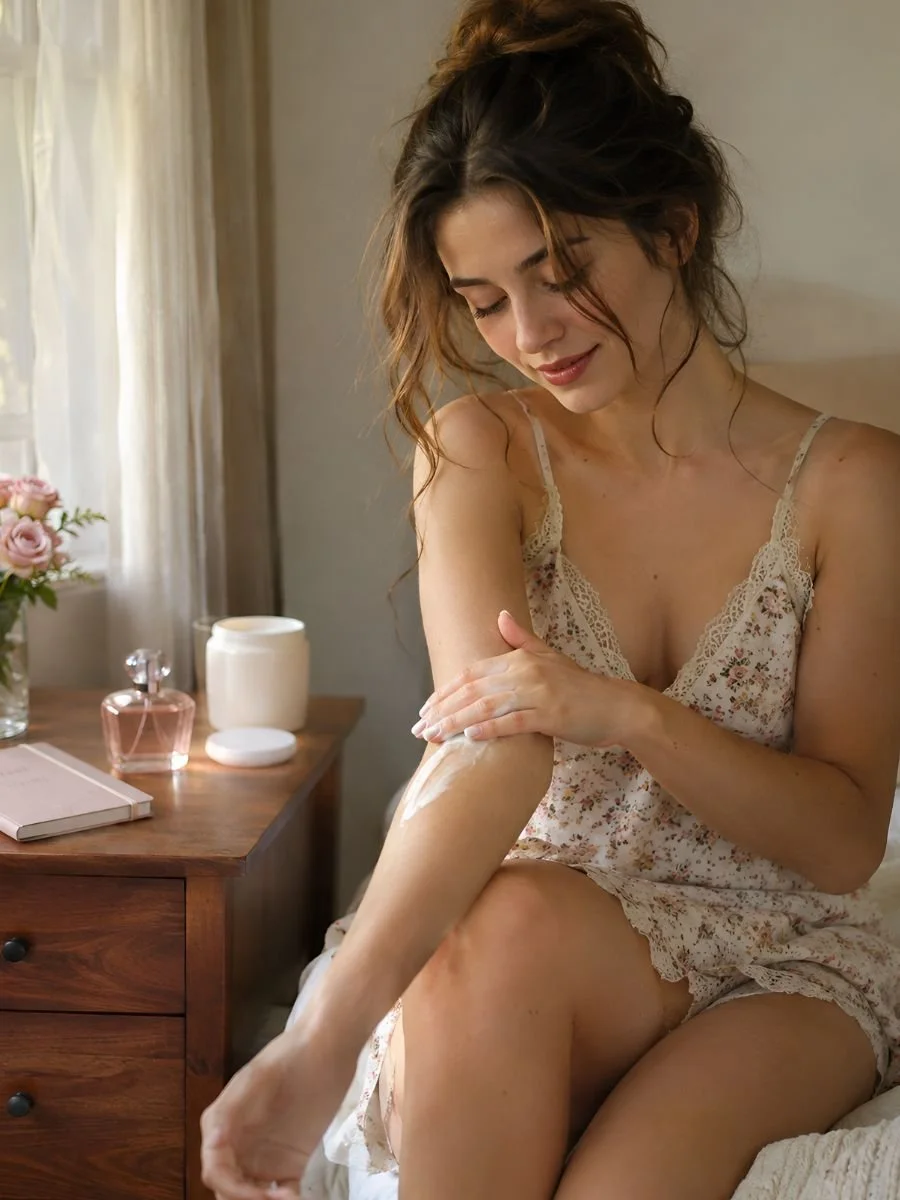
Now that we know hydration can influence fragrance evaporation, let's consider what happens when you moisturize your skin.
Your skin has a protective outer layer called the stratum corneum.
This layer helps regulate moisture and protect the body from the surrounding environment.
Its condition can influence how substances interact with the skin's surface.
3. Moisturizers Change the Condition of Your Skin's Surface
Moisturizers are designed to help skin retain water and reduce dryness.
They commonly contain ingredients that work in different ways.
Humectants, such as glycerin and hyaluronic acid, help attract or retain water.
Emollients help soften and smooth the skin.
Occlusive ingredients help reduce water loss by forming a protective layer over the skin.
A 2026 randomized study published in the International Journal of Cosmetic Science examined how different moisturizing routines influenced skin hydration and water loss.
The researchers studied 123 volunteers and found that a hyaluronic acid serum, a moisturizing cream, and a combined routine improved measured skin hydration shortly after application.
The combined routine provided the most sustained hydration benefit at the eight-hour measurement.
The study didn't involve perfume, so it doesn't establish that hydrated skin automatically provides longer fragrance wear.
What it does demonstrate is that moisturizing products can produce measurable changes in skin hydration.
And because the 2025 fragrance study identified hydration as a factor in evaporation, it's reasonable to investigate whether a moisturizer changes how a fragrance behaves.
But the effect may depend on both the moisturizer and the perfume.
A lightweight lotion, rich cream, and body oil don't necessarily leave the same type of film on your skin.
Different perfume ingredients may interact with those surfaces differently.
That's why there's no scientifically established moisturizer that will make every fragrance last longer.
Is Dry Skin the Reason Your Perfume Fades Quickly?
Perhaps you've noticed that your favorite perfume seems to disappear especially quickly during winter.
Your skin feels a little drier, you're using more body cream, and the fragrance doesn't seem quite as noticeable as it did during warmer months.
Could dry skin be contributing?
Possibly.
The 2025 research suggests that skin hydration and water loss can influence the evaporation of certain fragrance molecules.
But dry skin isn't automatically the explanation whenever a perfume fades quickly.
The fragrance's composition, its application area, environmental conditions, and your own smell sensitivity can also affect the experience.
And someone with naturally dry skin won't necessarily have shorter perfume longevity than every person with oilier skin.
What About Oily Skin?
You may have heard that oily skin holds perfume better because fragrance clings to natural skin oils.
Certain fragrance materials do interact with lipids, but that doesn't establish a universal rule about oily skin and perfume longevity.
In the 2025 fragrance evaporation study, sebum wasn't among the strongest factors identified in the researchers' analysis.
The forearm, where the testing was conducted, also naturally produces relatively little sebum compared with areas such as the face.
So the research doesn't justify claiming that oily skin will always hold perfume longer than dry skin.
The relationship between fragrance and skin is more complicated.
And that's why it's worth paying attention to how a particular perfume behaves on you rather than assuming your skin type determines everything.
What Kind of Moisturizer Should You Use Before Perfume?
If you'd like to try moisturizing before applying fragrance, you don't need a special product marketed as a perfume primer.
A comfortable body lotion or cream may be all you need.
The important thing is choosing something suitable for your skin.
4. A Fragrance-Free Body Lotion Is a Sensible Starting Point
If you want to enjoy your perfume without another fragrance competing with it, choose a moisturizer labeled fragrance-free.
This is especially helpful when you're trying a new perfume or want to appreciate its individual notes.
According to the American Academy of Dermatology, fragrance-free moisturizers are generally preferable for people with dry or sensitive skin.
There's also a distinction between fragrance-free and unscented.
An unscented product may contain ingredients that mask another odor, while a fragrance-free product is formulated without added fragrance intended to provide or disguise scent.
That's worth remembering if your skin is sensitive.
A fragrance-free moisturizer also makes it easier to compare your perfume's performance without adding another scented product to the routine.
5. What About Matching Scented Body Lotions?
There's something lovely about a fragrance collection that includes a matching body lotion.
Perhaps you adore a soft rose perfume and enjoy using the coordinating body cream.
Or maybe your favorite amber and vanilla fragrance has a beautifully scented lotion that makes the entire routine feel a little more luxurious.
Using both products can create a more continuous fragrance experience.
But it's important to distinguish layering from making the perfume itself last longer.
When you apply a scented body lotion and then spray perfume, you're introducing fragrance from two products.
The scent may remain noticeable longer because the lotion contributes its own aromatic materials.
That doesn't necessarily mean the moisturizer has slowed the evaporation of the perfume sprayed on top.
If you enjoy matching products and your skin tolerates them, there's nothing wrong with layering.
Just remember that additional fragranced products also increase your exposure to fragrance ingredients, which can cause irritation or allergic reactions in susceptible people.
How to Apply Moisturizer Before Perfume
Now for the practical part.
You don't need a complicated routine or a dressing table full of new products.
A few simple steps are enough to try this method.
6. Moisturize After Showering
The American Academy of Dermatology recommends applying moisturizer shortly after bathing while the skin is still slightly damp.
This helps reduce moisture loss and supports the skin's protective barrier.
After your shower, gently pat your skin dry rather than rubbing vigorously with a towel.
Apply your body lotion or cream while your skin still retains a little moisture.
You don't need to use an excessive amount.
Simply apply enough to leave your skin feeling comfortable.
7. Allow the Moisturizer to Absorb
Once you've applied your moisturizer, give it a little time to settle before reaching for your perfume.
There's no scientifically established waiting period that guarantees better fragrance longevity.
The idea is simply to avoid applying perfume onto a heavy, slippery layer of freshly applied product.
If your lotion leaves a noticeable film, allow it to settle until your skin feels comfortable.
Different moisturizers absorb differently, so use the way your skin feels as your guide.
Then apply your perfume as you normally would.
You don't need to increase the number of sprays or change every part of your fragrance routine.
8. Choose Application Areas That Suit Your Day
The wrists, neck, and inner elbows are popular places to apply perfume.
But if you're interested in longer wear, think about which areas are least likely to be washed or rubbed throughout the day.
For example, perfume applied to your wrists may be affected by frequent handwashing.
An area such as the inner elbows may be worth trying if it remains comfortable and isn't constantly exposed to friction.
Avoid spraying perfume onto irritated, broken, or inflamed skin.
And remember that warmth can make a fragrance more noticeable by encouraging evaporation, but it doesn't necessarily guarantee longer wear.
The best application area is one that works comfortably with your daily routine.
Does Petroleum Jelly Make Perfume Last Longer?
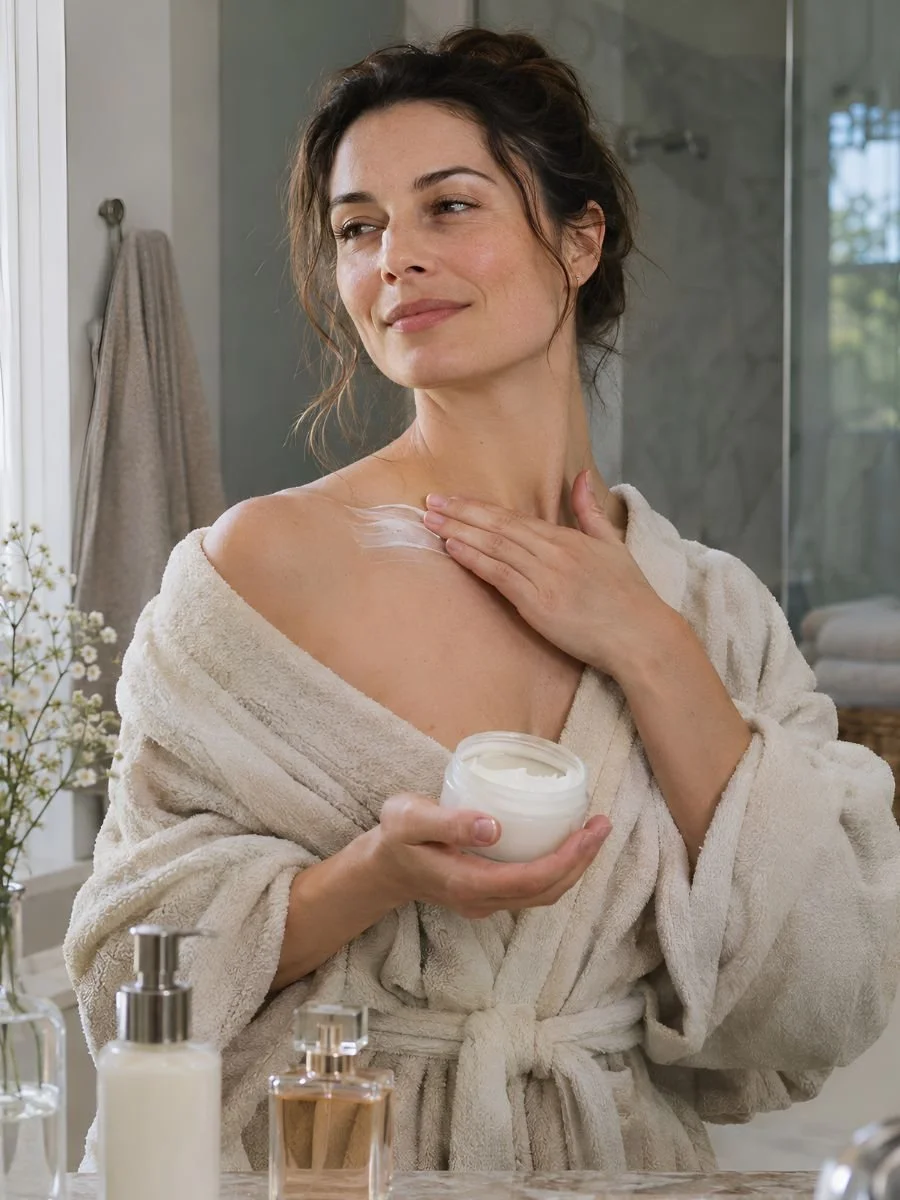
You've probably encountered this familiar beauty trick.
Apply a little petroleum jelly to your pulse points, spray perfume over it, and supposedly your fragrance will last much longer.
But does it really work?
Petroleum jelly is an occlusive product that helps reduce water loss from the skin.
That makes it useful in certain skincare routines.
However, there isn't strong direct evidence establishing that applying petroleum jelly before commercial perfume reliably increases its detectable longevity.
A thick layer could also change how fragrance materials are released from the skin, and not necessarily in the same way for every formula.
So while some people enjoy using this method, it shouldn't be presented as a scientifically proven perfume trick.
If you already use a suitable body moisturizer, there's no need to add petroleum jelly simply because you've heard that perfume needs something sticky to cling to.
And there's certainly no reason to cover your pulse points in thick layers of product.
A comfortable skincare routine is a much better starting point.
The Parlor Notes: Does Moisturizing Make a Difference for Your Perfume?
If you're curious whether moisturizing helps your favorite perfume last longer, why not compare it for yourself?
You don't need special equipment or an expensive collection of products.
Just choose a fragrance you already know well.
Try this simple comparison on two different days:
Start with the same perfume and choose a similar application area each day.
On the first day, apply your usual amount of perfume to clean, dry skin without adding moisturizer to that area beforehand.
Notice how the fragrance develops over the next several hours.
On the second day, follow a similar routine, but apply a fragrance-free moisturizer first and allow it to absorb.
Use approximately the same amount of perfume and try to keep your activities and surroundings similar.
Compare how noticeable the fragrance seems at comparable times during the day.
Avoid repeatedly bringing your wrist toward your nose, since prolonged exposure can make a familiar scent seem less noticeable.
If someone you trust is comfortable helping, you could also ask for their impression of the fragrance at similar times.
This isn't a controlled scientific experiment.
Your skin condition, surroundings, and sense of smell can vary from day to day.
But it may help you decide whether moisturizing makes a noticeable difference for a particular perfume in your own routine.
Perhaps you'll find that your favorite floral remains detectable a little longer.
Or maybe you'll discover that the fragrance behaves almost exactly the same.
Either result is useful.
And if moisturizing doesn't noticeably extend your perfume's wear time, that doesn't mean you've done something wrong.
What If Your Skin Is Sensitive to Fragrance?
There's one important consideration before adding perfume to freshly moisturized skin.
If you have sensitive skin, eczema, or a history of fragrance reactions, introducing additional scented products may not be a good idea.
A 2026 dermatology review on fragrance sensitization discusses how fragrances can trigger allergic contact dermatitis and other reactions in susceptible individuals.
The review also emphasizes that fragrance risks should be considered individually rather than assuming everyone responds the same way.
If perfume causes itching, redness, burning, or a rash, stop applying it to the affected skin.
Use skincare products appropriate for your skin's needs, and seek professional advice if symptoms persist or recur.
And if your skin is irritated or broken, don't apply perfume directly to the affected area simply to test whether moisturizing improves its longevity.
A beautiful fragrance should be a pleasure to wear, not a source of discomfort.
Is Moisturizing Before Perfume Really Worth It?
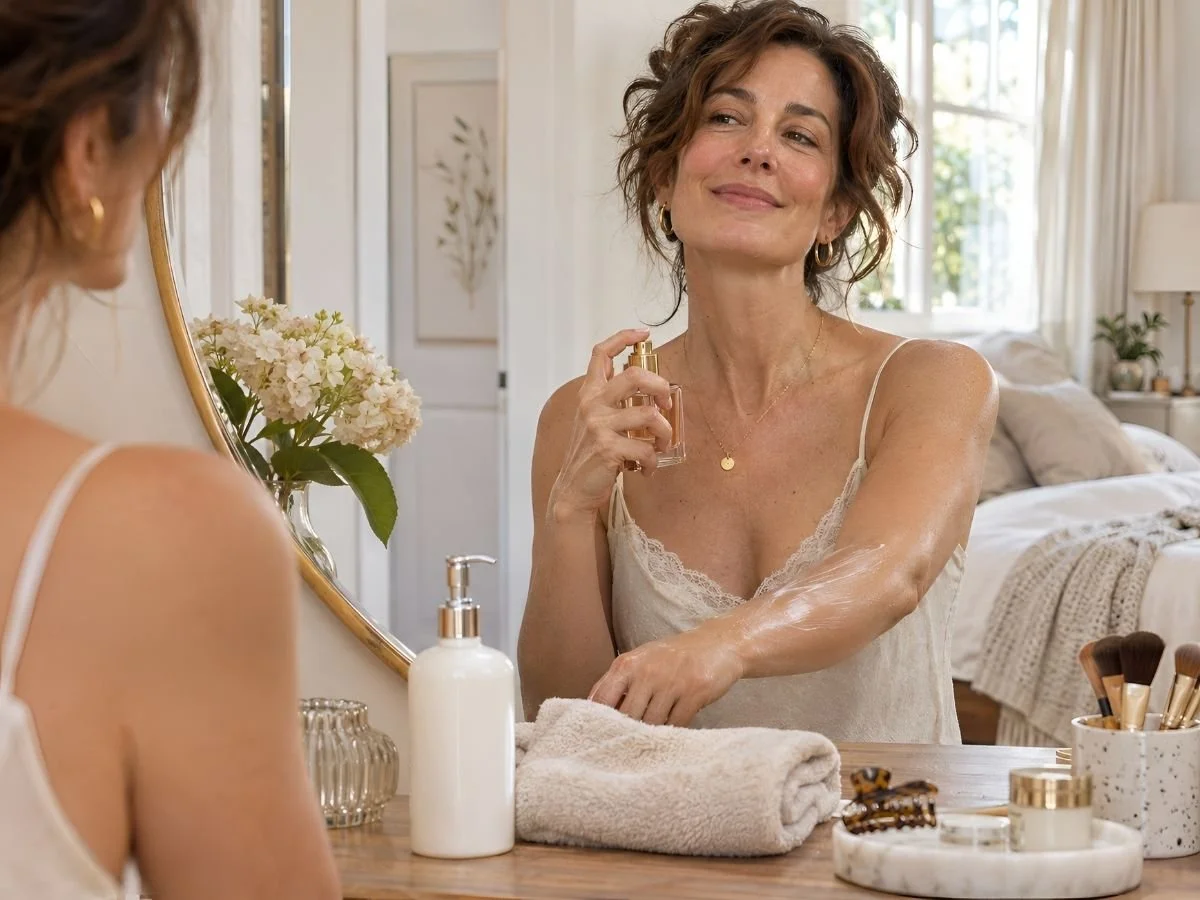
So, does moisturized skin make perfume last longer?
The research gives us a promising reason to think it may help in some circumstances.
The 2025 fragrance evaporation study found that skin hydration influenced how certain fragrance molecules were released.
And modern skincare research confirms that moisturizers can produce measurable improvements in skin hydration.
But those two findings don't establish that applying body lotion before perfume will automatically extend the wear time of every fragrance.
That's the distinction worth remembering.
If your skin tends to be dry, moisturizing before perfume is a sensible habit to try.
Choose a product that feels comfortable, allow it to absorb, and see how your favorite fragrance behaves.
You don't need an expensive perfume primer or an elaborate layering ritual.
Sometimes a simple fragrance-free cream is all you want.
And if moisturizing doesn't noticeably change your perfume's longevity, that's perfectly fine, too.
Your skin still benefits from appropriate moisturizing, and you can continue enjoying your fragrance in whatever way suits you best.
The most useful approach is to understand what the research supports without expecting one beauty trick to work for everyone.
After all, part of the pleasure of perfume is learning how your favorite fragrances behave on your own skin.
And sometimes the simplest beauty habits are the ones worth keeping.
Before You Leave the Parlor💕…
Don't slip out without signing the guest book — just drop a note in the comments below.
Have you noticed a difference in how long your perfume lasts when you apply body lotion first?
Tell us which fragrance you've tried and whether moisturizing helped it linger—we would love to hear from you.
Beauty Starts at the Parlor™.
