
Have you ever noticed that your favorite perfume seems stronger during summer but wears much more quietly when winter arrives? Cold temperatures can slow fragrance evaporation, but does that actually mean your perfume lasts longer? Here's what recent research reveals about how seasonal changes affect your favorite scents.
You have a perfume you absolutely love.
Perhaps it's a beautiful rose fragrance, a creamy vanilla with warm amber notes, or an elegant floral that always makes you feel put together.
You've worn it throughout the summer, so you know how it usually behaves.
A few sprays in the morning, a lovely burst of fragrance as you get dressed, and a softer scent that stays with you into the afternoon.
Then winter arrives.
You reach for the same perfume, apply your usual amount, and notice something different.
The fragrance seems quieter. That beautiful opening isn't quite as noticeable, and you find yourself wondering whether it has already started to fade.
But here's something interesting.
Your perfume may actually be evaporating more slowly in the colder weather, even though you aren't smelling it as strongly.
So, does perfume last longer in winter than summer?
The answer is that perfume can evaporate more slowly in colder conditions, which may allow some fragrance materials to remain on the skin longer. However, that doesn't guarantee you'll be able to smell the perfume for more hours.
Temperature affects fragrance release, but your skin condition, the perfume's formulation, and the conditions in which you wear it all matter.
Let's take a closer look at why the same fragrance can behave so differently between summer and winter—and how to enjoy it beautifully in both seasons.
Why Cold Weather Can Make Perfume Last Longer
To understand the difference between winter and summer, we need to look at what happens after perfume reaches your skin.
Perfume contains aromatic materials that gradually evaporate into the surrounding air.
Those molecules must reach your nose before you can smell them.
And temperature influences how readily many of those materials evaporate.
1. Cold Temperatures Can Slow Fragrance Evaporation
When temperatures decrease, many volatile substances evaporate more slowly.
A volatile substance is one that readily enters the air.
In perfume, different aromatic materials have different levels of volatility.
Some evaporate quickly, contributing to a bright opening. Others are released more gradually and contribute to the fragrance's lasting character.
A 2025 study published in the International Journal of Cosmetic Science examined how fragrance molecules evaporate from human skin.
The researchers explained that evaporation depends partly on molecular properties such as vapor pressure, intermolecular interactions, and temperature.
Vapor pressure helps describe how readily a substance enters the air. For many fragrance materials, vapor pressure increases as temperature rises.
That means warmer conditions generally encourage faster evaporation, while cooler conditions tend to slow it.
The study wasn't a direct comparison of commercial perfumes worn outdoors in winter and summer. It therefore doesn't establish exactly how many additional hours a fragrance will last in cold weather.
But the physical principles help explain why perfume can behave differently across seasons.
The Perfume Society also explains that colder temperatures can slow fragrance evaporation, sometimes making a scent less noticeable while allowing certain notes to remain longer.
And that brings us to an important distinction.
2. Slower Evaporation Doesn't Always Mean Stronger Perfume
Imagine spraying your favorite fragrance on a warm summer afternoon.
Its citrus and floral notes seem to open immediately.
You can smell the perfume around you without bringing your wrist toward your nose.
Now imagine wearing the same perfume on a cold winter morning.
The fragrance may release some of its aromatic materials more slowly.
That could mean some of those materials remain on your skin longer.
But because fewer molecules may be entering the surrounding air at a particular moment, the perfume can seem softer.
This is where longevity and projection become important.
Longevity describes how long a perfume remains detectable.
Projection describes how far its scent travels from your skin.
A fragrance can have good longevity while projecting only a short distance.
So the perfume that seems quieter in winter might not be disappearing faster.
It may simply be releasing its scent more gradually.
Why Perfume Often Smells Stronger in Summer

Now let's turn to warmer weather.
You may have noticed that certain fragrances seem especially expressive during summer.
A sparkling citrus perfume feels wonderfully refreshing, while a rich vanilla or amber fragrance can become surprisingly noticeable in the heat.
There's a physical explanation for some of that difference.
3. Heat Can Make a Perfume's Opening More Noticeable
Warm conditions can encourage fragrance molecules to enter the air more readily.
That can make certain parts of a perfume more noticeable soon after application.
For example, imagine a fragrance opening with bergamot, orange blossom, and soft musk.
On a warm day, its brighter materials may be released more rapidly.
The fragrance could seem lively and expressive during its opening.
But those aromatic materials are also gradually leaving your skin.
When the release of particular ingredients happens more quickly, their contribution to the scent may decrease sooner.
This is why stronger projection doesn't necessarily mean better longevity.
A perfume may make a more noticeable first impression in summer while becoming softer relatively quickly.
But the actual result depends on its formula.
Not every fragrance responds to heat in exactly the same way, and there isn't a reliable rule saying all perfumes last fewer hours in summer.
4. Perspiration and Summer Activities Can Change the Experience
Summer also changes how we spend our days.
You may perspire more, spend longer outdoors, or wash your skin more frequently.
Those activities can affect fragrance remaining on the skin.
Consider perfume applied to your wrists.
If you're washing your hands often or repeatedly getting the application area wet, the fragrance may be removed or redistributed.
Clothing friction can also affect perfume on the surface of your skin.
So when someone says their perfume disappears quickly during summer, the weather itself may not be the only explanation.
Their activities could be contributing.
And sometimes the perfume hasn't faded as much as it seems.
A fragrance may simply be dispersing differently outdoors than it does inside a quiet, enclosed room.
Why Perfume Can Seem Weaker in Winter
Here's where things become a little more interesting.
Winter may slow the evaporation of certain fragrance materials, but it also brings conditions that can make perfume harder to notice.
And those conditions sometimes work against the longer-lasting effect we might expect from colder temperatures.
5. Winter Air and Indoor Heating Can Dry Out Your Skin
Have you ever noticed that your skin feels tighter or drier once winter arrives?
Cold outdoor weather and dry indoor heating can contribute to moisture loss from the skin.
According to the American Academy of Dermatology, low humidity and indoor heating commonly contribute to dry skin during winter.
And skin condition may influence fragrance evaporation.
The 2025 study published in the International Journal of Cosmetic Science examined fragrance evaporation on the skin of ten volunteers.
Researchers found that skin hydration, surface roughness, and water loss were associated with differences in how certain fragrance molecules evaporated.
However, the effects varied depending on the molecules being studied.
The research doesn't establish that every perfume will last longer on moisturized skin, nor does it prove that winter dryness makes every fragrance fade faster.
Still, it identifies skin hydration as a factor worth considering.
So while cold temperatures may slow evaporation, changes in your skin could influence the fragrance in another way.
This is one reason winter perfume performance isn't always as simple as the temperature outside.
6. Recent Research Shows That Temperature Changes Affect Skin
A 2026 randomized crossover study published in Environmental Research investigated how exposure to different temperatures affected skin characteristics.
Researchers studied 30 healthy adults who spent two hours in environments measuring 22°C and 32°C.
Participants reported feeling oilier and stickier under warmer conditions, while the cooler conditions were associated with sensations of dryness and tightness.
Researchers also observed measurable differences in sebum production and other indicators of skin condition.
The study examined facial skin health rather than perfume longevity.
So it cannot tell us that a fragrance will last a particular number of hours longer in winter.
What it does show is that temperature changes can influence the condition of our skin.
And when combined with the fragrance evaporation findings from 2025, it helps explain why seasonal differences may involve more than temperature alone.
Your skin, your fragrance, and your surroundings all contribute to the experience.
Does Winter Clothing Make Perfume Last Longer?
There's another seasonal difference that's easy to overlook.
Your wardrobe.
During summer, you may wear lighter clothing that leaves your wrists, arms, or neck exposed.
But in winter, those same areas may be covered by sweaters, jackets, scarves, and coats.
And that can change how you experience your perfume.
7. Clothing Can Change How Fragrance Reaches the Air
Imagine spraying perfume onto your neck before wrapping yourself in a winter scarf.
The fragrance may be partly covered by the fabric rather than dispersing freely into the surrounding air.
Some fragrance materials may also transfer onto the scarf.
Depending on the textile and perfume, those materials may remain noticeable on the fabric after the scent on your skin has become faint.
You might remove your scarf at the end of the day and discover a lovely trace of perfume still lingering there.
But that doesn't mean fabric always holds every fragrance longer than skin.
Different fibers interact differently with aromatic materials.
And perfume can stain or damage certain clothing.
If you enjoy wearing fragrance on fabric, always consider the garment's care instructions and test a small, inconspicuous area first.
Avoid spraying directly onto silk, leather, delicate finishes, or valuable garments.
There's no reason to risk your favorite winter coat just to extend your perfume's staying power.
Does Winter Make Certain Perfume Notes Last Longer?
You've probably noticed that fragrance lovers often associate particular scents with different seasons.
Fresh citrus, aquatic fragrances, and airy florals are popular summer choices.
Vanilla, amber, woods, and spices often appear in winter fragrance collections.
But does that mean warm, rich fragrances are scientifically designed to last longer in cold weather?
Not necessarily.
8. Fragrance Composition Matters More Than the Season Label
Perfumes contain many aromatic materials with different evaporation characteristics.
Some of the ingredients commonly used to create bright citrus impressions are relatively volatile.
Others, including certain musks, woody materials, and resinous ingredients, may be more persistent.
However, a perfume's listed notes aren't a precise inventory of its actual ingredients.
And two fragrances described as vanilla perfumes may have very different formulas.
That's why we can't predict exact longevity simply by looking for words such as amber, sandalwood, or citrus on a fragrance website.
The actual materials and formulation matter.
A fresh Eau de Toilette may last beautifully during winter.
A rich Eau de Parfum may still become faint after several hours.
And a fragrance you enjoy during summer might be just as lovely during colder months.
Seasonal fragrance categories are useful for inspiration, not rules you have to follow.
9. Can You Wear Summer Perfume During Winter?
Absolutely.
If you love a sparkling citrus perfume, there's no reason you have to put it away when the temperature drops.
You may simply notice that it behaves differently.
A fragrance that feels lively outdoors during summer may seem quieter on a cold winter morning.
Likewise, a warm amber fragrance that feels particularly comforting in winter may become much more noticeable during hot weather.
Those differences can influence your preferences, but they don't make either perfume unsuitable for a particular season.
The best approach is to wear the fragrances you love and pay attention to how they develop under different conditions.
You might even discover a new side of a familiar scent.
How to Help Your Perfume Last Beautifully During Winter
If your perfume seems unusually faint when the weather turns cold, you don't necessarily need a stronger fragrance.
Start with a few thoughtful adjustments.
10. Keep Your Skin Comfortably Moisturized
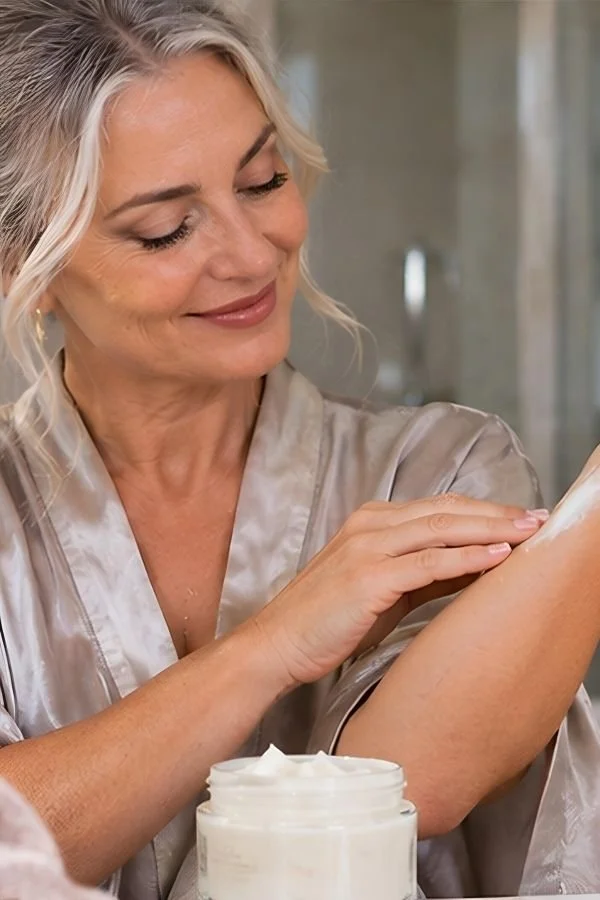
If your skin feels dry during winter, use a moisturizer suited to your skin.
The American Academy of Dermatology recommends moisturizers, particularly creams or ointments, for helping relieve dry skin.
A fragrance-free body lotion or cream can be a sensible choice before perfume because it won't introduce another scent that competes with your fragrance.
Allow the moisturizer to settle before applying your perfume.
Remember that although hydration can influence certain fragrance molecules, there's no scientifically established guarantee that applying lotion will make every finished perfume last longer.
Think of this as good skincare first, with a possible fragrance benefit.
11. Choose Your Application Areas Thoughtfully
Consider where your fragrance will be least likely to be washed or rubbed away.
If your wrists are frequently covered by tight sleeves or washed throughout the day, another comfortable application area may be worth trying.
The inner elbows can be practical, depending on your clothing.
Avoid irritated or broken skin, and allow the perfume to dry before dressing.
There's no need to spray every pulse point or apply more perfume simply because it's winter.
12. Don't Confuse Soft Projection With Poor Longevity
Perhaps the most useful habit is to check whether your perfume has actually faded.
If the scent seems less noticeable around you, bring your wrist close to your nose after a little time has passed.
Can you still detect a softer version of the fragrance?
If so, it may simply be wearing closer to your skin.
And remember that your nose can become accustomed to a familiar perfume.
So repeated checking isn't always helpful.
If your fragrance has genuinely become faint and you'd like to enjoy it again, a modest refresh is perfectly reasonable.
But don't assume winter automatically requires more sprays.
The Parlor Notes: Compare Your Perfume in Winter and Summer
If you're curious whether your favorite fragrance behaves differently between seasons, try keeping a few simple observations.
You don't need a fragrance journal or any special equipment.
Just pay attention to the perfume you already love.
Choose a fragrance you wear regularly throughout the year.
Apply approximately the same amount to a similar area of clean skin.
Notice how strongly the perfume projects when you first apply it.
Check whether it remains detectable close to your skin several hours later.
Consider the surrounding conditions, including indoor heating, outdoor temperature, clothing, and activity level.
Compare your experiences across different days rather than relying on a single wear.
For a more meaningful comparison, try to keep your application routine as consistent as possible.
And remember that your own smell sensitivity may influence what you notice.
This isn't a controlled scientific experiment, but it may help you understand your fragrance's seasonal personality.
Perhaps you'll find that your favorite floral becomes quieter but remains detectable longer during cooler weather.
Or maybe your vanilla perfume seems to perform almost identically throughout the year.
You may even discover that differences in your clothing and daily activities matter more than the outdoor temperature.
There's no need for every perfume to follow the same pattern.
So, Does Perfume Really Last Longer in Winter?

The answer is that it can, but not always.
Cold temperatures generally slow the evaporation of many fragrance materials.
That can allow certain compounds to remain on a surface longer.
However, slower evaporation may also reduce how strongly a fragrance projects into the surrounding air.
At the same time, winter dryness, indoor heating, clothing, and daily routines can influence how a perfume behaves on your skin.
And because different fragrance materials respond differently, there isn't one universal rule that guarantees longer perfume wear during winter.
The most useful distinction is between how long a perfume remains detectable and how strongly you can smell it.
A fragrance can linger quietly throughout a cold afternoon without surrounding you with the same noticeable scent you enjoyed during summer.
If your perfume seems softer in winter, don't immediately assume it's performing poorly.
Give it time to develop, notice how it wears close to your skin, and consider whether your skincare or application routine needs a little adjustment.
You may discover that the fragrance you thought had become weaker is simply revealing itself more gradually.
And there's something lovely about enjoying a familiar perfume in a slightly different way as the seasons change.
After all, your favorite fragrance doesn't have to perform identically in January and July to deserve a place on your dressing table.
Before You Leave the Parlor💕
Don't slip out without signing the guest book — just drop a note in the comments below.
Have you noticed that your favorite perfume lasts longer in winter, or does it seem to perform better during summer?
Tell us which fragrance you wear and how its staying power changes with the seasons—we would love to hear about your experience.
Beauty Starts at the Parlor™.
