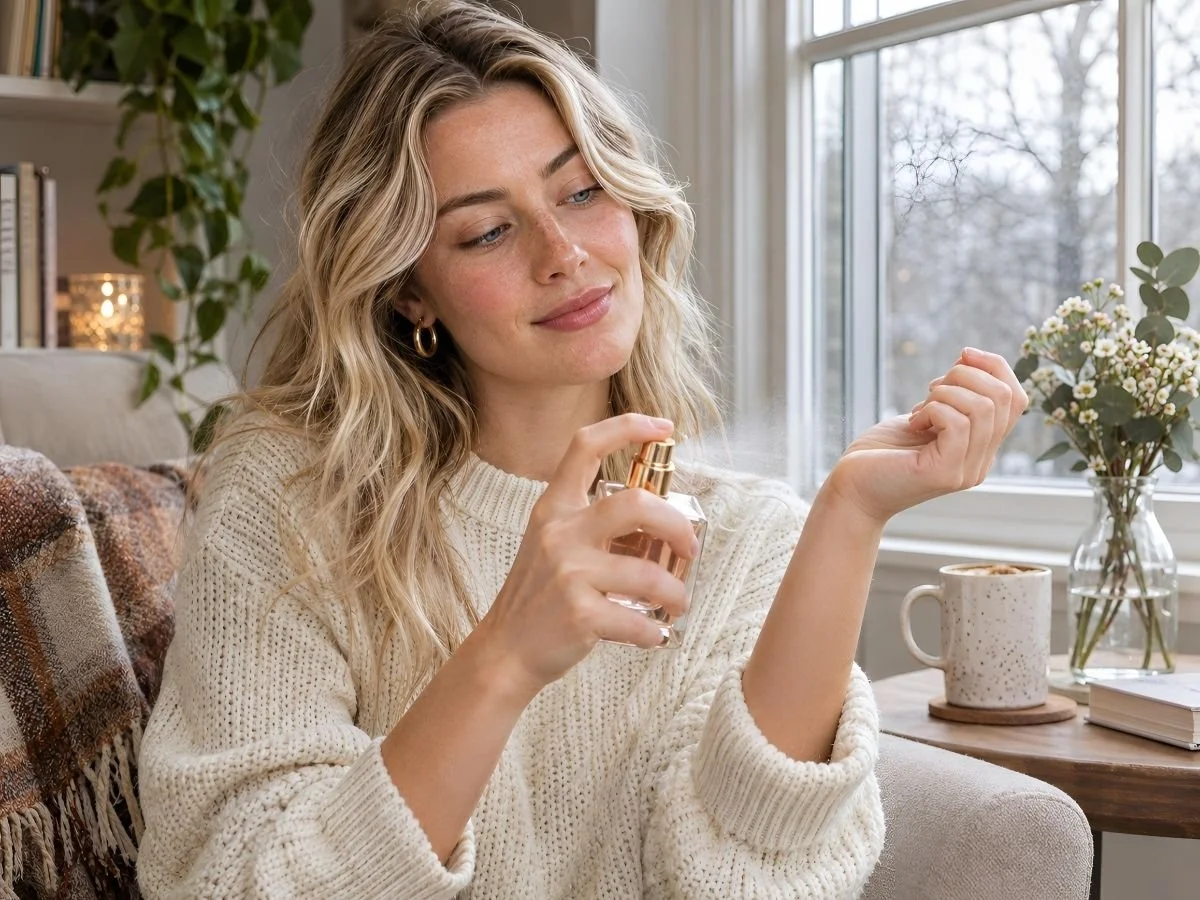
Have you ever noticed that your favorite perfume smells stronger on a warm summer day but seems much softer when the weather turns cold? Temperature, humidity, and even a little wind can change how you experience your fragrance. Here's what recent research tells us about how weather affects perfume longevity.
You have a perfume you absolutely love.
Perhaps it's a fresh floral with sparkling citrus, a warm vanilla with soft amber notes, or an elegant woody fragrance that always makes you feel put together.
You wear it regularly, so you know how it usually behaves.
But then the weather changes.
On a warm summer afternoon, your perfume seems noticeably stronger. You catch little traces of it as you move around, and its opening feels especially expressive.
A few months later, you're wearing the same fragrance on a chilly morning, and it seems much quieter.
Same bottle. Same perfume.
So what's going on?
Is your fragrance actually lasting longer in one season than another?
The answer is that weather can affect perfume longevity, but not always in the way you might expect.
Temperature influences how fragrance molecules evaporate. Humidity can affect skin condition and odor perception, while wind changes how scent disperses through the surrounding air.
But there's an important distinction: a perfume smelling stronger doesn't necessarily mean it's lasting longer.
In fact, a fragrance that makes a particularly noticeable impression in warm weather may also release some of its materials more quickly.
Let's explore how different weather conditions influence your perfume and what you can do to enjoy your favorite fragrances throughout the year.
Why Does Temperature Affect Perfume?
Before comparing summer and winter, it helps to understand what makes perfume noticeable in the first place.
Perfume contains aromatic materials that gradually evaporate from your skin.
As those molecules enter the surrounding air and reach your nose, you experience the fragrance.
The rate at which they evaporate depends on their physical and chemical properties, the surface they're applied to, and the surrounding conditions.
Temperature is one of those conditions.
Warmth Can Encourage Fragrance Evaporation
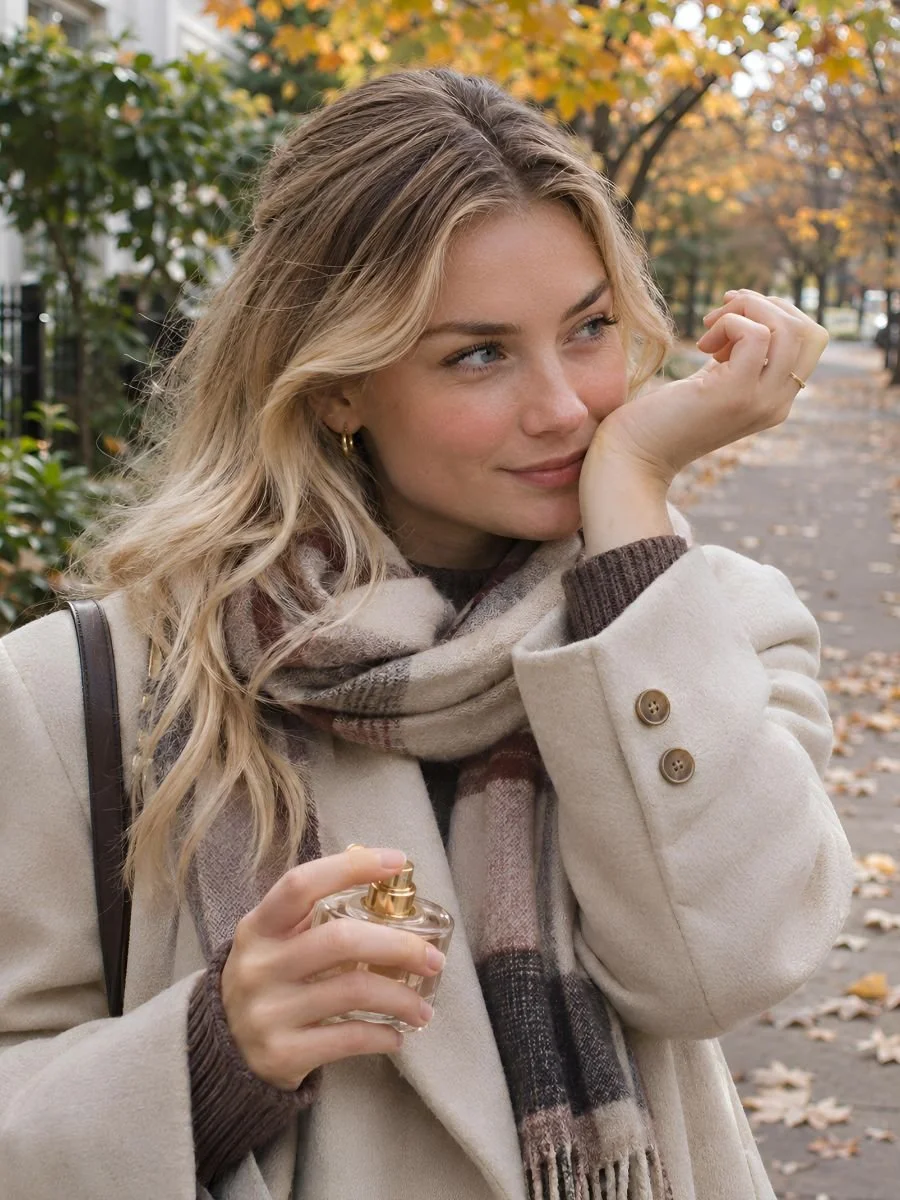
Warmth Can Encourage Fragrance Evaporation
When the temperature rises, many fragrance materials evaporate more readily.
That's because temperature affects a substance's vapor pressure, which helps determine how easily its molecules move into the air.
A 2025 review published in the Journal of Colloid and Interface Science examined temperature-responsive fragrance delivery systems and how temperature changes can influence the release of aromatic materials.
The review focused on specialized encapsulation technology rather than ordinary perfume wear, but it illustrates why temperature is an important factor in fragrance release.
Now think about what happens when you spray perfume on warm skin.
Certain fragrance molecules may enter the air more readily, making the scent noticeable.
But those materials are also being released from the surface.
So the fragrance may become more expressive while some of its ingredients are being depleted more quickly.
That's why warmth and longevity aren't necessarily the same thing.
A stronger initial impression doesn't guarantee that the perfume will remain noticeable for more hours.
Does Perfume Last Longer in Hot Weather?
Summer can be a lovely season for fragrance.
Fresh citrus, airy florals, delicate musks, and tropical-inspired compositions often feel especially appealing when the weather warms up.
But hot weather can change how a perfume behaves.
Heat May Make Your Perfume Smell Stronger at First
Imagine applying a fragrance with bergamot, jasmine, and warm sandalwood.
On a mild day, the opening may feel soft and refreshing.
On a particularly hot afternoon, those brighter notes may seem more noticeable.
The warmer conditions can encourage the release of certain fragrance materials into the air.
But there's a catch.
If those materials evaporate more rapidly, their noticeable opening may also change sooner.
This doesn't mean every perfume automatically fades faster in summer.
Different fragrance molecules respond differently to temperature, and finished perfume formulations are complex mixtures.
The important thing is that heat can influence the rate at which some fragrance materials are released.
And that may change both the intensity and development of your perfume.
Perspiration and Summer Activities Can Also Matter
There's another part of summer fragrance wear that has little to do with the perfume formula itself.
Your daily activities.
On a hot day, you may perspire more, spend time outdoors, or wash your skin more frequently.
Those activities can affect the fragrance remaining on your body.
For example, perfume applied to your wrists may become less noticeable after repeated washing.
Perspiration and contact with clothing can also change the surface conditions around your fragrance.
So if your perfume seems to fade more quickly during a busy summer afternoon than during a quiet day indoors, don't automatically assume the fragrance is poorly made.
Your routine may be contributing to the difference.
The Pretty Skin Parlor™ advice: During hot weather, begin with your usual amount of perfume rather than immediately applying extra sprays. You may find that the fragrance is already more noticeable than expected.
And if the scent genuinely fades later in the day, a modest refresh may be all you need.
Does Perfume Last Longer in Cold Weather?
Now let's turn to winter.
Perhaps you've noticed that a fragrance you love during summer seems much softer on a chilly morning.
You apply your usual amount, but the scent doesn't seem to surround you in quite the same way.
Does that mean your perfume has stopped performing?
Not necessarily.
Cold Conditions Can Make Fragrance Feel Less Noticeable
Lower temperatures can reduce the evaporation rate of many volatile materials.
That means some fragrance ingredients may enter the surrounding air more slowly.
As a result, a perfume may seem less expressive in colder conditions, particularly during its opening.
But here's something worth remembering.
Slower evaporation doesn't automatically guarantee longer detectable wear.
A fragrance must release enough aromatic material for your nose to notice it.
If fewer molecules reach your nose at a particular moment, the perfume may seem faint even while some material remains on your skin.
So a perfume that feels quieter in winter isn't necessarily disappearing faster.
It may simply be releasing its fragrance differently.
Winter Clothing Changes the Experience Too
Think about how differently you dress during winter.
You may be wearing sweaters, scarves, coats, and long sleeves that cover your usual perfume application areas.
Those layers can affect how scent moves into the surrounding air.
A fragrance applied to your neck may be partly covered by a scarf, while perfume on your wrists may be enclosed beneath sleeves.
Clothing can also absorb or retain some fragrance materials through contact.
That's why you might barely notice your perfume while wearing a winter coat, only to discover a lovely trace on your scarf later.
It's a reminder that the fragrance you perceive around yourself isn't always a complete measure of what's remaining on your skin or clothing.
Does Humidity Make Perfume Last Longer?

Humidity is probably one of the most misunderstood parts of fragrance performance.
You've likely heard someone say that perfume lasts longer in humid weather because moisture holds the scent in the air.
Others insist that humidity makes perfume disappear faster.
But neither statement is reliable as a universal rule.
Humidity Can Influence How We Perceive Odors
Humidity describes the amount of water vapor in the air.
It can influence environmental conditions, skin moisture, and how certain substances behave.
But the relationship between humidity and odor perception isn't straightforward.
The 2025 ASHRAE Handbook chapter on odors reviews research examining temperature, humidity, and perceived odor intensity.
The findings are mixed.
Some studies found differences in how people experienced odors under warmer or more humid conditions, while others found little change or even a reduction in perceived intensity.
These studies weren't specifically designed to establish perfume longevity on human skin.
Still, they demonstrate why we shouldn't assume that high humidity always makes fragrance stronger.
A perfume may feel different in humid air, but that doesn't necessarily mean it remains on your skin longer.
Humidity Also Affects Your Skin
The relationship becomes even more interesting when we consider skin hydration.
A 2025 study published in the International Journal of Cosmetic Science examined how low-humidity conditions affected the skin barrier in a reconstructed human epidermal model.
Researchers found that exposure to low humidity produced measurable changes in skin barrier function.
The study didn't investigate perfume, but it supports the understanding that environmental humidity can influence skin condition.
And skin condition may matter for fragrance.
A separate 2025 study on fragrance evaporation from human skin found that hydration, surface roughness, and water loss were associated with differences in how certain fragrance molecules evaporated.
The researchers studied ten volunteers, so the results shouldn't be interpreted as a universal rule for every perfume.
They also didn't establish that humid outdoor weather automatically increases fragrance longevity.
What these studies suggest is that skin hydration and fragrance evaporation are connected in ways that deserve further investigation.
So if your perfume behaves differently during a humid summer than during a dry winter, changes in your skin may be one contributing factor.
But humidity alone can't tell us how many hours a fragrance will last.
Can Wind Make Your Perfume Disappear Faster?
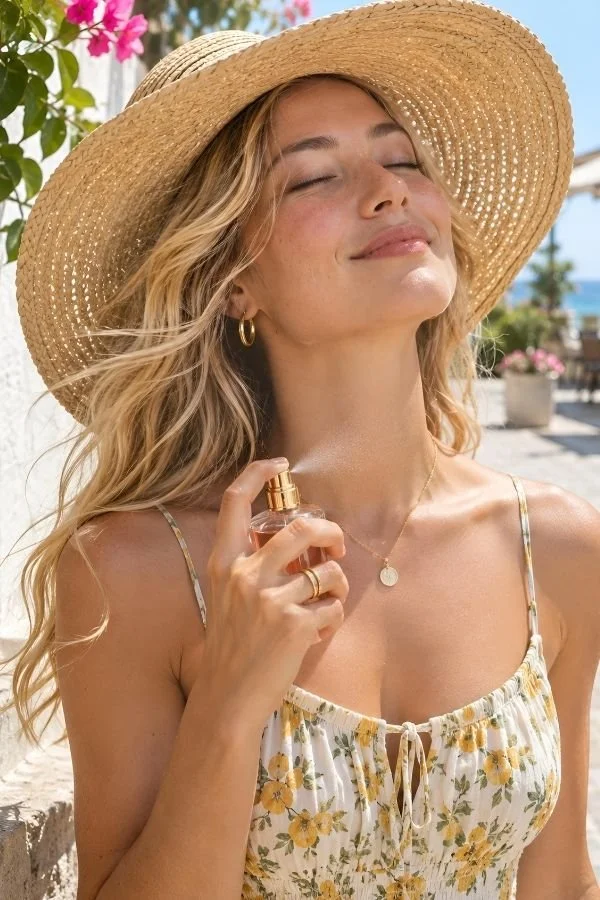
Have you ever worn a beautiful fragrance outdoors and felt as though it disappeared almost immediately?
Perhaps you were walking along a breezy street or enjoying an afternoon near the water.
You could smell your perfume perfectly well when you left the house.
But once you stepped outside, it seemed much less noticeable.
Wind may be part of the explanation.
Moving Air Changes How Fragrance Travels
For you to smell perfume, its aromatic molecules must reach your nose.
Air movement affects how those molecules disperse.
On a breezy day, fragrance released from your skin may be carried away and diluted in the surrounding air.
That can make your perfume seem less noticeable than it would in a quiet indoor environment.
Airflow can also influence the movement and evaporation of volatile materials.
A 2025 study published in the International Journal of Heat and Mass Transfer examined a fragrance-dispensing system designed to improve the release of volatile substances into room air.
The researchers found that increasing airflow dramatically affected evaporation and dispersion in the tested device.
Of course, an air-freshener system isn't the same as perfume on human skin.
The study doesn't prove that walking outside on a windy day will shorten your perfume's longevity by a particular amount.
But it illustrates why airflow matters when fragrance molecules are released into the air.
So if your perfume seems to vanish the moment you step outdoors, consider whether you're experiencing reduced scent concentration around you rather than the fragrance disappearing completely.
What Happens to Perfume When It Rains?
Rain presents another interesting situation.
Does rainy weather make perfume last longer?
Not necessarily.
Rainfall itself doesn't provide a reliable prediction of fragrance longevity.
But it can change the conditions in which you're wearing your scent.
For example, if rainwater directly wets an area where you've applied perfume, some fragrance material may be redistributed or removed.
And if you're walking through cool, damp conditions, your perfume may feel different from the way it does during a warm, dry afternoon.
There's no good evidence establishing that a rainy day automatically makes every perfume last longer or disappear sooner.
So rather than judging your fragrance by the weather forecast alone, pay attention to the actual conditions and whether the application area becomes wet.
You don't need to change your entire perfume routine simply because there's a little rain outside.
Why Does Your Skin Feel Different During Each Season?

Here's where perfume and skincare become closely connected.
Your skin doesn't always remain in the same condition throughout the year.
Cold weather, dry indoor heating, and changes in humidity can influence how comfortable and hydrated your skin feels.
And those changes may contribute to differences in fragrance wear.
Winter Can Make Skin Drier
A 2026 randomized crossover study published in Environmental Research examined how short-term temperature changes affected skin characteristics in 30 healthy adults.
The researchers found that warmer and cooler exposures produced measurable differences in skin condition.
Warmer exposure increased certain measures of sebum production, while cooler exposure was associated with greater feelings of dryness and tightness.
The study didn't investigate perfume longevity.
However, it provides recent evidence that temperature can affect the condition of our skin.
The American Academy of Dermatology also explains that low-humidity environments and indoor heating can contribute to dry skin.
If your skin becomes noticeably drier during winter, adjusting your moisturizing routine may be worthwhile.
A fragrance-free body lotion or cream can help keep your skin comfortable without adding another scent that competes with your perfume.
Although moisturizing may influence the evaporation of certain fragrance materials, research hasn't established that it guarantees longer wear for every commercial perfume.
Think of it as sensible skincare first, with a possible fragrance benefit worth exploring.
Should You Wear Different Perfumes in Summer and Winter?
You certainly can, but you don't have to.
Many perfume lovers enjoy changing their fragrances with the seasons.
A sparkling citrus or airy floral may feel especially refreshing during warm weather.
A creamy vanilla, woody amber, or comforting musk may feel particularly appealing when the temperature drops.
But those are personal preferences, not scientific rules.
A rich fragrance isn't automatically unsuitable for summer.
And a fresh floral doesn't suddenly become inappropriate when winter arrives.
The important thing is how the fragrance behaves in the conditions where you plan to wear it.
Consider the Fragrance's Strength and Character
If you enjoy a rich, expressive perfume, you may find that it feels especially noticeable during hot weather.
In that case, a lighter application might be more comfortable.
If a delicate fragrance seems unusually quiet in winter, give it time to develop before deciding whether it needs refreshing.
And remember that concentration alone doesn't determine performance.
An Eau de Parfum isn't guaranteed to last longer in cold weather simply because it contains more fragrance concentrate than an Eau de Toilette.
The actual formulation matters.
When choosing a perfume for a particular season, sample it in conditions similar to those in which you'll wear it.
A fragrance tested inside a cool, air-conditioned store may feel quite different during an afternoon outdoors.
The Parlor Notes: How to Adjust Your Perfume Routine for the Weather
You don't need a complicated fragrance routine for every season.
A few thoughtful habits can help you enjoy your perfume as the weather changes.
In warm weather, begin with your usual amount of perfume. Notice how strongly it projects before deciding whether you need more.
On particularly active days, consider application areas that won't be repeatedly washed or rubbed.
During cold or dry weather, keep your skin comfortable with an appropriate fragrance-free moisturizer.
Don't judge longevity by projection alone. A fragrance may become less noticeable in the surrounding air while remaining detectable close to your skin.
If your perfume seems to disappear outdoors, check it again in a calmer environment before assuming it has completely faded.
When trying a new fragrance, wear it through an ordinary day rather than judging its performance only at the perfume counter.
Refresh your perfume modestly when it has genuinely become faint, especially in shared spaces where a stronger scent may be uncomfortable for others.
You can also try wearing the same fragrance on two days with different weather conditions.
Use approximately the same amount and application area, then notice how the scent develops.
Keep in mind that differences in activity, clothing, and your own smell perception may influence the results.
This won't provide a scientific measurement, but it may help you understand how your favorite perfume behaves throughout the year.
And sometimes that little bit of observation is more useful than buying another fragrance simply because the season has changed.
Does Weather Affect the Perfume Inside the Bottle?
There's one more distinction worth understanding.
We've been discussing how weather affects perfume after you've applied it.
But heat and sunlight can also influence fragrance stability during storage.
These are two different issues.
Warm weather during an afternoon outdoors may temporarily change how your fragrance evaporates from your skin.
Repeated exposure of the bottle to excessive heat or direct sunlight, however, may affect the perfume's composition over time.
According to Coty's official product-care guidance, fragrances and other beauty products should be stored in a dry place, preferably away from light and extreme temperatures.
So while it's perfectly reasonable to enjoy wearing your perfume on a hot summer day, leaving the bottle inside a parked car or on a sunny windowsill isn't a good idea.
Keep your fragrances in a cool, dry place away from direct sunlight.
Proper storage won't make a naturally delicate perfume last all day, but it can help protect the fragrance you already love.
Finding the Right Fragrance for Every Season
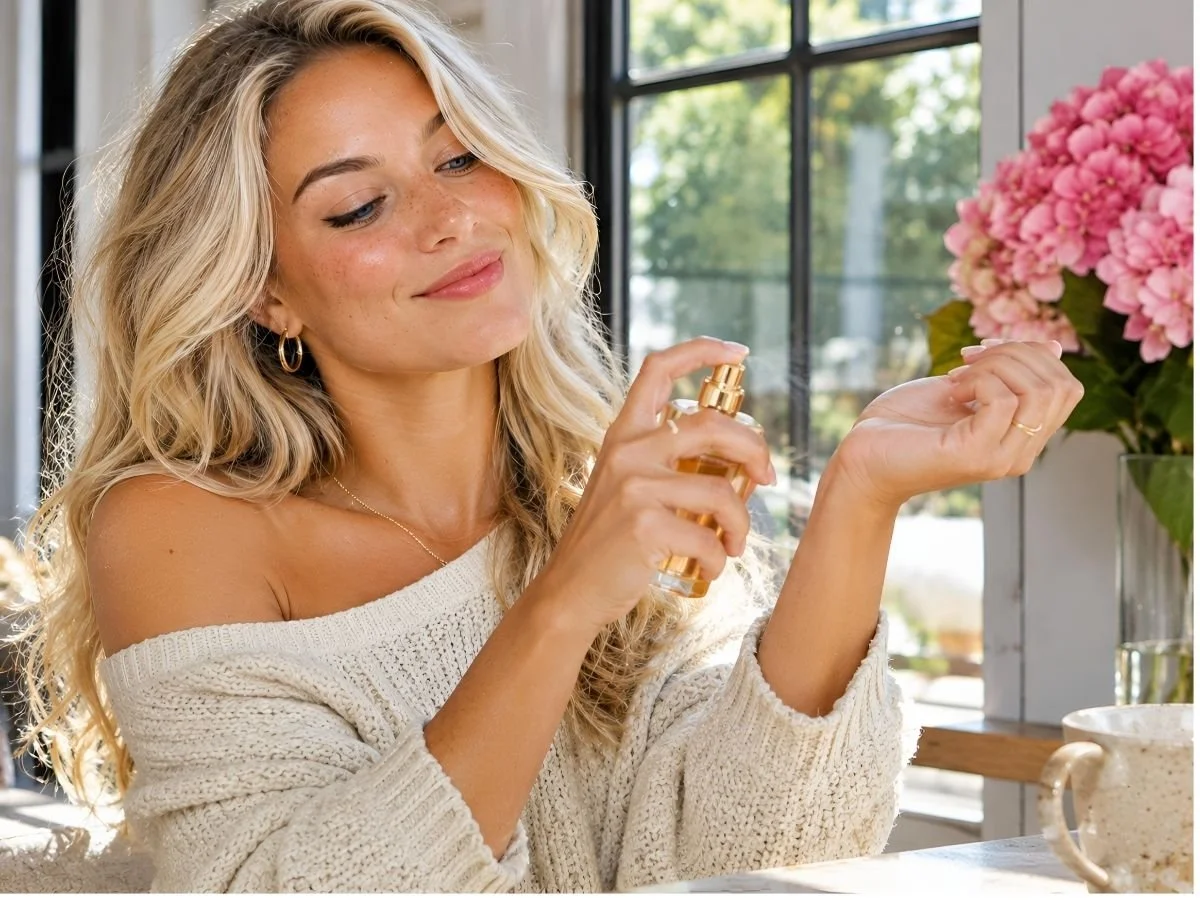
So, does weather affect perfume longevity?
Yes, weather can influence how a perfume behaves and how strongly you experience it.
Temperature affects the release of fragrance molecules.
Humidity can influence skin condition and odor perception.
Wind changes how scent disperses through the air.
And seasonal changes in clothing, perspiration, and daily activities can make the same perfume feel different throughout the year.
But there's no simple rule that perfume always lasts longer in winter or fades faster in summer.
A fragrance's actual formula and the conditions in which you wear it matter.
Perhaps your favorite floral feels brighter during a warm spring afternoon.
Maybe your vanilla fragrance becomes especially noticeable on a summer evening.
Or perhaps a soft woody perfume feels more intimate when you're wrapped in your favorite winter sweater.
Those differences can be part of what makes wearing fragrance enjoyable.
The key is recognizing that how strongly you smell your perfume isn't always the same as how long it remains detectable.
Rather than expecting your fragrance to perform identically in every season, pay attention to the way it develops under different conditions.
You may discover that certain perfumes suit particular weather beautifully.
And you might find that a fragrance you thought was only for summer is just as lovely on a crisp autumn morning.
A beautiful perfume doesn't need perfect weather to be enjoyed.
Sometimes it simply needs a little understanding of how the weather changes the experience.
Before You Leave the Parlor💕
Don't slip out without signing the guest book — just drop a note in the comments below.
Have you noticed that one of your favorite perfumes smells stronger or lasts differently in summer than it does in winter?
Tell us which fragrance it is and what kind of weather seems to bring out its best—we would love to hear about your experience.
Beauty Starts at the Parlor™.
