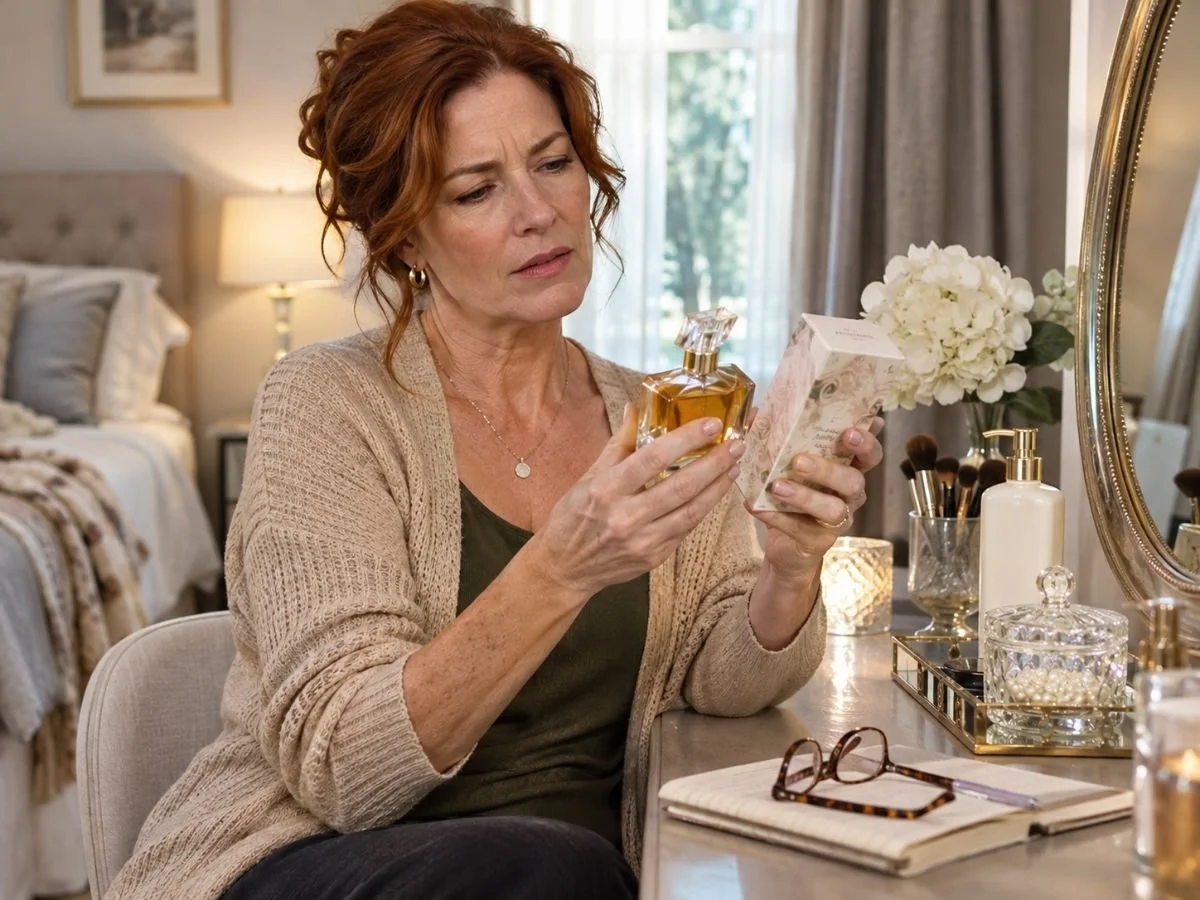
Your favorite perfume used to last beautifully throughout the day, but lately, it seems to fade much sooner. Has something changed with the fragrance, your skin, or even your sense of smell? Here's what recent research tells us about why a familiar perfume may suddenly seem less long-lasting.
You have a perfume you've loved for years.
Perhaps it's a beautiful rose fragrance, a warm vanilla with soft amber notes, or an elegant floral that's become your signature scent.
You know exactly how it wears.
A few sprays in the morning, a lovely fragrance throughout the afternoon, and sometimes even a little trace left on your clothes the following day.
But lately, something seems different.
The same perfume that once lasted for hours now seems to disappear before lunchtime.
You haven't deliberately changed anything about the way you apply it, so naturally, you're wondering what's happened.
Did the perfume company change the formula? Is your bottle getting old? Or is your skin behaving differently?
Here's what you should know.
A perfume that suddenly seems less long-lasting may be affected by changes in your skin, daily routine, storage conditions, or sense of smell. If you've recently purchased a new bottle, a difference in formulation is another possibility—but it shouldn't be assumed without evidence.
And there's an important distinction between a perfume genuinely fading faster and simply becoming less noticeable to you.
Let's explore the possible explanations and how to work out what's happening with your favorite fragrance.
Your Sense of Smell May Have Changed
Before deciding that your perfume has lost its staying power, consider something that doesn't get nearly enough attention.
Your nose.
We tend to assume that if we can't smell our perfume anymore, it must have disappeared.
But our sense of smell doesn't always give us an accurate picture of how much fragrance is still present.
1. You May Have Become Accustomed to Your Signature Perfume
If you've worn the same fragrance regularly, you may have become less sensitive to its familiar scent.
This is called olfactory adaptation, sometimes described as becoming nose-blind.
With continued exposure to an odor, your sense of smell can become less responsive to it.
A 2026 study published in Building and Environment investigated how people perceived lemon and acetic acid odors during prolonged exposure.
Researchers found that perceived odor intensity decreased over time, even while participants continued to experience the odor.
Sensitivity also recovered after participants left the scented environment.
The study wasn't conducted using commercial perfumes, so it doesn't tell us exactly how quickly someone becomes accustomed to a particular fragrance.
But it demonstrates something relevant to perfume wear: our perception of a scent can change without the odor completely disappearing.
Perhaps you once noticed your signature perfume throughout the afternoon, but now you're so familiar with it that you hardly register its presence.
That doesn't necessarily mean the fragrance has changed.
The Pretty Skin Parlor™ advice: Before adding more perfume, ask someone you trust whether they can still detect your fragrance. If they can smell it comfortably while you barely notice it, your own scent adaptation may be contributing.
And if that's the case, using more perfume may not be the solution.
2. A Recent Illness or Medication Change May Affect Your Sense of Smell
Have you recently had a cold, sinus infection, or other respiratory illness?
Or perhaps you've started taking a new medication.
These are worth considering if your perfume suddenly seems different.
According to the National Institute on Deafness and Other Communication Disorders' 2025 guidance, changes in smell can be associated with respiratory infections, sinus inflammation, certain medications, hormonal disturbances, and other medical conditions.
Sometimes a fragrance doesn't seem as strong because your ability to detect odors has changed.
You may also notice that familiar scents smell different rather than simply weaker.
For example, a perfume you've always enjoyed might suddenly seem less floral or less pleasant than you remember.
That doesn't automatically mean there's something wrong with the fragrance.
If you've noticed changes in your ability to smell coffee, food, flowers, or other familiar things as well, it may be more than ordinary perfume adaptation.
A sudden, unexplained, or persistent change in your sense of smell deserves medical attention.
Your Skin May Be Affecting Your Perfume Differently
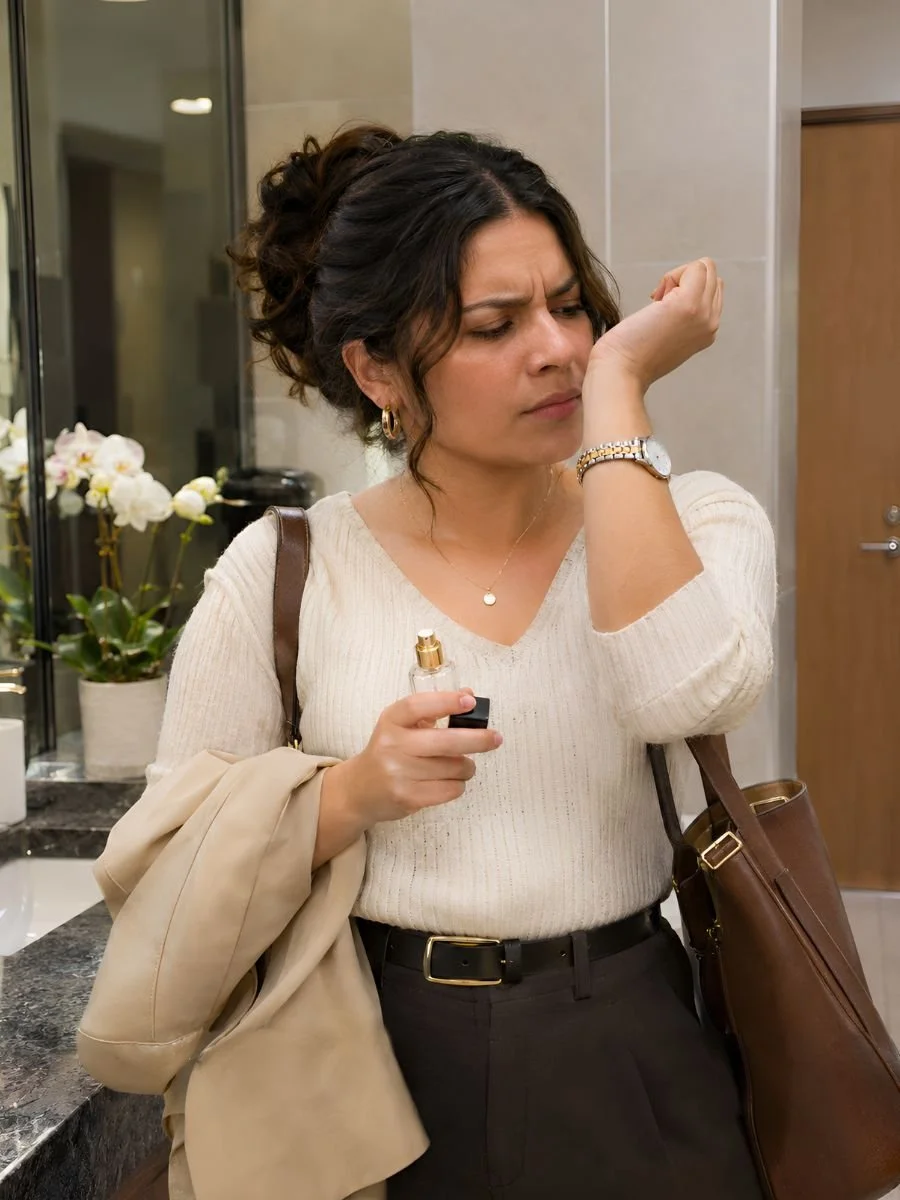
Now let's consider your skin.
Perhaps you haven't changed your perfume, but you have changed your skincare products.
Or maybe your skin has been feeling noticeably drier than usual.
These details may matter more than you realize.
3. Changes in Skin Hydration Can Influence Fragrance Evaporation
Your skin provides the surface from which perfume gradually evaporates.
And its characteristics can influence how fragrance molecules are released.
A 2025 study published in the International Journal of Cosmetic Science examined the evaporation of eight fragrance molecules from the skin of ten volunteers.
Researchers measured characteristics including skin hydration, surface roughness, and transepidermal water loss.
Transepidermal water loss refers to moisture that passes through the skin and evaporates into the surrounding air.
The researchers found that these skin characteristics influenced the evaporation of certain fragrance molecules.
However, the effects varied depending on the individual materials being studied.
The study was small and didn't establish exactly how long finished commercial perfumes would last on different people.
It also didn't prove that applying body lotion before perfume will automatically improve longevity.
Still, it provides evidence that changes in skin hydration can influence how fragrance materials behave.
So if your skin has become noticeably drier, it may be worth experimenting with a fragrance-free moisturizer before applying your perfume.
You might notice a difference.
Or you may find that the fragrance behaves much the same.
Either result is useful because it helps you understand how your perfume responds to your routine.
4. Your Daily Habits May Have Changed Without You Noticing
Sometimes the explanation is much simpler.
Think about how your days have changed recently.
Are you washing your hands more frequently?
Have you started exercising before work?
Are you wearing heavier clothing that rubs against your usual perfume application areas?
Perhaps you're now spending more time outdoors in warmer weather.
All these changes can influence your fragrance experience.
Perfume applied to your wrists, for example, may be removed through frequent handwashing or transferred through contact with clothing.
Temperature also influences evaporation, while airflow affects how fragrance moves through the surrounding air.
So the same perfume may feel more noticeable during a quiet afternoon indoors than during a busy day outside.
If your fragrance seems to disappear particularly quickly on certain days, consider what those days have in common.
You may discover that your perfume hasn't changed nearly as much as your routine has.
Could Your Perfume Bottle Be Getting Old?
Now let's talk about the bottle itself.
If you've been using the same perfume for a long time, its condition is worth examining.
Perfume doesn't necessarily remain chemically unchanged forever.
And the way you store it can influence how well it maintains its original character.
5. Heat, Light, and Air Can Affect Your Fragrance
Perfume contains aromatic materials that can change over time.
Exposure to heat, light, and air can affect certain ingredients, potentially altering the fragrance's scent.
The U.S. Food and Drug Administration's guidance on cosmetic shelf life explains that temperature changes, sunlight, and air exposure can contribute to changes in cosmetic products, including their odor.
And fragrance houses recognize the importance of proper storage.
Maison Francis Kurkdjian's official fragrance care guidance recommends keeping perfumes in a temperature-controlled environment away from direct sunlight and heat.
So if you've been storing your perfume on a sunny windowsill or in a bathroom with frequent temperature changes, consider moving it.
A cool, dry drawer or closed cabinet is generally a sensible choice.
But here's something important.
An older perfume doesn't automatically have poor longevity.
Some fragrances remain beautifully preserved for years when stored appropriately.
And a change in color alone doesn't prove that a perfume has deteriorated. Natural raw materials can produce color variations without necessarily affecting fragrance quality.
6. How Can You Tell If Your Perfume Has Changed?
Take a closer look at the bottle you've been using.
Does the fragrance smell the way you remember?
Or does it seem noticeably different?
Some possible signs of deterioration include:
A scent that's become unusually sour, harsh, or otherwise different from its original character.
A noticeable change in the fragrance's clarity or appearance.
A perfume that no longer develops the way it previously did.
These signs aren't definitive proof that a perfume has spoiled, but they may justify a closer look.
If the fragrance smells unpleasant or the liquid has changed unexpectedly, it's sensible to stop using it and contact the manufacturer for advice.
And if the perfume smells normal but seems to fade sooner, don't automatically assume it's expired.
The difference may involve another factor entirely.
Did the Perfume Company Change the Formula?
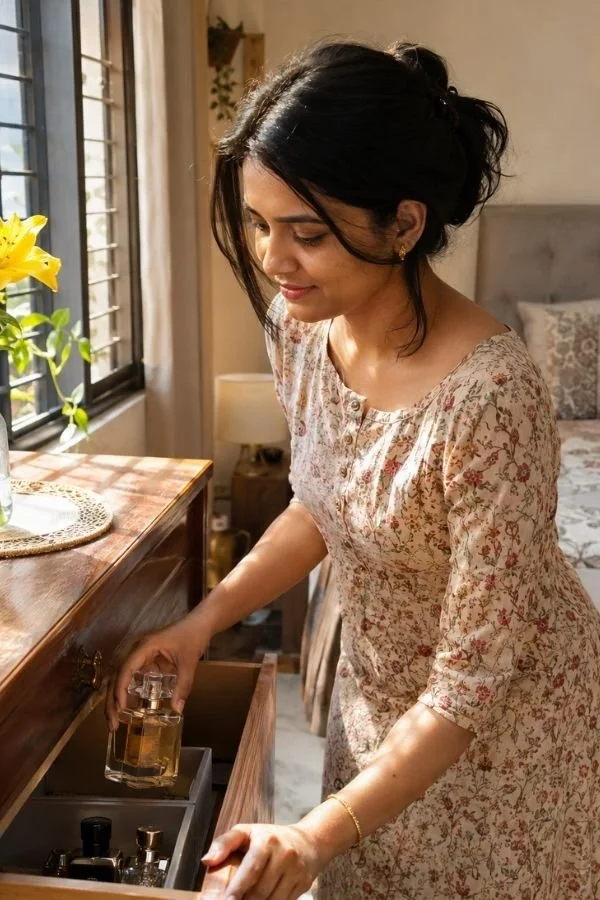
Here's a possibility many perfume lovers immediately suspect.
You've worn the same fragrance for years.
You finish one bottle, purchase another, and discover that the new one doesn't seem to perform quite the same way.
Could the formula have changed?
Yes, it's possible.
But there are some important distinctions to understand.
7. Fragrance Reformulation Can Change a Perfume's Character
Reformulation happens when a fragrance manufacturer changes the composition of an existing perfume.
This may involve replacing an ingredient, changing proportions, or making other adjustments while continuing to sell the fragrance under the same name.
There are several reasons a manufacturer might do this.
For example, ingredient availability, regulatory requirements, and fragrance-industry safety standards can influence formulation decisions.
The International Fragrance Association maintains standards that restrict, prohibit, or specify conditions for the use of certain fragrance materials.
These standards can influence how perfume formulas are developed or maintained.
However, a change in industry standards doesn't prove that your particular perfume has been reformulated.
And even when a fragrance has been reformulated, that doesn't automatically mean the newer version is weaker or less long-lasting.
A change could affect its scent, performance, or neither in a way you'd noticeably detect.
8. How to Check Whether Your Perfume Has Been Reformulated
If you've recently purchased a new bottle and noticed a difference, begin by checking the details.
Make sure you've bought the same fragrance concentration.
For example, an Eau de Toilette and an Eau de Parfum may share a fragrance name while having different compositions.
Also check whether you've purchased a different version, flanker, or limited-edition release.
A flanker is a related fragrance released under an existing perfume name, often with its own variation of the original scent.
If everything appears identical, you can contact the brand directly and ask whether the fragrance has undergone a formulation change.
Comparing a well-preserved older bottle with a new bottle may also be informative.
But be careful about drawing conclusions from batch codes or packaging differences alone.
They don't necessarily reveal whether a formula has changed.
And if you're still using the exact same bottle you've always used, a recent reformulation cannot explain a sudden change in that bottle's performance.
That's a distinction worth remembering before blaming the manufacturer.
What About Hormonal Changes or Aging?
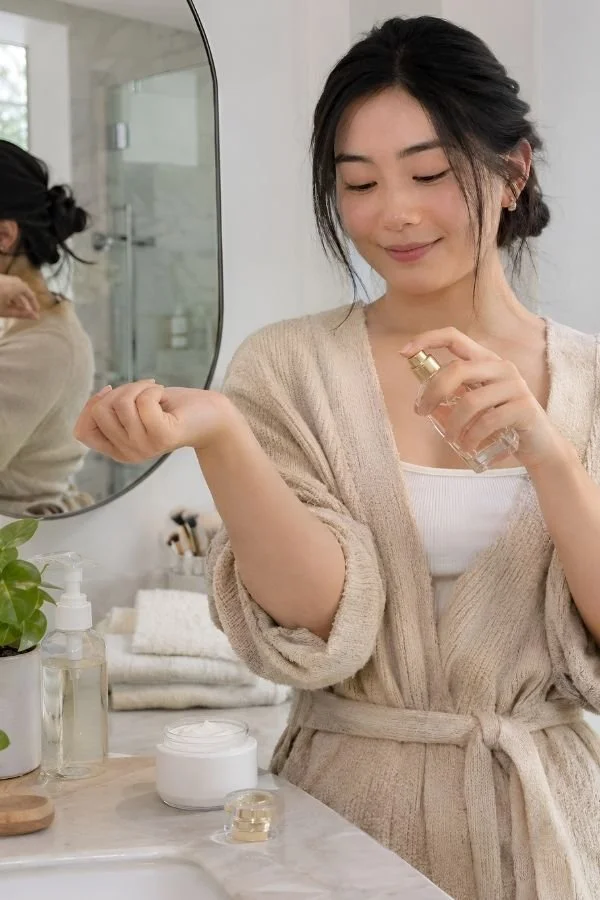
Our bodies change over time, and those changes may influence both skin condition and smell perception.
For example, hormonal changes can affect skin characteristics, while aging and certain health conditions may influence how well we detect odors.
The NIDCD identifies aging and hormonal disturbances among the factors associated with changes in the sense of smell.
However, we shouldn't assume that menopause, a particular age, or one hormonal change automatically makes perfume fade faster.
The research on perfume evaporation isn't extensive enough to support such a universal claim.
If you've noticed your skin becoming drier, it may be worth reviewing your moisturizing routine.
And if your ability to smell familiar fragrances has changed more broadly, a healthcare professional may be able to help identify the cause.
The important thing is to look at what has actually changed rather than assuming there's one explanation for everyone.
The Parlor Notes: How to Find Out Why Your Perfume Seems Weaker
If your favorite fragrance suddenly seems to have lost its staying power, you don't need to buy another bottle immediately.
Start with a few simple observations.
Start with the perfume itself. Has the fragrance changed in smell, appearance, or the way it develops? Consider how long you've owned it and where it's been stored.
Think about whether it's the same bottle. If the difference began after purchasing a replacement, confirm that you've bought the same concentration and version.
Consider your skin and routine. Have you changed body lotions, started washing the application area more frequently, or been spending more time in different temperatures?
Check your sense of smell. Can you still smell coffee, flowers, food, and other familiar aromas normally? If your perfume seems faint but other people can detect it, adaptation may be contributing.
Give the fragrance a fair comparison. On two similar days, apply the same amount to the same area of clean skin and notice how it develops without constantly checking it.
You can also ask someone who hasn't been continuously exposed to your perfume whether they can still detect it.
That won't provide a scientific measurement, but it can help you understand whether the fragrance has genuinely become faint or simply less noticeable to you.
Avoid changing several things at once.
If you switch moisturizers, application areas, and perfume amounts all on the same day, it becomes difficult to know which change made a difference.
A little patience can tell you more than immediately doubling your usual number of sprays.
What Should You Do If Your Perfume Still Doesn't Last?
Once you've considered the possible explanations, you can make a few practical adjustments.
If your skin has become dry, try a comfortable fragrance-free moisturizer before applying perfume. The benefit for fragrance longevity isn't guaranteed, but it's a reasonable habit to explore.
If you've been applying perfume to an area that's frequently washed or rubbed, experiment with another comfortable application point.
If your bottle has been exposed to heat or sunlight, move it to a more suitable storage location.
Proper storage won't reverse chemical changes that have already occurred, but it can help protect the fragrance going forward.
And if your nose has simply become accustomed to your signature scent, resist the temptation to keep spraying more.
You may already be wearing enough perfume.
There's also nothing wrong with refreshing a fragrance when it has genuinely faded.
Not every perfume needs to last from morning until bedtime to be enjoyable.
But if a fragrance that once performed beautifully has changed considerably, it's worth understanding why before replacing it.
Understanding Why Your Favorite Perfume Has Changed
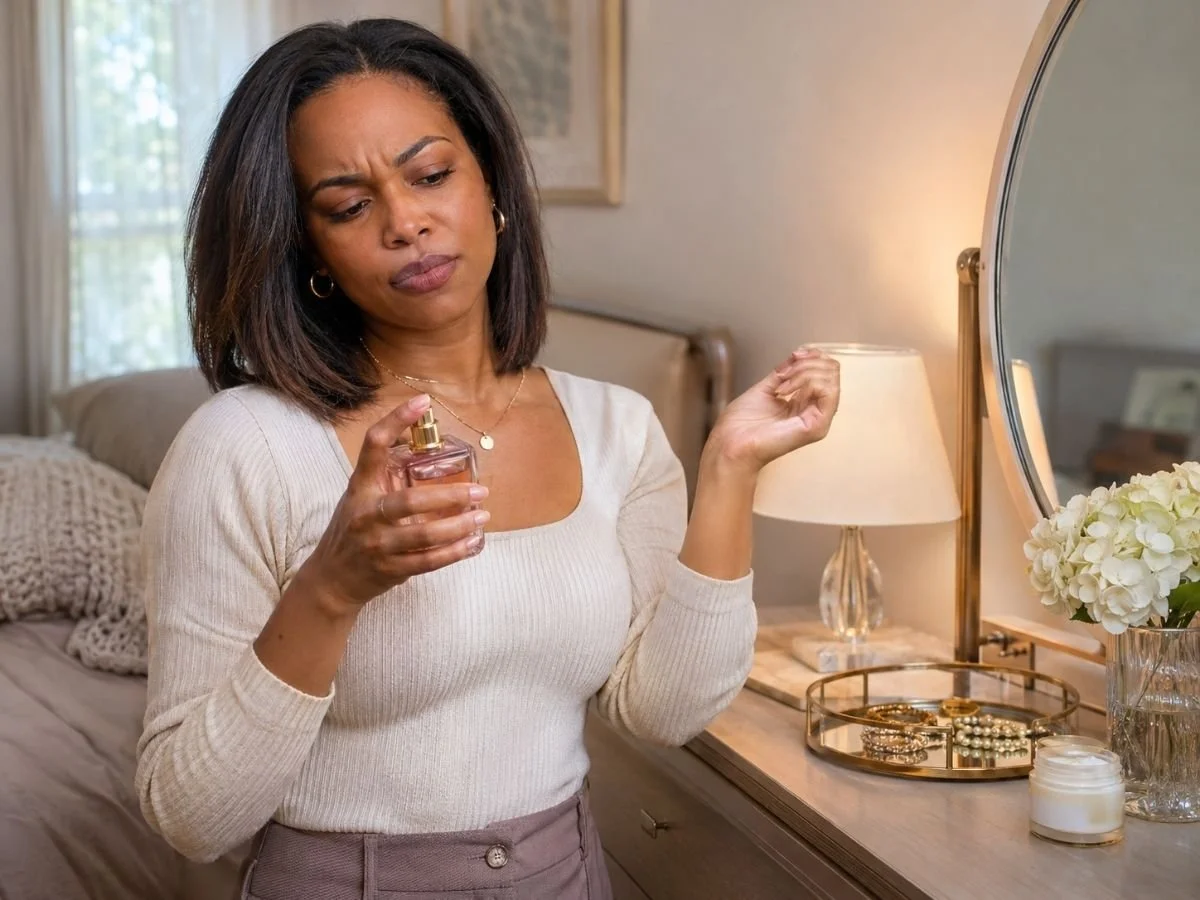
So why did your perfume suddenly stop lasting as long as it used to?
There isn't one explanation that applies to everyone.
Your skin condition or daily routine may have changed.
Your perfume may have been affected by its age or storage conditions.
If you've purchased a new bottle, there may be a difference between the versions.
Or your sense of smell may have become less responsive to a fragrance you've worn regularly.
Recent research helps us understand how these factors can influence fragrance evaporation and perception, but it doesn't give us a universal formula for predicting perfume longevity.
The most useful thing you can do is consider what changed around the time you noticed the difference.
Start with the simple possibilities before assuming your perfume has been reformulated or that you need to replace it.
Sometimes a small adjustment to your routine is all that's worth trying.
And sometimes the fragrance hasn't changed at all—only the way you're experiencing it.
The important thing is to understand your perfume well enough to enjoy it without constantly wondering whether it's still there.
After all, that favorite bottle earned its place on your dressing table for a reason.
Before You Leave the Parlor💕
Don't slip out without signing the guest book — just drop a note in the comments below.
Have you ever noticed that a perfume you've worn for years suddenly doesn't seem to last as long?
Tell us which fragrance it was and whether you discovered what changed—we would love to hear about your experience.
Beauty Starts at the Parlor™.
