
You've probably heard perfume lovers describe a fragrance as long-lasting, beautifully projecting, or having wonderful sillage. But what do those terms actually mean? Here's how to understand the three qualities that describe perfume performance—and why knowing the difference can help you choose fragrances you'll truly enjoy wearing.
You find a perfume that smells absolutely beautiful.
Perhaps it's a soft, romantic floral, a warm vanilla with a hint of amber, or an elegant fragrance with just enough musk to make you feel wonderfully put together.
You spray it on, enjoy that lovely first impression, and begin your day.
Hours later, you can still detect a delicate trace on your wrist.
But something has changed.
The fragrance that seemed to surround you when you first applied it now stays close to your skin.
And perhaps nobody notices it when you walk past.
Does that mean your perfume has poor performance?
Not necessarily.
If you've spent time reading perfume reviews or exploring fragrance discussions, you've probably encountered three terms: longevity, projection, and sillage.
They're often discussed together, and sometimes people use them as though they mean the same thing.
But they describe three different aspects of how a perfume behaves.
Longevity refers to how long a fragrance remains detectable. Projection describes how far its scent travels from your skin. Sillage describes the trail of fragrance you leave behind as you move.
A perfume can perform beautifully in one area without being particularly strong in the others.
And understanding those differences can make shopping for perfume much more enjoyable.
Let's explore what each term means, how they work together, and what to look for when choosing your next fragrance.
What Does Longevity Mean in Perfume?
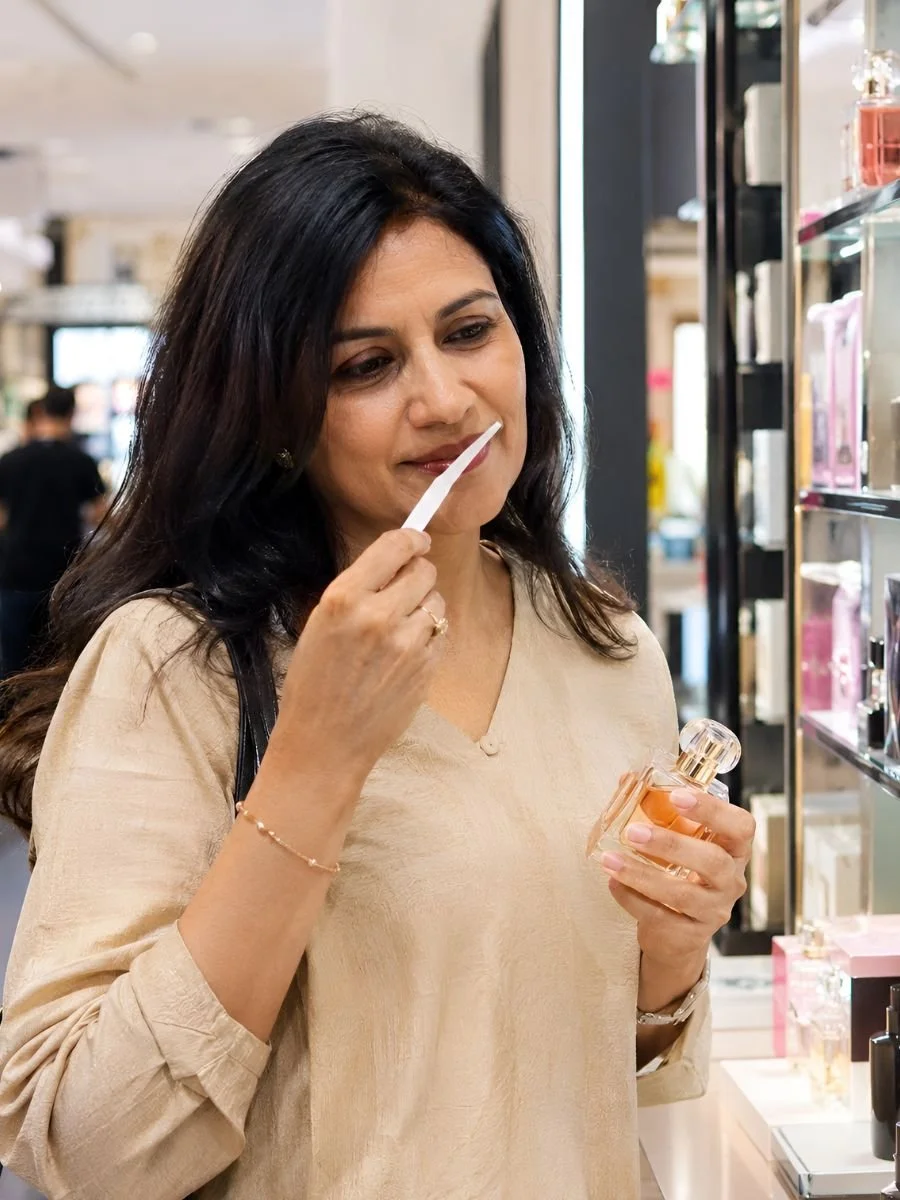
Longevity is probably the most familiar fragrance performance term.
It describes how long a perfume remains detectable after you apply it.
If you spray your fragrance in the morning and can still smell it on your skin later in the afternoon, you're experiencing its longevity.
But there's something important to understand.
A Long-Lasting Perfume Doesn't Have to Smell Strong All Day
Imagine applying a beautiful perfume with sparkling bergamot, delicate jasmine, and a soft sandalwood base.
For the first few minutes, the fragrance is bright and noticeable.
After an hour, the citrus has softened, and the floral notes become more prominent.
Later in the afternoon, you can still detect a gentle trace of sandalwood when you bring your wrist toward your nose.
The fragrance has changed considerably, but it hasn't completely disappeared.
That's an example of longevity.
A perfume can remain detectable for hours even when its initial intensity has faded.
According to Redolia Perfumery's October 2026 guide to fragrance performance, longevity describes how long a fragrance stays detectable, rather than how far its scent travels.
That's an important distinction when reading perfume reviews.
Someone might describe a fragrance as lasting eight hours, but that doesn't necessarily mean it remains equally noticeable throughout those eight hours.
It may become much softer as it develops.
What Determines How Long Perfume Lasts?
Fragrance longevity depends partly on the physical and chemical properties of its aromatic materials.
Some fragrance molecules evaporate more readily, while others remain on the application surface longer.
The perfume's formulation also matters.
And the surface receiving the fragrance can influence how those materials are released.
A 2025 study published in the International Journal of Cosmetic Science investigated fragrance evaporation on the skin of ten volunteers.
Researchers found that skin characteristics, including hydration and surface roughness, influenced the evaporation of certain fragrance molecules.
However, the effects varied between individual compounds.
The small study doesn't establish exact wear times for finished commercial perfumes, but it helps explain why the same fragrance may behave differently from person to person.
Your activities and surroundings can influence the experience, too.
A perfume applied to your wrists may be affected by frequent handwashing, while warmth and environmental conditions can change how its scent is released.
So when someone tells you a perfume lasts all day, remember that their experience may not be identical to yours.
What Does Projection Mean in Perfume?
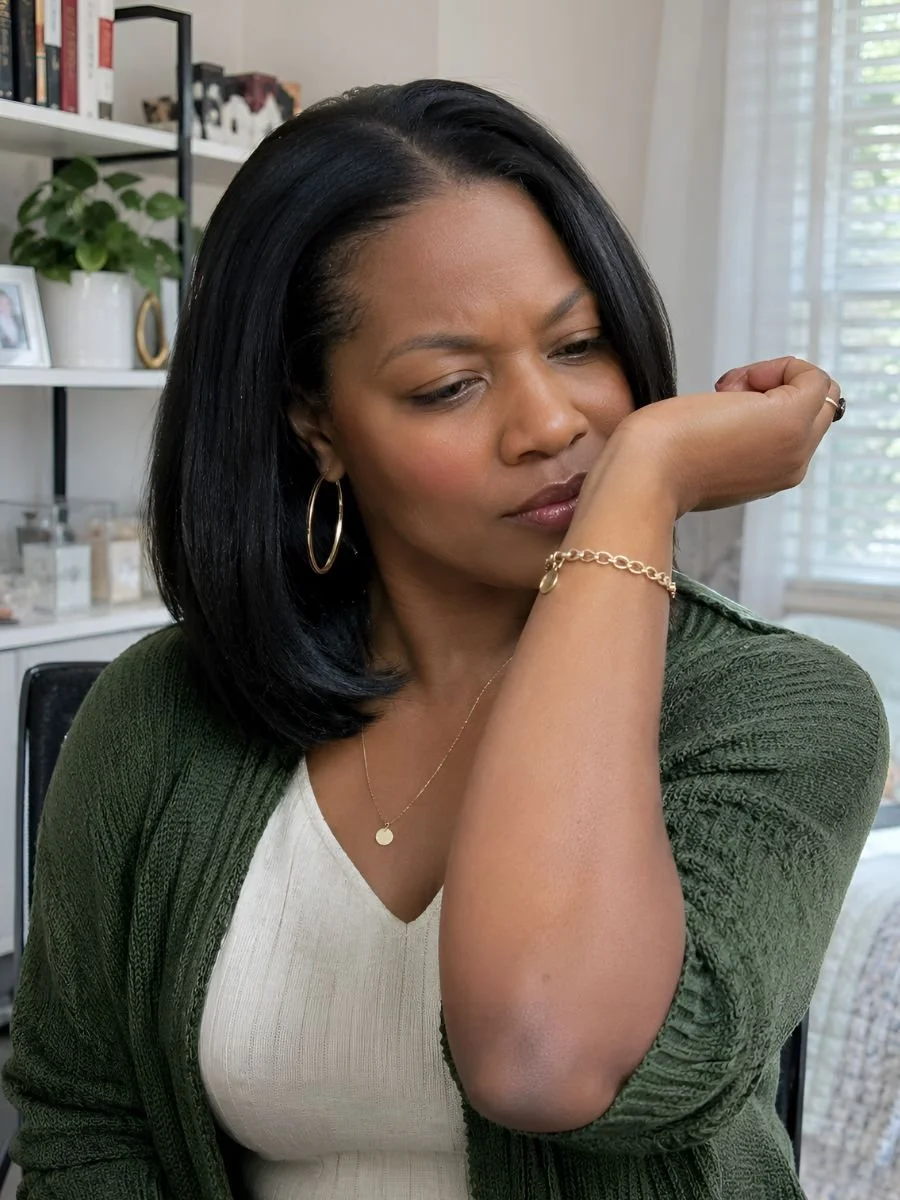
Now let's talk about something quite different.
Have you ever sat beside someone and immediately noticed their beautiful perfume, even though you weren't particularly close to them?
Perhaps it was an elegant rose fragrance, a warm amber, or a fresh floral that seemed to gently fill the space around its wearer.
That's fragrance projection.
Projection describes how far a perfume's scent travels from the person wearing it at a particular moment.
Think of Projection as the Scent Around You
Imagine standing in a room wearing your favorite perfume.
If someone a short distance away can detect your fragrance without leaning toward you, your perfume is projecting into the surrounding air.
If the scent is noticeable only when someone comes very close, its projection is softer.
Perfume lovers sometimes describe this as a fragrance's scent bubble.
A perfume with strong projection has a more noticeable presence beyond the wearer's skin.
A perfume with soft projection remains more intimate.
Neither style is inherently better.
A delicate fragrance that stays close to your body can be just as beautiful as one that makes a stronger impression.
The difference lies in how you want your perfume to be experienced.
Does Projection Stay the Same Throughout the Day?
Not usually.
A perfume's projection can change as its composition develops.
You may notice stronger projection shortly after applying a fragrance, followed by a softer presence as its more volatile materials evaporate.
But the exact pattern depends on the formula.
Some perfumes have a particularly noticeable opening and become intimate relatively quickly.
Others maintain a more noticeable presence for longer.
A September 2026 fragrance guide published by Sacred Fragrance explains that projection describes how far a perfume radiates at a particular stage of wear, rather than representing one fixed distance throughout the day.
That's why judging a perfume's projection immediately after spraying doesn't tell you everything about how it will behave several hours later.
A fragrance that initially seems quite expressive may become a soft skin scent by the afternoon.
And it can still have good longevity.
What Does Sillage Mean in Perfume?
Now we arrive at perhaps the most elegant-sounding term in the fragrance world.
Sillage.
Pronounced approximately see-YAHZH, the word comes from French and refers to the wake or trail left behind by something moving through water.
In perfumery, sillage describes the scented trail a person leaves in the air as they move.
And there's something rather romantic about that idea.
Sillage Is the Fragrance Trail You Leave Behind
Imagine walking through an elegant hotel lobby.
A woman passes by wearing a beautiful perfume.
A moment later, you catch a delicate trace of her fragrance lingering in the air.
Perhaps it's a soft jasmine, a warm amber, or a powdery floral that leaves you wondering what she's wearing.
That's sillage.
It's the fragrance trail associated with her movement through the space.
Unlike projection, which describes how far perfume extends around someone at a given moment, sillage describes the scent noticed as or after that person passes.
The 2026 Redolia Perfumery guide makes this distinction by separating the scent surrounding a wearer from the trail left behind.
And while the two qualities are closely related, they're useful to think about separately.
Does Strong Sillage Mean Your Perfume Is Long-Lasting?
Not necessarily.
A perfume may create a noticeable scent trail when you first apply it, then become much softer after a relatively short time.
Another fragrance may remain detectable on your skin for hours without leaving a particularly noticeable trail as you walk.
The difference depends on how fragrance materials enter and move through the surrounding air.
Air movement, the amount of perfume applied, and the fragrance's composition can influence what someone nearby notices.
Sillage also isn't something the wearer can always judge easily.
You may notice someone else's fragrance trailing through a room, but you can't experience your own scent trail from the same perspective.
That's one reason feedback from another person can be helpful when evaluating a perfume.
What's the Difference Between Projection and Sillage?

This is where many perfume lovers become confused.
Both projection and sillage describe fragrance beyond the surface of your skin.
So why do we need two terms?
The easiest way to understand the distinction is to imagine two situations.
Projection Is What People Notice While You're There
You're sitting at a restaurant wearing a beautiful floral perfume.
Someone seated across from you notices your fragrance.
You're still sitting at the table.
That's an example of projection.
Your perfume is radiating into the air around you while you're present.
Sillage Is What People Notice As You Move Away
Now imagine standing up and walking toward the restaurant's entrance.
As you pass another table, someone catches a trace of your perfume.
The scent may remain briefly noticeable after you've walked by.
That's sillage.
Your movement has created a scented trail.
The distinction is useful, although these aren't completely independent physical properties.
Both involve fragrance molecules entering and moving through the air.
And everyday perfume reviews sometimes use the terms interchangeably.
Still, thinking about projection as the scent surrounding you and sillage as the trail accompanying your movement makes the difference much easier to understand.
Can a Perfume Have Excellent Longevity but Weak Projection and Sillage?
Absolutely.
In fact, this is one of the most important things to understand about fragrance performance.
A perfume doesn't need to be noticeable across a room to last a long time.
Imagine a soft musk that remains detectable on your skin well into the evening.
You can still smell it when you bring your wrist close to your nose.
But someone standing several feet away may barely notice it.
And when you walk through a room, you may leave very little detectable scent behind.
That perfume can have good longevity, soft projection, and subtle sillage.
Now imagine a bright, expressive fragrance that makes a noticeable impression when you first apply it.
Its scent travels farther into the surrounding air, and someone notices it as you pass.
But after a few hours, the fragrance becomes very faint.
That perfume may have strong initial projection and noticeable sillage but relatively modest longevity.
Neither experience makes one perfume automatically better than the other.
As explained in NASMÉ Parfums' 2026 discussion of fragrance performance, longevity, projection, and sillage describe different qualities, and strength in one doesn't guarantee strength in the others.
The important question is which combination suits your preferences.
Does Eau de Parfum Have Better Longevity, Projection, and Sillage?
You've probably heard that Eau de Parfum is stronger than Eau de Toilette.
Generally, Eau de Parfum contains a higher concentration of fragrance materials than Eau de Toilette.
But that doesn't automatically mean it will last longer, project farther, or leave a more noticeable trail than every Eau de Toilette.
The actual formula matters.
Different aromatic materials have different evaporation and diffusion characteristics.
Even two concentration versions of the same named fragrance may contain differences in their compositions.
A richer concentration may feel more substantial without necessarily projecting farther.
And a lighter fragrance can sometimes have a bright, expressive opening that travels noticeably through the air.
That's why concentration alone isn't a reliable way to predict all three aspects of perfume performance.
When comparing fragrances, don't rely entirely on whether the bottle says Eau de Toilette, Eau de Parfum, or Extrait de Parfum.
Try the exact version you're considering.
Allow it to develop on your skin.
And consider how it performs after the initial opening has settled.
How to Understand Perfume Performance Reviews
If you've ever browsed fragrance reviews, you've probably noticed that people describe perfume performance in very different ways.
One reviewer might say a perfume has wonderful longevity.
Another might describe it as having weak projection.
And someone else may praise its beautiful sillage.
Those opinions aren't necessarily contradictory.
The reviewers may be discussing different aspects of the same fragrance.
What Does It Mean When a Perfume Is Called a Skin Scent?
A skin scent is a fragrance, or a stage of a fragrance, that remains noticeable mainly at close range.
It may have soft projection and very little detectable trail.
But it can still remain on the skin for hours.
Some perfume lovers actively prefer that intimate style.
A subtle fragrance can be especially appealing when you want something personal rather than a scent that announces your presence across the room.
What About a Perfume Described as a Powerhouse?
You may also encounter descriptions such as powerhouse or beast mode.
These are informal fragrance-community expressions, not standardized scientific performance categories.
They're often used for perfumes considered particularly strong, noticeable, or long-lasting.
But they don't tell you exactly how many hours a perfume will remain detectable or how far its scent will travel.
Similarly, a community longevity rating of eight out of ten doesn't mean the perfume will last exactly eight hours.
These ratings describe people's impressions using different scales and conditions.
They're useful for identifying fragrances you may want to sample.
But they shouldn't be treated as guarantees.
The Parlor Notes: How to Evaluate Longevity, Projection, and Sillage
If you're curious about how your favorite perfume performs, there's a simple way to explore all three qualities.
You don't need special fragrance equipment.
Just choose a perfume you know well and, if possible, someone who enjoys fragrance enough to help you make a few observations.
Try this little experiment:
Start with clean skin and apply your usual amount of perfume.
Notice the fragrance's opening, then allow it to settle without repeatedly checking your wrists.
To assess projection, ask someone whether they can detect your fragrance while standing or sitting a comfortable distance away.
To observe sillage, walk naturally past that person and ask whether they notice a scent trail as you move away.
To assess longevity, check whether the fragrance remains detectable on your skin at different points throughout the day.
Repeat the observations later, when the perfume has become softer.
Try to keep the surroundings reasonably consistent.
Airflow, temperature, the amount of perfume applied, and another person's sensitivity can influence the results.
And remember that someone else's perception isn't a laboratory measurement.
This exercise is simply a way to become more familiar with your fragrance's personality.
Perhaps you'll discover that your perfume has beautiful longevity but remains close to your skin.
Or maybe its loveliest quality is the delicate trail it leaves as you move.
You may even find that a fragrance with relatively modest longevity has just the right presence for the occasions when you enjoy wearing it.
Understanding those distinctions can be much more useful than asking whether a perfume is simply strong or weak.
Which Matters More: Longevity, Projection, or Sillage?
The answer depends entirely on what you want from your perfume.
If you enjoy wearing fragrance throughout a long day, longevity may be your priority.
You want a scent that remains detectable without needing frequent reapplication.
If you enjoy a fragrance that people nearby can notice, projection may matter more.
And if you love the idea of leaving a beautiful, subtle fragrance trail as you walk past, sillage may be particularly appealing.
But there's no reason to assume that the strongest possible performance is always the most desirable.
An intimate perfume can be lovely for everyday wear.
A more expressive fragrance may suit an evening occasion.
And in shared spaces, especially offices, restaurants, or public transportation, softer projection and restrained sillage may be more considerate.
There isn't one perfect combination for every person or every situation.
The loveliest fragrance is often the one whose character and performance feel appropriate for the way you want to wear it.
Choosing a Perfume That Performs the Way You Love

Now that you understand longevity, projection, and sillage, perfume shopping can become a little more thoughtful.
Instead of simply asking whether a fragrance is long-lasting, consider what kind of presence you'd like it to have.
Do you want something that stays with you quietly throughout the day?
Would you prefer a fragrance that people can notice when they're nearby?
Or do you love a perfume that leaves a delicate trail as you move through a room?
These are different preferences, and they deserve different considerations.
The next time you read a perfume review, pay attention to which quality the reviewer is describing.
A fragrance praised for excellent longevity may not have particularly strong projection.
A perfume with noticeable sillage may not remain detectable on your skin until bedtime.
And a soft skin scent may turn out to be exactly the kind of fragrance you love wearing most.
Longevity tells you how long the fragrance remains.
Projection tells you how far it reaches.
Sillage tells you what it leaves behind.
Once you understand the difference, you're no longer judging perfume performance by strength alone.
You're choosing the kind of fragrance experience that makes you happiest.
And sometimes, the most memorable perfume isn't the one that fills the entire room.
It's the one that leaves just enough of a beautiful impression to make someone wonder what you're wearing.
Before You Leave the Parlor💕
Don't slip out without signing the guest book — just drop a note in the comments below.
When choosing a perfume, which matters most to you: long-lasting fragrance, noticeable projection, or a beautiful scent trail?
Tell us which quality you prefer and what perfume gives you that experience—we would love to hear about your favorites.
Beauty Starts at the Parlor™.
