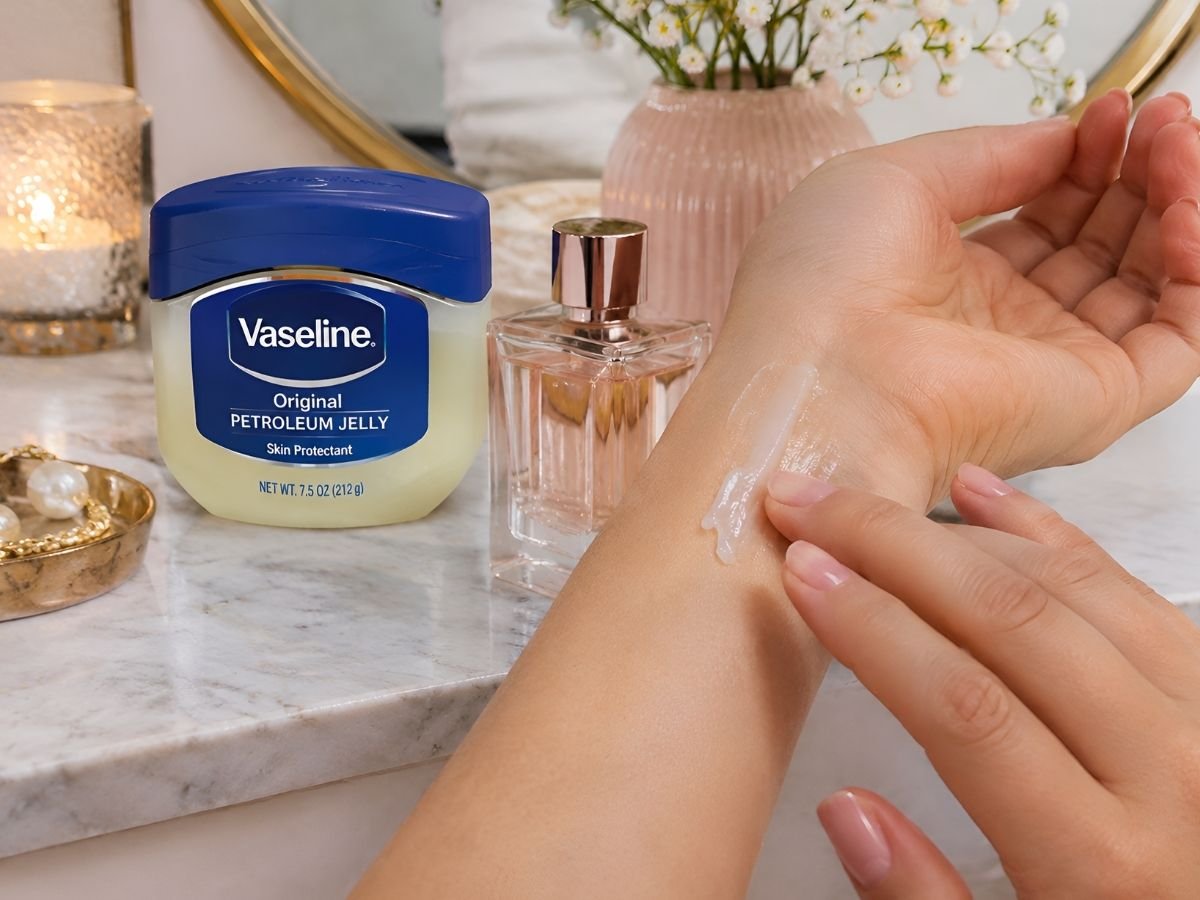
You've probably heard that dabbing a little Vaseline onto your skin before spraying perfume can help your fragrance last all day. But does this popular beauty trick actually work, or is it another perfume myth? Here's what recent research reveals about petroleum jelly, skin hydration, and fragrance longevity.
You find a perfume you absolutely adore.
Perhaps it's a beautiful rose fragrance, a warm vanilla with a hint of amber, or an elegant floral that makes you feel wonderfully put together.
You spray it on in the morning, enjoy that lovely first impression, and hope the fragrance stays with you throughout the day.
But by lunchtime, the scent has become noticeably softer.
Then someone shares a little beauty tip.
Put a dab of Vaseline on your pulse points before spraying your perfume, and supposedly, your fragrance will last for hours longer.
It sounds wonderfully simple.
After all, petroleum jelly is inexpensive, easy to find, and probably already sitting somewhere in your bathroom cabinet.
But can something as ordinary as Vaseline really make your favorite perfume last longer?
Here's what you should know.
Petroleum jelly may change how a perfume behaves on your skin, and its ability to reduce moisture loss provides a reasonable explanation for why the trick might help. However, as of 2026, there isn't sufficient direct scientific evidence showing that applying Vaseline before a finished commercial perfume reliably extends its noticeable wear time.
That doesn't mean the trick is useless.
It means there's a difference between a beauty tip that makes scientific sense and one that's actually been proven to work.
Let's explore what petroleum jelly does, what fragrance researchers have discovered, and whether this familiar perfume trick is worth trying.
What Is the Vaseline Perfume Trick Supposed to Do?
The method is simple.
You apply a small amount of petroleum jelly to an area where you normally wear perfume, such as your wrist or inner elbow.
Then you spray your fragrance over it.
The idea is that the jelly creates a protective layer that helps the fragrance remain on your skin instead of evaporating as quickly.
Some people claim this makes their perfume last several extra hours.
Others say they notice little difference.
And that's where understanding what petroleum jelly actually does becomes important.
Petroleum Jelly Helps Your Skin Retain Moisture
Petroleum jelly, also known as petrolatum, is an occlusive skin protectant.
An occlusive forms a protective layer that reduces water loss from the skin.
According to the American Academy of Dermatology, petroleum jelly can help relieve dry skin by protecting it from moisture loss.
The organization also recommends applying petroleum jelly while skin is damp for better moisturizing results.
Original Vaseline® Healing Jelly contains 100% white petrolatum.
It doesn't contain added fragrance, and its primary purpose is to protect the skin and help retain moisture.
That's a well-established skincare benefit.
But here's the important distinction.
Helping skin retain water isn't automatically the same as helping perfume retain its fragrance.
Water molecules and aromatic fragrance molecules have different physical and chemical properties.
A product that slows water loss from your skin won't necessarily slow the evaporation of every perfume ingredient.
And that brings us to what the research actually shows.
What Does Science Say About Petroleum Jelly and Perfume Longevity?
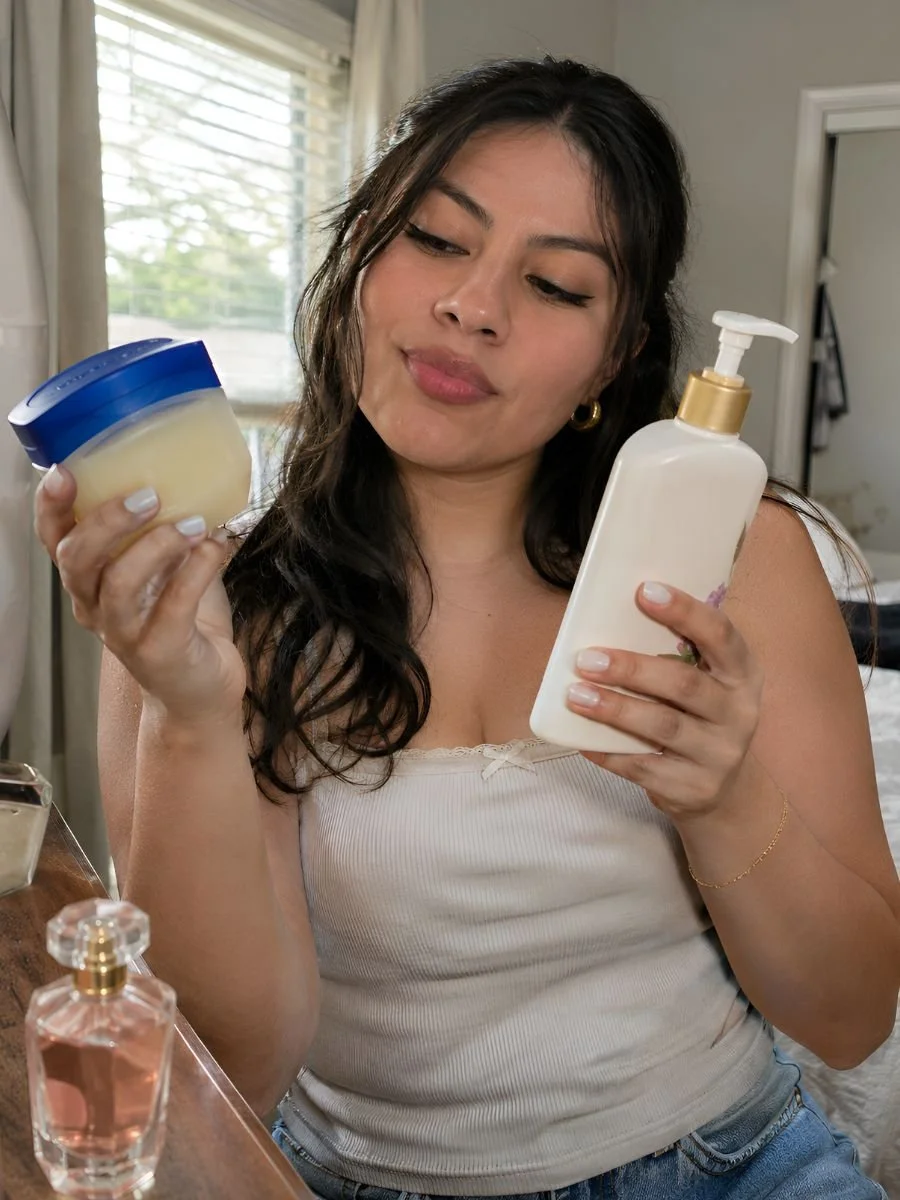
There are scientific studies examining petroleum jelly, skin hydration, and fragrance evaporation.
However, they investigate different questions.
Understanding those differences is essential before deciding whether Vaseline is a proven perfume fixative.
A 2025 Study Confirmed Petroleum Jelly's Moisturizing Effects
A 2025 randomized clinical study published in Cosmetics examined how petroleum jelly and extra virgin olive oil affected skin barrier function.
The study involved 54 healthy adults.
Researchers applied the products to participants' forearms and measured several skin characteristics, including hydration and transepidermal water loss.
Transepidermal water loss refers to the water that passes through the outer layers of the skin and evaporates into the surrounding air.
Both products improved certain measurements of skin condition.
Petroleum jelly also reduced water loss, demonstrating its occlusive properties.
These findings support what dermatologists already know: petroleum jelly can be useful for protecting dry skin and helping it retain moisture.
But the researchers didn't apply perfume over the petroleum jelly.
They weren't investigating fragrance longevity.
So while this study supports the moisturizing benefits of petrolatum, it doesn't establish that Vaseline makes perfume last longer.
Another 2025 Study Examined How Fragrance Evaporates From Skin
A second study gets us closer to the perfume question.
Published in the International Journal of Cosmetic Science in June 2025, Exploring the Impact of Fragrance Molecular and Skin Properties on the Evaporation Profile of Fragrances investigated how fragrance molecules behaved on human skin.
Researchers studied ten volunteers and examined the evaporation of eight different fragrance molecules.
They also measured characteristics such as skin hydration, surface roughness, and water loss.
The results showed that skin properties influenced how certain fragrance materials evaporated.
Hydration was among the most influential factors identified.
However, the effects varied depending on the properties of individual fragrance molecules.
Some materials were more sensitive to hydration, while others were influenced by the skin's surface characteristics.
The study was small, and the researchers emphasized that additional investigation is needed.
Most importantly, they didn't compare perfume applied over petroleum jelly with perfume applied directly to bare skin.
So the findings can't tell us how many extra hours Vaseline might add to a particular fragrance.
Still, they provide a scientific reason to investigate how moisturizing products could influence perfume performance.
A 2026 Study Shows Why the Type of Fixative Matters
There's another interesting development in fragrance research.
A July 2026 study published in the Flavour and Fragrance Journal examined how a specialized polymer-based fixative affected fragrance release.
Researchers tested different concentrations of the fixative in a model perfume formulation.
They found that the additive could delay the release of certain top and heart notes.
Interestingly, using more of the fixative didn't always produce better results.
The formulation containing a moderate amount performed better for several measured fragrance materials than the formulation containing a higher amount.
This demonstrates that fragrance longevity can be influenced by how aromatic molecules interact with other materials in a formula.
But the additive studied wasn't petroleum jelly, and the experiment wasn't a test of Vaseline applied beneath perfume on human skin.
So we cannot use these results to claim that Vaseline works like a professionally formulated perfume fixative.
What we can say is that fragrance release is complicated.
And simply creating a thicker layer beneath perfume doesn't guarantee a longer-lasting scent.
Could Vaseline Actually Help Your Perfume Last Longer?
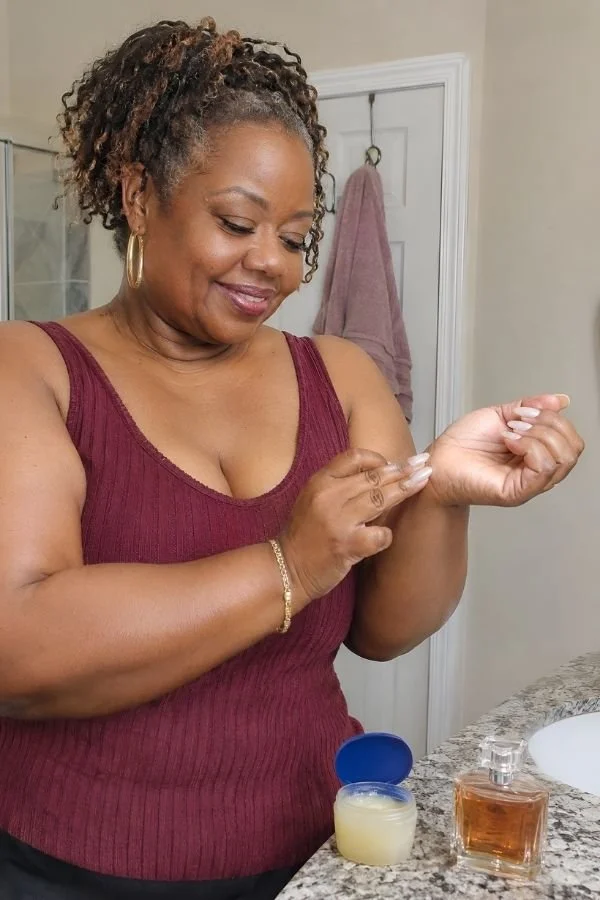
Now that we've examined the research, let's consider what might happen when you spray perfume onto petroleum jelly.
There are a few plausible possibilities.
First, petroleum jelly can reduce moisture loss and change the condition of the skin's surface.
Because skin hydration can influence the evaporation of some fragrance molecules, this may affect how certain perfumes behave.
Second, petroleum jelly leaves a protective, oily film on the skin.
Some fragrance materials may interact with that film differently than they interact with bare skin.
Depending on the fragrance, those interactions could influence how the perfume is released into the air.
But slower release doesn't automatically mean a better fragrance experience.
If a material retains fragrance too strongly, it may also reduce how much scent reaches your nose at a particular moment.
That's why a perfume could potentially smell softer over petroleum jelly without necessarily disappearing more slowly.
And another fragrance might behave differently.
The problem is that we don't yet have enough direct evidence to predict those outcomes reliably.
So the most accurate answer is this:
The Vaseline perfume trick is scientifically plausible, but its effect on the longevity of finished perfumes hasn't been adequately established through controlled research.
You may notice a difference with your favorite fragrance.
Or you may find that applying petroleum jelly changes very little.
Neither experience should be treated as proof that the method works—or fails—for every perfume.
How to Try the Vaseline Perfume Trick
If you're curious about this method, there's no need to turn it into an elaborate beauty routine.
A small amount of plain petroleum jelly is enough to experiment with.
1. Begin With Clean, Comfortable Skin
Choose an area where you normally apply perfume.
Your wrist or inner elbow may be convenient, provided the skin isn't irritated or broken.
If your skin is dry, you can follow your usual moisturizing routine first.
There's no reason to apply perfume over skin that's uncomfortable simply to see whether it lasts longer.
2. Apply a Very Thin Layer of Petroleum Jelly
Use a tiny amount of plain, fragrance-free petroleum jelly.
You don't need a thick, shiny coating.
Gently spread it across a small area, leaving a thin film.
Because petroleum jelly is occlusive, it doesn't disappear into the skin in quite the same way as a lightweight lotion.
If you apply too much, the area may remain greasy.
That can also increase the chance of transferring the product to your clothing.
3. Apply Your Perfume Normally
Spray your usual amount of perfume onto the prepared area.
There's no need to increase the number of sprays.
Allow the fragrance to settle naturally, and avoid immediately rubbing the area against your clothing.
Keep perfume away from your eyes and avoid applying it to irritated skin.
4. Notice How Your Fragrance Develops
Pay attention to the opening, then allow the fragrance to develop throughout the day.
Does the scent seem softer than usual?
Can you still detect it after a few hours?
Does it smell different from the way it normally develops on bare skin?
These observations may tell you more than simply checking whether your perfume remains noticeable at bedtime.
And remember, you may become accustomed to smelling your own fragrance.
That can make it difficult to judge how much perfume is actually present.
Is Vaseline Better Than Regular Body Lotion for Perfume?
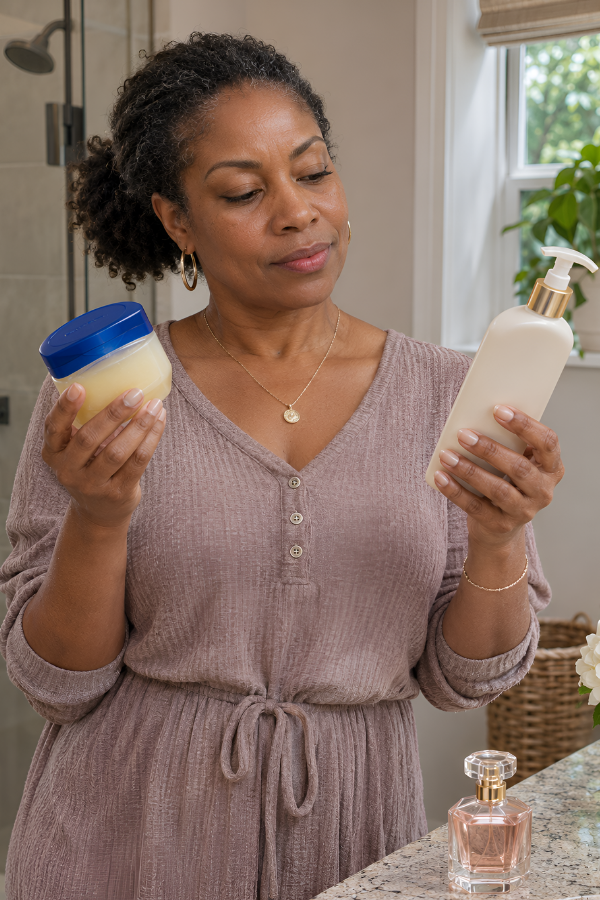
You may be wondering whether petroleum jelly is worth using if you already moisturize your skin.
After all, if both products help with dryness, does one offer a better base for perfume?
There's no reliable scientific evidence establishing that Vaseline consistently improves perfume longevity more than an ordinary fragrance-free body lotion.
The products also work somewhat differently.
Body Lotion
Most body lotions combine ingredients that help hydrate and soften the skin.
Many include humectants, which help attract or retain water, along with emollients that improve the skin's feel.
A lightweight fragrance-free lotion can be a comfortable choice if you prefer your skin to feel smooth without a heavy coating.
It may also be more convenient when you're getting dressed.
Petroleum Jelly
Petroleum jelly is particularly effective at reducing water loss.
It's useful for areas that need additional protection against dryness.
However, it leaves a more noticeable occlusive film than many lightweight lotions.
That texture may not appeal to everyone, particularly in warm weather or beneath delicate clothing.
Neither product has been proven to give every fragrance the best possible longevity.
If you already enjoy using a fragrance-free body lotion, there's no compelling research-based reason to replace it with petroleum jelly solely for perfume.
And if you like the idea of trying Vaseline on one small application area, you can experiment without changing your entire routine.
The Parlor Notes: Put the Vaseline Trick to the Test
If you'd really like to know whether petroleum jelly makes a difference for your favorite fragrance, try a simple comparison.
This won't provide a laboratory measurement, but it may help you decide whether the trick is worth keeping in your personal perfume routine.
Choose a perfume you already know well and a day when you can observe how it develops.
Apply a small amount of plain petroleum jelly to one clean, comfortable inner forearm.
Leave a comparable area on the opposite forearm free of petroleum jelly.
Apply the same amount of perfume to each area, avoiding unnecessary rubbing.
Notice how the fragrance smells when first applied.
After a few hours, compare the scents without repeatedly sniffing them throughout the day.
Repeat the comparison on another day, switching which arm receives the petroleum jelly.
If someone you trust is comfortable helping, you could also ask them to compare the fragrance on each arm.
Just remember that the results are subjective.
The amount of perfume deposited, differences between application areas, and your own sense of smell can influence what you notice.
And because you know which arm has petroleum jelly, your expectations may also affect your impression.
Perhaps you'll notice that your fragrance remains detectable longer over the jelly.
Or maybe the two applications will smell almost identical.
You may even find that the perfume's opening smells a little different.
The purpose isn't to prove a universal beauty rule.
It's to decide whether this particular method makes your favorite fragrance more enjoyable to wear.
And if you don't notice a meaningful improvement, there's no reason to add an unnecessary step to your routine.
Are There Any Downsides to Putting Vaseline Under Perfume?

For many people, plain petroleum jelly is well tolerated when applied appropriately to intact skin.
But there are a few practical considerations.
It Can Feel Greasy
A heavy layer can leave your skin feeling slippery, especially during warm weather.
That may not be particularly comfortable when you're getting dressed.
Petroleum jelly can also transfer onto fabric, so it's sensible to keep it away from delicate clothing.
It Isn't Suitable for Every Skin Situation
The American Academy of Dermatology recommends petroleum jelly for several dry-skin concerns but cautions that people who are acne-prone may develop breakouts when using it on the face.
If you're prone to breakouts, avoid turning this perfume trick into a routine that involves coating your face or other acne-prone areas with petroleum jelly.
And don't apply perfume over irritated, broken, or inflamed skin.
Petroleum Jelly Doesn't Prevent Fragrance Allergies
Plain Vaseline® Healing Jelly Original is fragrance-free, but the perfume you spray over it still contains fragrance ingredients.
Those ingredients can cause irritation or allergic reactions in some people.
The U.S. Food and Drug Administration explains that fragrance ingredients are among the substances that can trigger allergic reactions to cosmetics.
Applying petroleum jelly beneath a perfume doesn't make the perfume hypoallergenic or guarantee protection from those ingredients.
If you develop itching, redness, burning, or a rash, stop applying the fragrance to your skin.
And if reactions persist or recur, seek advice from a healthcare professional.
The purpose of wearing perfume is to enjoy it—not to tolerate discomfort for a few extra hours of fragrance.
Should You Use Vaseline to Make Your Perfume Last Longer?
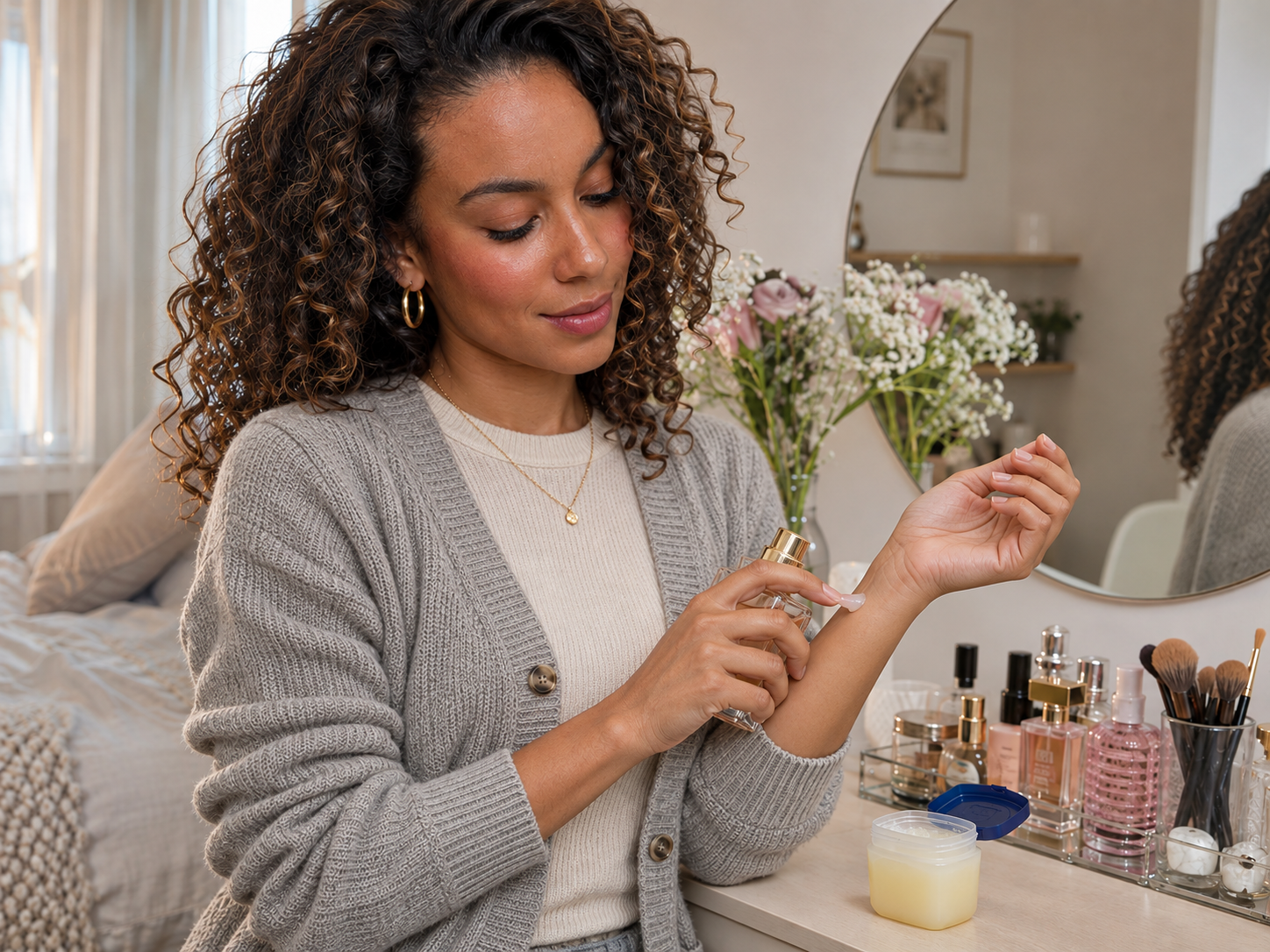
So, does petroleum jelly really make perfume last longer?
The answer is that it might help in some circumstances, but the evidence isn't strong enough to call it a proven perfume trick.
We know that petroleum jelly helps protect skin from moisture loss.
We also have recent scientific evidence showing that skin hydration can influence the evaporation of certain fragrance molecules.
And modern fragrance research demonstrates that the release of aromatic materials can be affected by the other substances with which they're combined.
But none of those findings establishes that applying Vaseline beneath your perfume will reliably make it last longer.
That's the distinction worth remembering.
If you enjoy the method and find that a particular fragrance seems to linger longer, there's nothing wrong with including it in your routine, provided your skin tolerates it.
But you don't need to coat your wrists in petroleum jelly every morning to enjoy beautiful perfume.
A comfortable moisturizing routine, thoughtful fragrance application, and an occasional refresh may be more practical for everyday wear.
And if a fragrance naturally fades after a few hours, petroleum jelly shouldn't be expected to transform it into something entirely different.
The formula itself still matters.
Perhaps the most useful lesson is that beauty advice doesn't have to be completely right or completely wrong to be worth investigating.
Some tips have strong scientific support.
Others are plausible but remain unproven.
And some simply work better for certain people's preferences than for others.
The important thing is knowing the difference.
If you decide to try the Vaseline perfume trick, enjoy the little experiment without expecting a guaranteed transformation.
You may discover that your favorite fragrance lingers a little longer.
Or perhaps you'll decide that your usual body lotion is all you need.
Either way, there's no reason to complicate a beautiful fragrance routine when a simple one already makes you happy.
Before You Leave the Parlor💕…
Don't slip out without signing the guest book — just drop a note in the comments below.
Have you ever tried putting Vaseline on your skin before applying perfume? Did your fragrance seem to last longer, or did you notice no difference at all?
Tell us which perfume you tried and what happened—we would love to hear about your experience.
Beauty Starts at the Parlor™.
