
You spray on your favorite perfume in the morning, hoping to enjoy its beautiful fragrance throughout the day. But by afternoon, the scent seems to have faded. Here are some simple ways to help your perfume linger longer—without having to use half the bottle.
There's something wonderful about putting on your favorite perfume before leaving the house.
Perhaps it's a romantic floral that makes you feel beautifully feminine, a warm vanilla that wraps around you like a soft cashmere sweater, or an elegant woody fragrance that adds the finishing touch to your outfit.
You give yourself a little spritz, catch that first lovely impression, and head out feeling perfectly put together.
But a few hours later, you find yourself wondering whether you should have sprayed a little more.
Surely there must be a way to make that beautiful fragrance last longer.
Well, there are several things you can try, and most of them are surprisingly simple.
The best way to help perfume last longer is to apply it to moisturized skin, choose your application areas carefully, avoid unnecessary rubbing, and refresh your fragrance when needed. Layering complementary products and choosing the right perfume for your preferences can also help.
You don't need an expensive collection of lotions, oils, and fragrance accessories to enjoy your perfume.
Sometimes it's the smallest changes in your daily beauty routine that make the difference.
Let's explore how to give your favorite fragrance a better chance of staying with you throughout the day.
Start With Your Skin Before Reaching for Your Perfume
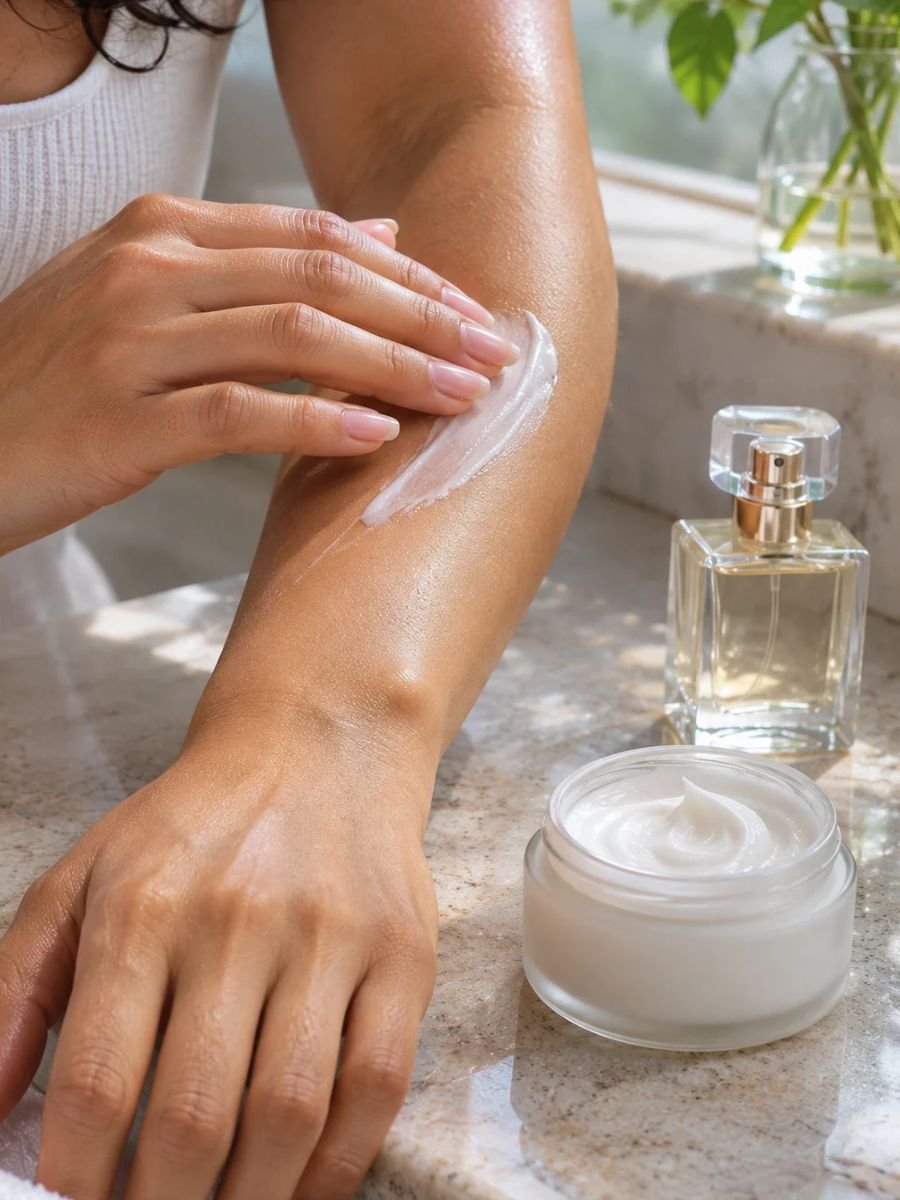
One of the most important parts of a perfume routine happens before you ever pick up your fragrance bottle.
Your skin provides the surface from which your perfume gradually evaporates, and its condition can influence how different fragrance materials behave.
That's why preparing your skin is such a sensible place to begin.
1. Moisturize Your Skin Before Applying Perfume
If your skin tends to feel dry, you may notice that certain perfumes don't seem to linger as long as you'd like.
Skin hydration can influence how fragrance molecules evaporate.
A 2025 study published in the International Journal of Cosmetic Science found that skin hydration, surface roughness, and other skin characteristics affected the evaporation of certain fragrance materials.
The study involved only ten volunteers, so it doesn't prove that every perfume will last longer simply because you apply lotion first.
Nevertheless, moisturizing is an easy and worthwhile habit to try.
After your shower, gently dry your skin and apply a fragrance-free body lotion or cream.
Give it a little time to absorb before spraying your perfume.
A fragrance-free moisturizer is particularly useful because it won't interfere with the fragrance you've chosen.
If you love a delicate rose perfume, for example, you probably want to enjoy those beautiful rose notes without an unrelated body lotion competing for attention.
The Pretty Skin Parlor™ advice: Try applying your perfume over moisturized skin for several days and compare the results with your usual routine. You may find that this little adjustment helps your fragrance remain noticeable longer.
And even if you don't notice a dramatic difference in perfume longevity, your skin still benefits from the moisturizing step.
2. Layer Your Fragrance With Complementary Products
Have you ever noticed that some perfume collections include matching body lotions, creams, and shower gels?
Those coordinating products aren't simply pretty additions to a fragrance collection.
They can also help create a more continuous scent experience throughout the day.
Fragrance layering means wearing complementary scented products together rather than relying on perfume alone.
For example, you might begin with a matching floral body lotion and finish with your favorite floral Eau de Parfum.
Or perhaps you enjoy a rich amber perfume with soft vanilla notes. A coordinating body cream may complement those warm, comforting qualities.
There are two easy ways to approach fragrance layering:
Matching scented products: Apply a body lotion or cream from the same fragrance collection before using your perfume.
Fragrance-free products: Choose an unscented moisturizer when you want your perfume to remain the main attraction.
Layering may help keep a fragrance noticeable because you're wearing scent in more than one product, although it doesn't necessarily make the perfume itself evaporate more slowly.
The important thing is to choose products that work pleasantly together.
And remember, more fragrance isn't always better.
You want your perfume to smell beautifully balanced, not like several different perfumes are competing for attention.
Where You Apply Your Perfume Makes a Difference
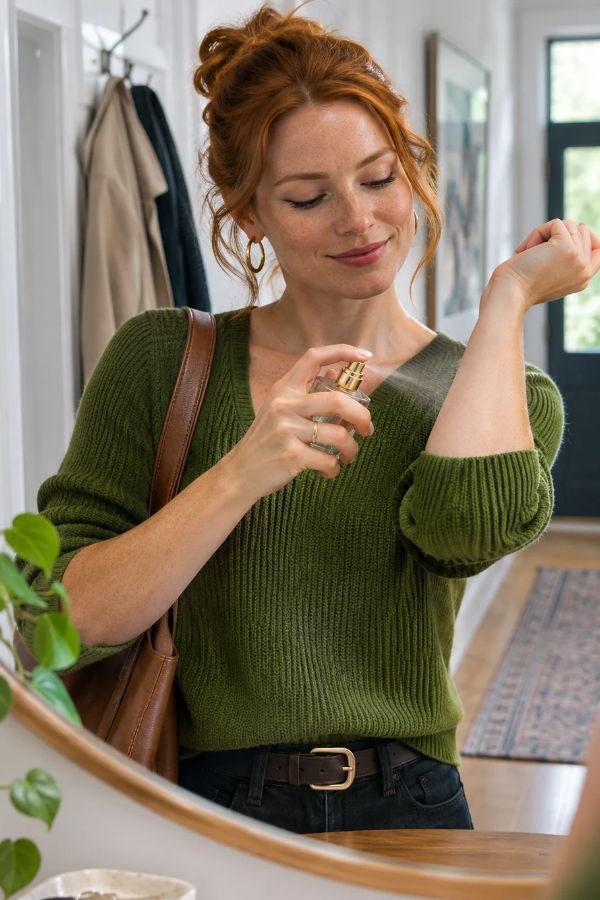
Now that your skin is prepared, let's talk about where your perfume goes.
You've probably heard that perfume should be applied to your pulse points.
That's familiar advice, but there are a few things worth understanding before you start spraying every warm spot on your body.
3. Choose Your Perfume Application Areas Carefully
Pulse points are areas where blood vessels lie relatively close to the skin's surface.
These areas are often warmer, which can help fragrance molecules evaporate and become noticeable in the air.
Popular perfume application areas include:
Wrists: A classic choice, although fragrance here may be washed away during frequent handwashing.
Sides of the neck: A lovely area for enjoying fragrance close to your face.
Inner elbows: Worth trying if your wrists are frequently washed or rubbed.
Behind the ears: A traditional application area for a subtle amount of fragrance.
Behind the knees: Sometimes chosen for fragrance worn on the lower body.
But here's something that might surprise you.
The warmest application area isn't necessarily the one that will make your perfume last the longest.
Warmth can help a fragrance become more noticeable, but it can also encourage evaporation.
Instead of focusing only on pulse points, consider where your perfume is less likely to be washed, rubbed, or disturbed throughout the day.
For example, if you're constantly washing your hands, your inner elbows might be a more practical choice than your wrists.
There's no need to spray every application point, either.
Start with a modest amount and discover which areas work best for your fragrance.
4. Stop Rubbing Your Wrists Together
It's one of the most familiar perfume habits.
You spray your wrists, press them together, and give them a little rub.
Perhaps you've been doing it for years without giving it a second thought.
But rubbing isn't necessary to activate your perfume.
After application, fragrance materials begin evaporating naturally, allowing the scent to develop over time.
Rubbing your wrists can spread the fragrance and create friction, but it isn't required to release the notes.
You may have heard that rubbing destroys the perfume molecules. That's an exaggeration, and there's no need to worry that one little rub has ruined your fragrance.
Still, allowing your perfume to dry without unnecessary rubbing is a simple habit.
Spray your fragrance, give it a moment to settle, and enjoy the way it develops.
Sometimes leaving your perfume alone is the easiest thing you can do.
5. Try a Light Mist on Clothing
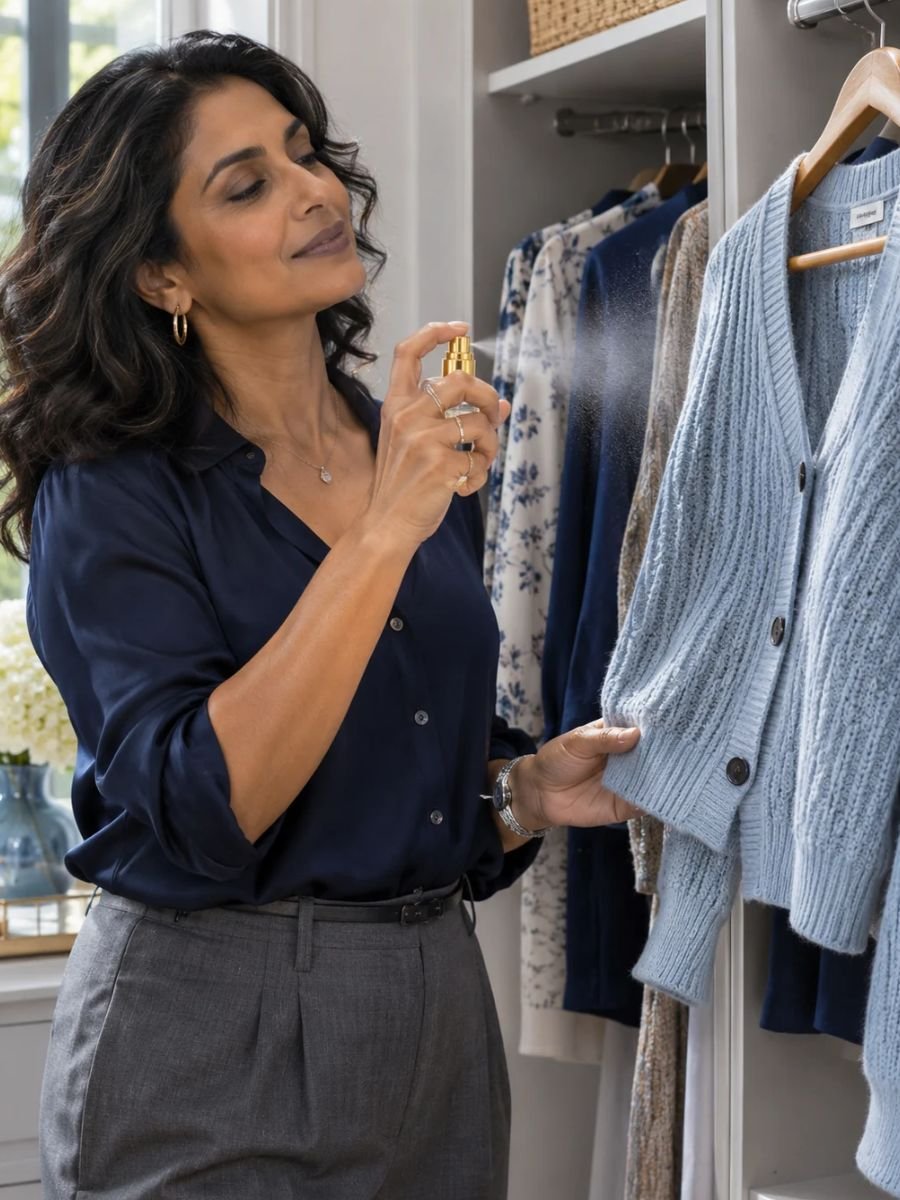
Have you ever pulled a favorite sweater out of your wardrobe and noticed a beautiful trace of perfume from the last time you wore it?
Fabric can sometimes retain fragrance longer than skin.
That means a carefully placed mist on suitable clothing may help you enjoy your perfume beyond its initial application.
Imagine a soft floral lingering on your cardigan or a warm vanilla leaving a delicate trace on your winter scarf.
It's one of those little fragrance pleasures that can make getting dressed feel special.
But there's an important precaution.
Not every fabric is suitable for perfume.
The alcohol, fragrance oils, colorants, and other ingredients in some perfumes can leave stains or damage delicate materials.
CHANEL's fragrance care guidance notes that perfume can sometimes stain clothing and recommends taking care with delicate fabrics.
If you'd like to try this method, test your perfume on a small, hidden area of the garment first.
Allow the test area to dry completely before deciding whether the fabric is suitable.
Avoid spraying directly onto silk, leather, delicate finishes, or jewelry.
A beautiful perfume lingering on a sweater can be delightful.
A permanent stain on your favorite blouse? Not quite so charming.
Make Your Fragrance Work With Your Daily Routine
Sometimes the reason perfume fades has less to do with how you've applied it and more to do with what happens afterward.
Your activities, surroundings, and the perfume itself all affect the experience.
A few thoughtful habits can help you enjoy the fragrance you already own.
6. Allow Your Perfume to Dry Before Getting Dressed
If you apply perfume and immediately pull on a tight sweater or button up your blouse, some of the fragrance may transfer to your clothing.
Friction from clothing can also disturb perfume on your skin.
Try applying your perfume while you're getting ready, then allow it to dry before dressing.
You don't need to wait an exact number of minutes.
Simply give the fragrance enough time to settle so that your skin no longer feels damp from the spray.
This is especially useful when applying perfume around your neck or inner elbows, where clothing may come into contact with freshly sprayed skin.
It's a small adjustment, but one worth making part of your morning routine.
7. Understand the Fragrance You're Wearing
Some perfumes are naturally more persistent than others.
A fresh citrus fragrance may open with the sparkling impression of bergamot, lemon, or grapefruit before settling into something softer.
A rich woody or amber fragrance may contain slower-evaporating materials that remain noticeable for longer.
The difference lies partly in the fragrance's composition.
And while Eau de Parfum is often more concentrated than Eau de Toilette, concentration alone doesn't guarantee longer wear.
The materials used in the actual formula matter, too.
This is worth remembering when you're tempted to replace a favorite perfume simply because it doesn't last as long as you'd hoped.
Perhaps your delicate floral was designed to feel light and airy.
Perhaps your citrus perfume is at its loveliest during those refreshing first few hours.
Rather than expecting every fragrance to behave the same way, think about the kind of scent experience you enjoy.
If you want something soft for daytime, a lighter perfume may suit you beautifully.
If you prefer a fragrance with a more persistent presence, sample richer compositions and compare how they develop on your skin.
And don't forget to pay attention to the dry-down.
That's the fragrance that remains after the brighter opening notes have faded.
A perfume's personality often becomes especially interesting once those initial notes settle.
8. Store Your Perfume Away From Heat and Sunlight
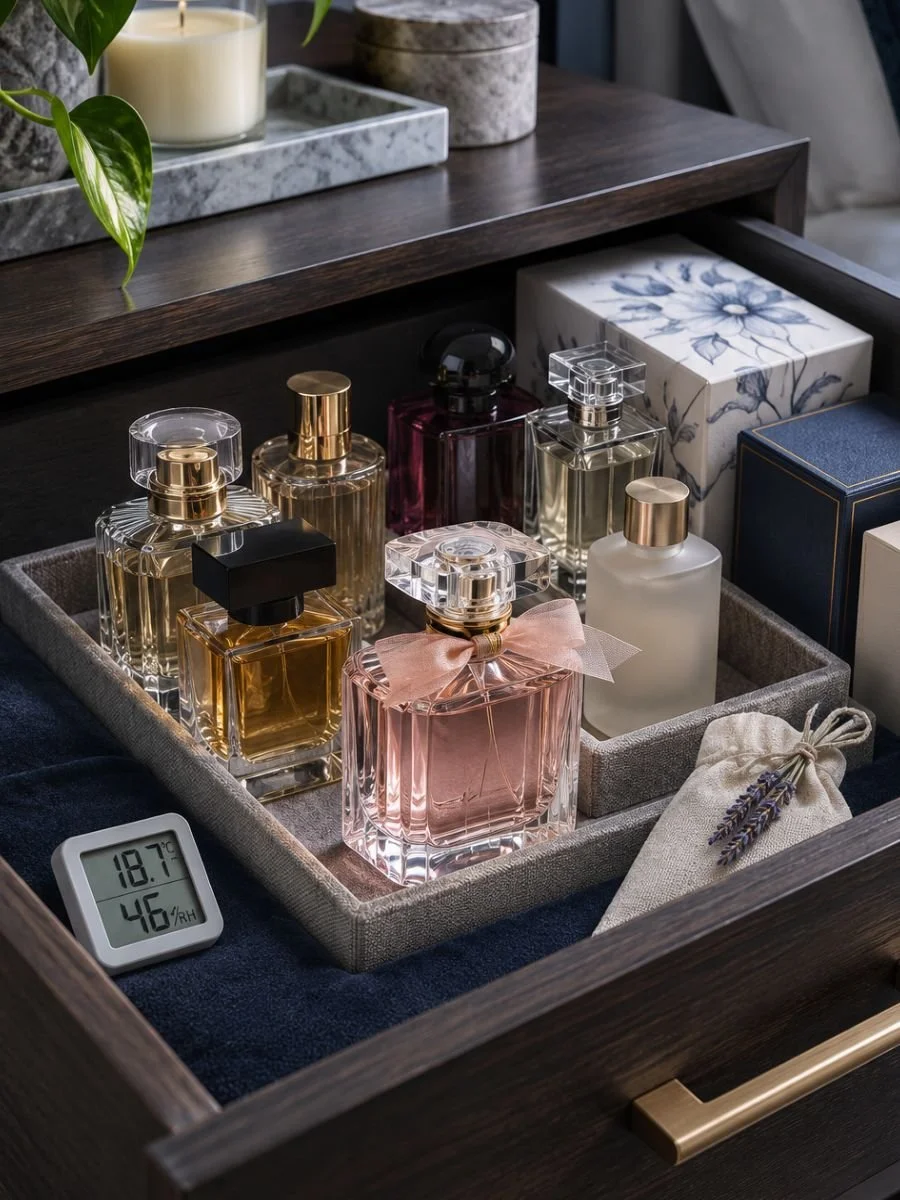
Your fragrance routine doesn't end when you put the bottle down.
Where you store your perfume can influence how well it maintains its original character over time.
A row of elegant perfume bottles looks beautiful on a dressing table, especially when the glass catches the afternoon light.
Unfortunately, direct sunlight isn't ideal for fragrance storage.
Heat, light, and repeated temperature changes can affect a perfume's stability.
According to Maison Francis Kurkdjian's fragrance care guidance, perfume should be kept in a temperature-controlled environment away from direct sunlight and heat.
A few sensible storage habits include:
Keeping your perfume in a cool, dry drawer or cabinet.
Avoiding sunny windowsills and areas near heating vents.
Keeping the bottle closed when you're not using it.
Storing perfume in its original box when practical.
Avoiding bathrooms where temperatures frequently change.
Proper storage won't make a naturally delicate perfume suddenly last all day on your skin.
What it can do is help preserve the fragrance you've invested in.
And when you've found a perfume you absolutely adore, taking good care of it is certainly worth the effort.
9. Give Yourself Permission to Reapply Your Perfume
Here's a little perfume advice that deserves more attention.
It's perfectly fine to refresh your fragrance during the day.
Not every perfume is intended to remain equally noticeable from morning until bedtime.
A delicate floral, fresh cologne, or airy musk may become softer after several hours.
That doesn't make it a poor perfume.
It may simply be part of the fragrance's character.
If you love a lighter scent, carrying a small travel-size bottle can be a practical solution.
You can enjoy your fragrance in the morning and give it a modest refresh before dinner or an afternoon outing.
Just remember that your nose can become accustomed to your own perfume.
Before spraying again, consider whether the scent has genuinely faded or whether you've simply stopped noticing it.
You don't want to overwhelm yourself—or everyone else in the room—with unnecessary applications.
A little afternoon refresh can be a pleasant part of your beauty routine, especially when done thoughtfully.
The Parlor Notes: A Simple Perfume Routine to Try Tomorrow
Now that we've explored the different ways to help your perfume last longer, let's put them together.
You don't need to follow an elaborate ritual or purchase a collection of new products.
Try these simple steps the next time you get ready.
Begin with clean skin. Take your usual shower or bath and gently dry your skin.
Apply moisturizer. Use a fragrance-free lotion or matching body cream and allow it to absorb.
Spray your perfume thoughtfully. Choose a couple of comfortable application areas where the fragrance won't be constantly washed or rubbed away.
Let your perfume settle. Avoid rubbing your wrists and allow the fragrance to dry before dressing.
Consider your clothing. If you're using perfume on fabric, make sure the material is suitable and has passed a small patch test.
Enjoy the fragrance throughout the day. Notice how it changes rather than expecting the first impression to remain unchanged.
Refresh when needed. If the scent has faded and you'd like to enjoy it again, use a modest amount.
Give this routine a try with a perfume you already know well.
Pay attention to how your fragrance smells in the morning, around lunchtime, and later in the afternoon.
You might discover that one application area works better than another.
Perhaps moisturizing first makes a noticeable difference.
Or maybe you'll realize your favorite perfume lasts longer than you thought, but you've simply become accustomed to smelling it.
The point isn't to turn perfume application into a complicated experiment.
It's to learn a little more about your favorite fragrance and discover which habits work best for you.
A Few Perfume Tricks You Don't Really Need
There are plenty of perfume tips floating around, and some sound more convincing than others.
One popular suggestion is to apply petroleum jelly to your pulse points before spraying perfume.
A thin layer may change how a fragrance sits on the skin, but there isn't strong evidence that this trick reliably improves the longevity of every perfume.
If you already use a comfortable body moisturizer, you don't necessarily need an additional product.
Another suggestion is to spray a large amount of perfume all over your body.
But using more fragrance doesn't automatically solve a longevity problem.
It may simply make your perfume overpowering, especially in shared spaces.
You may also hear that spraying perfume directly into your hair will help the scent last longer.
While hair can retain fragrance, conventional alcohol-based perfumes may be drying for some hair types or irritating to the scalp.
If you enjoy fragrance in your hair, a product specifically formulated as a hair perfume may be a better option.
And if fragrance causes redness, itching, or irritation, stop applying it to your skin. The American Academy of Dermatology explains that fragrance ingredients can trigger contact dermatitis in some people.
A beautiful fragrance should be something you enjoy wearing, not something you have to tolerate.
Enjoying Your Perfume for a Little Longer
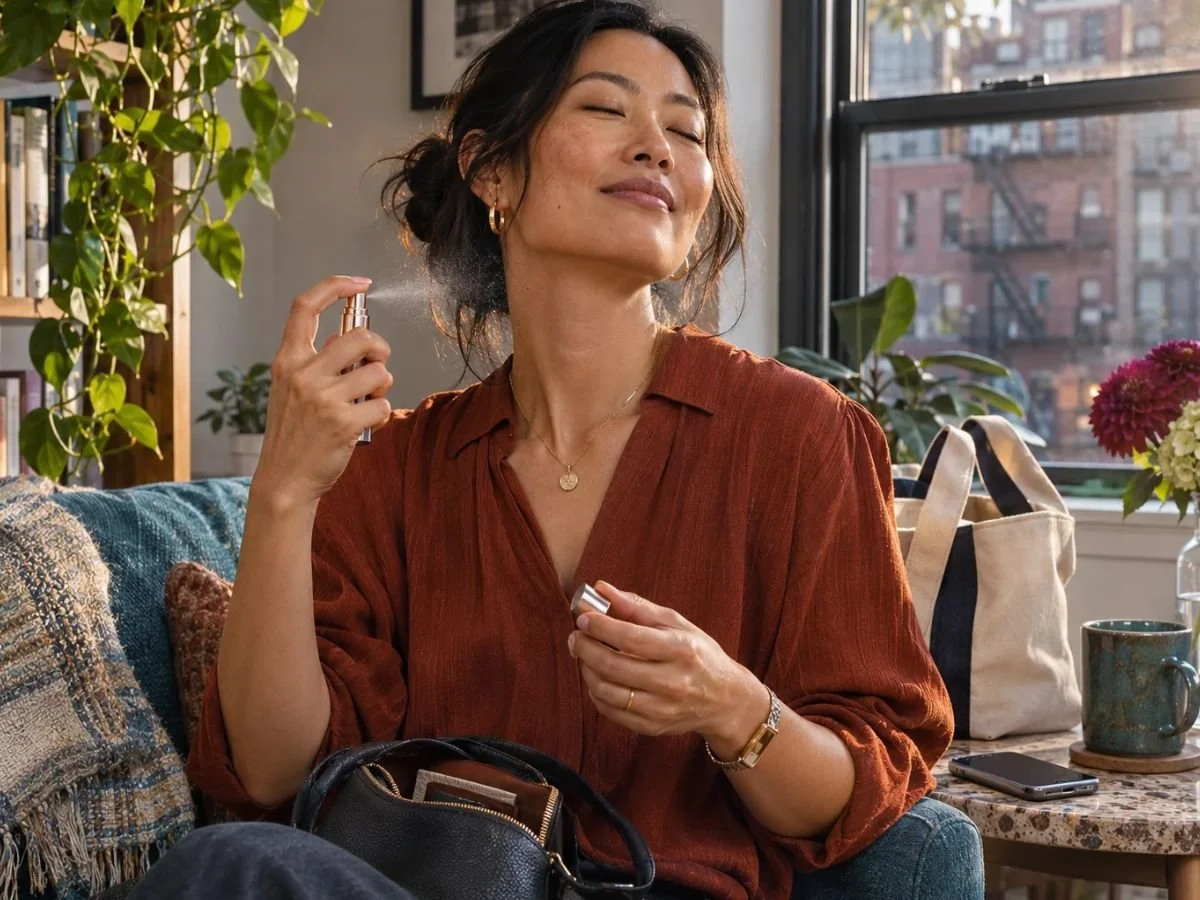
Perhaps the loveliest thing about perfume is how personal it becomes.
The same fragrance may feel soft and delicate on one person, warm and expressive on another, and entirely different as the hours pass.
That's part of what makes discovering perfume so interesting.
And while we all enjoy the idea of a beautiful fragrance lingering throughout the day, there's no need to measure the worth of a perfume by how many hours it lasts.
Some fragrances are made for a light, refreshing moment.
Others settle into the skin and remain as a soft, comforting presence long after you've forgotten you applied them.
Neither is necessarily better.
If you'd like your perfume to last longer, begin with the simple things.
Moisturize your skin, choose your application areas thoughtfully, avoid unnecessary rubbing, protect your fragrance bottles, and refresh your scent when needed.
Most importantly, pay attention to how your perfume behaves on you.
The little details of your routine can make wearing fragrance more enjoyable, even when they don't transform its natural longevity.
Making perfume last longer isn't always about using more. Sometimes it's about applying it more thoughtfully, caring for it properly, and appreciating the way it changes throughout the day.
And there's something rather beautiful about that final, delicate trace of fragrance that stays with you when the rest of the day has quietly passed.
Before You Leave the Parlor💕…
Don't slip out without signing the guest book — just drop a note in the comments below.
Have you tried moisturizing before applying your perfume, or do you have a favorite trick that helps your fragrance last longer?
Tell us what works for you—we would love to hear your perfume tips.
Beauty Starts at the Parlor™.
